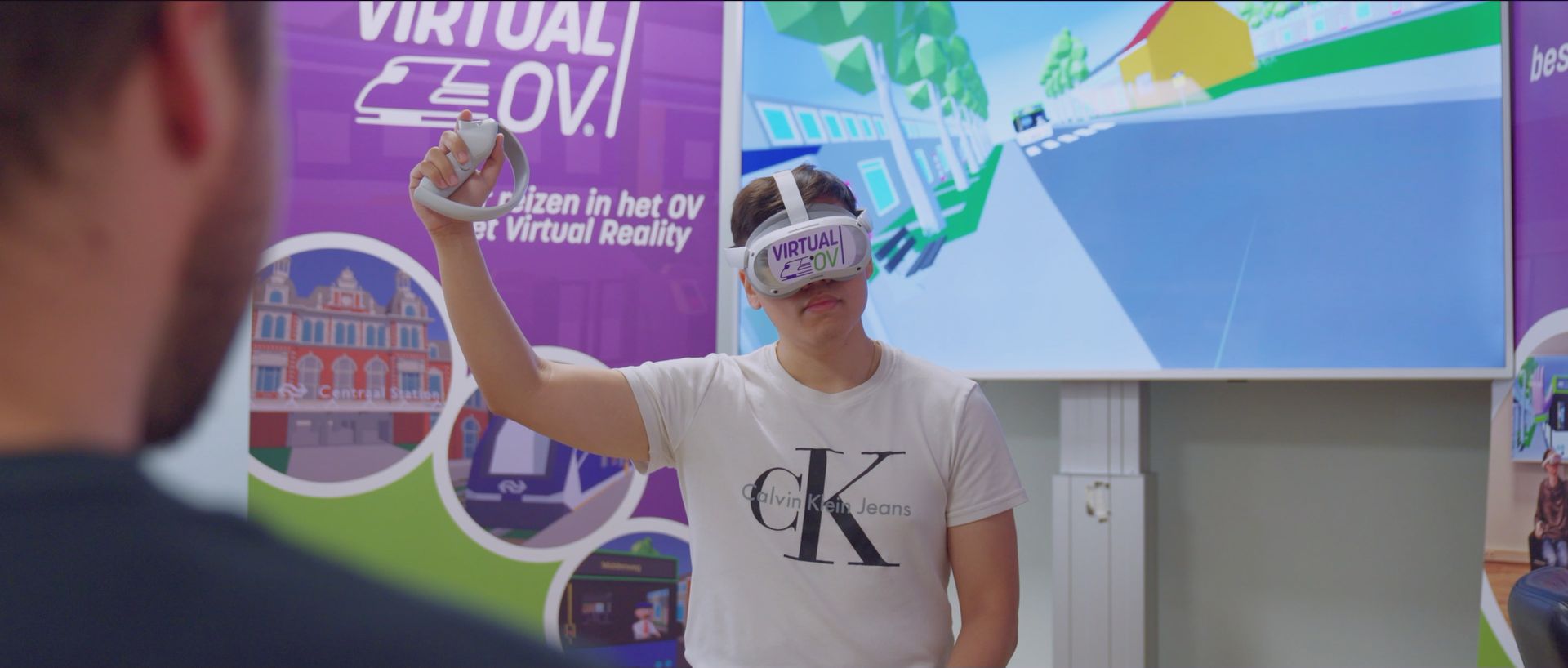
Virtual public transport training vs. traditional public transport travel training: How do you choose the best method?
Why make the right choice between public transport travel training and Virtual Public Transport?
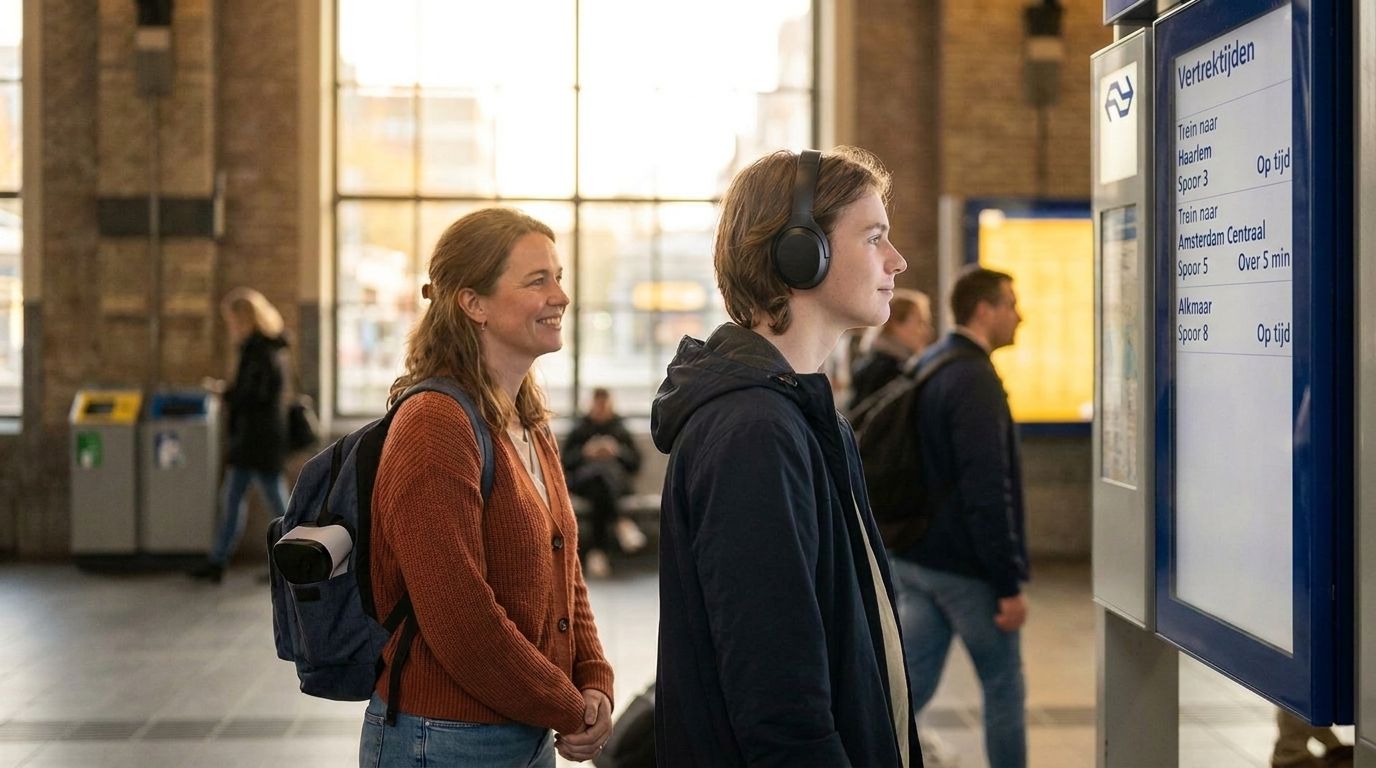
Teaching public transport travel skills is essential for self-reliance, particularly for neurodivergent individuals, people with disabilities, or young people in special education. One of the biggest challenges in traditional public transport travel training is the availability of trainers for one-on-one guidance. How do you ensure that everyone receives the attention and guidance they need?
In this blog, we explain how you can compare traditional public transport travel training with simulation-driven virtual public transport training using Virtual OV, so that you make a safe, effective, and scalable choice.
Step 1: Determine the needs and challenges of your target audience
Not every method works for everyone. Start by mapping out the specific needs of your target audience. Ask yourself:
✅ How do participants experience the real world?
- Are they overstimulated by crowds, noise, or unpredictability?
- Do they have a fear of social interactions (e.g., talking to a bus driver)?
- Is physical safety a concern (e.g. risk of falling or getting lost)?
✅ What is their learning level?
- Do they basic skills (e.g. recognizing stops) or advanced skills (e.g. dealing with delays)?
- Is repetition crucial for learning skills?
✅ What are the practical limitations?
- Is there limited access to actual public transport (e.g. in remote areas)?
- Is one-on-one guidance feasible, or is the availability of trainers limited?
The challenge of 1-on-1 guidance
In practice, one-on-one guidance is often a bottleneck:
- Time-intensive: Each participant requires individual attention, which limits scalability.
- Costs: More trainers mean higher costs.
- Flexibility: Trainers are not always available when participants want to practice.
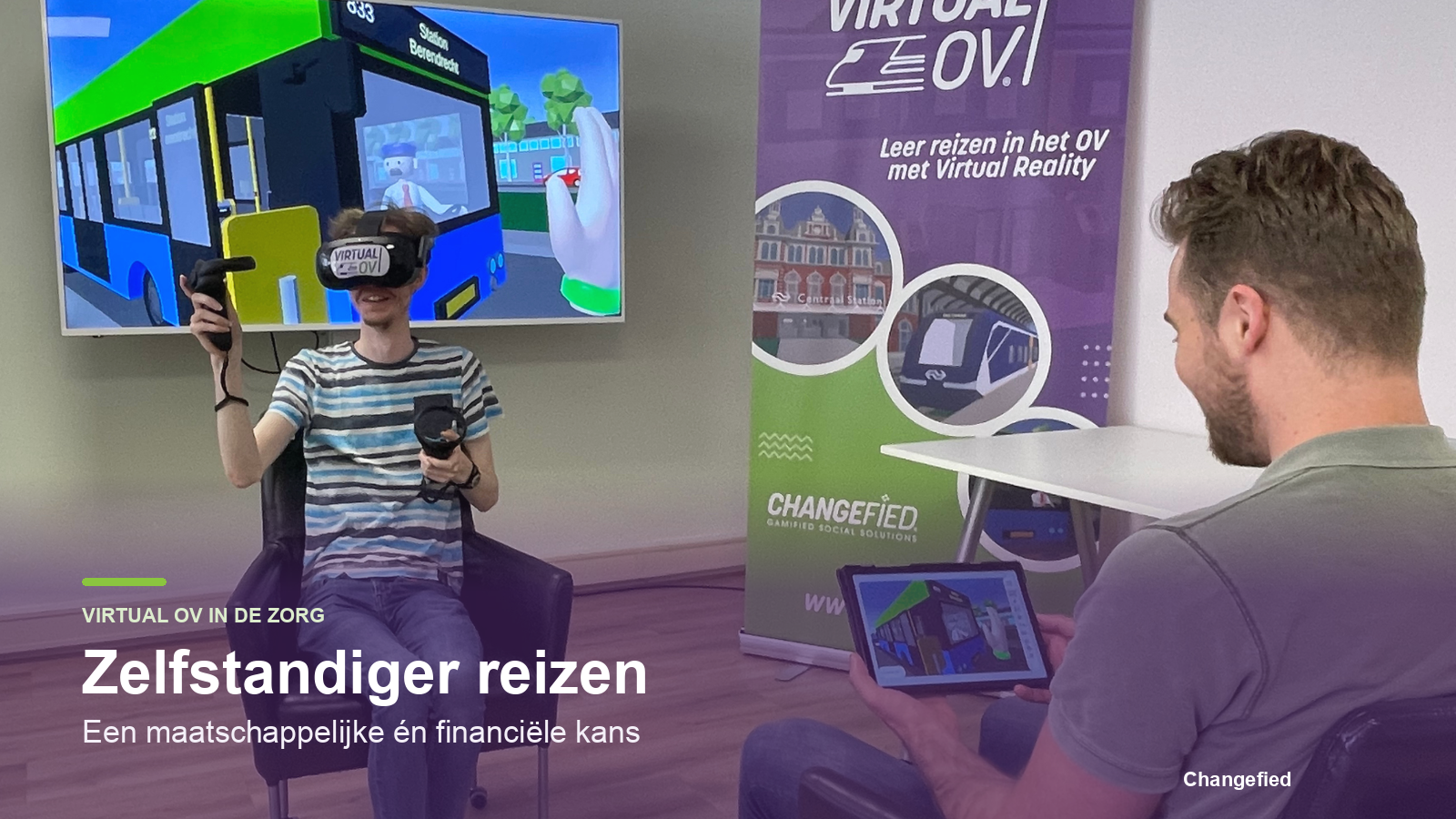
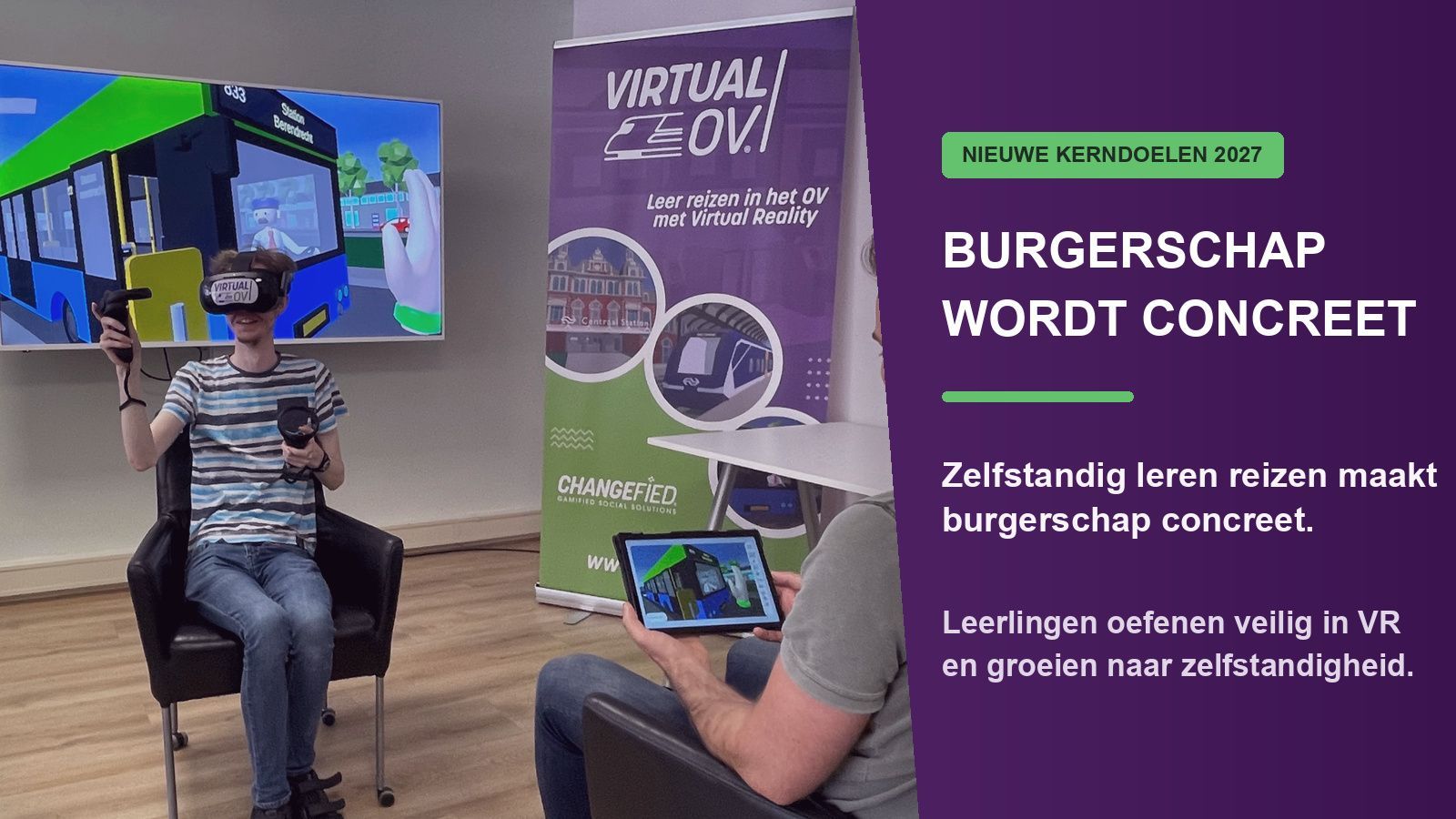
Virtual OV offers a solution here: In a virtual environment, participants learn faster and more efficiently, without being dependent on the availability of trainers.
When do you opt for traditional public transport travel training?
✔ For participants who are already familiar with public transport situations and only require fine motor skills or social skills.
✔ When the real world is the only option (e.g., for practicing physical access to vehicles).
✔ When sufficient trainers are available to provide 1-on-1 guidance.
When do you choose Virtual Public Transport?
✔ For neurodivergent participants (e.g., autism, acquired brain injury) who become overstimulated in real public transport situations.
✔ When repetition and safety are priorities: Virtual Public Transport offers a controlled environment where making mistakes is allowed.
✔ When trainer availability is limited: Multiple participants can train simultaneously without additional supervision.
✔ For practicing unpredictable situations (e.g., delays, lost public transport pass) in a safe setting.
Step 2: Compare the pros and cons
| Criteria | Traditional public transport travel training | Virtual OV (simulation-driven training) |
|---|---|---|
| Safety | Risk of accidents or overstimulation in real traffic. | 100% safe: No physical risks. |
| Repeatability | Limited by time, location, and availability of trainers. | Unlimited repeatability in a virtual environment. |
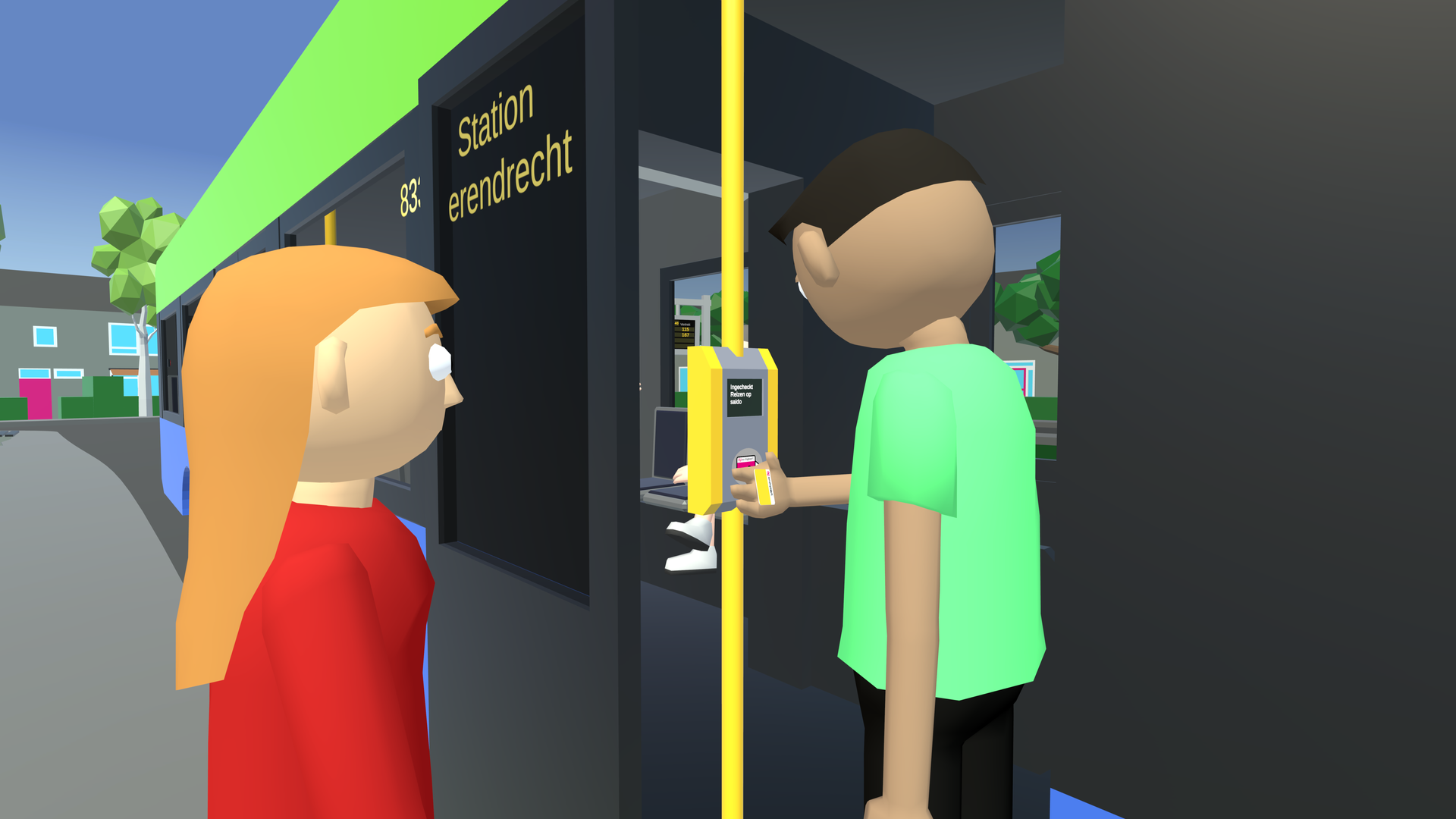
| Realism | Maximum reality, but unpredictable. | Realistic simulation of public transport situations, including delays, lost tickets, and other unexpected scenarios. |
| Costs | High (guidance, travel expenses, time). | Lower long-term costs (one-time investment in VR). |
| Scalability | Limited (1 trainer per participant). | Scalable: Multiple participants simultaneously, without extra trainers. |
| Measurability | Difficult to measure (subjective observation). | Measurable results (e.g. time per task, errors). |
| Accessibility | Subject to the availability of public transport and trainers. | Always available, regardless of location or trainer availability. |
| Learning speed | Slower, depending on the frequency of guidance. | Learn faster: Participants practice in a concentrated environment and learn more in less time. |
| Flexibility | Limited (depending on public transport services and trainer availability). | Flexible: Practice whenever and wherever you want, without being dependent on trainers. |
Step 3: Make a choice based on your goals
Choose traditional public transport travel training if:
- Your participants already have basic knowledge and only need practical experience.
- You want to train your physical skills (e.g. getting on a bus).
- You have enough trainers available for 1-on-1 guidance.
Choose Virtual Public Transport if:
- You have neurodivergent participants who want to practice safely and in a structured way.
- You want to save costs in the long term.
- You want to train multiple participants simultaneously, without extra trainers.
- You want to practice unpredictable situations, such as delays or lost public transport passes.
- You want to achieve results faster, because participants learn more in a shorter time in a virtual environment.
Step 4: Combine both methods for optimal results
The best approach is often a combination of both methods:
- Start with Virtual OV to build basic skills and confidence in a safe environment, without relying on trainers.
- Switch to traditional training as soon as participants feel confident in the simulation.
- Use Virtual OV for maintenance training to keep skills fresh and practice new scenarios, such as delays or lost tickets.
Example: A step-by-step plan for a special education school
- Phase 1 (Virtual): Students practice basic skills (e.g., buying a ticket, boarding) and unexpected situations (e.g., delays, lost public transport pass) in Virtual Public Transport.
- Phase 2 (Combined): Students first practice complex situations in Virtual OV, followed by supervised real-life practical sessions with a trainer.
- Phase 3 (Maintenance): Students use Virtual OV to brush up regularly and practice new scenarios, without being dependent on trainer availability.
Step 5: Measure and evaluate
How do you know if you right choice made
- Self-reliance: How many participants travel independently after the training?
- Time saving: How quickly do participants make the switch from school transport to regular public transport? (With Virtual OV, this was 25% sooner in previous projects.)
- Costs: What are the total costs per participant?
- Satisfaction: How satisfied are participants and supervisors?
- Learning efficiency: How much faster do participants learn in Virtual OV compared to traditional training?
Conclusion: Virtual public transport as an innovative and scalable solution
Traditional public transport travel training remains valuable for practical experience, but the availability of trainers is often a limiting factor. Virtual Public Transport offers a safer, more scalable, and cost-effective solution, especially for neurodivergent participants and larger groups. By combining both methods, you create an optimal learning experience that aligns with the needs of your target audience, without being dependent on trainer availability.
Curious how Virtual OV can help your organization?
👉
Request a demo and discover the possibilities!
About Changefied
Changefied BV develops innovative VR learning solutions, such as Virtual Public Transport and Virtual Empowerment, to increase self-reliance and inclusivity. Our solutions are used by schools, healthcare institutions, and government bodies throughout the Netherlands.