Did you know that our brain learns best in rich, concrete experiences? Not in PowerPoint slides or theoretical lists, but when seeing, hearing, moving, and feeling come together. Anyone who truly wants to master a new skill must not only understand it but practice it repeatedly, meaningfully, and in context. Until the newly learned behavior becomes almost second nature.
In our
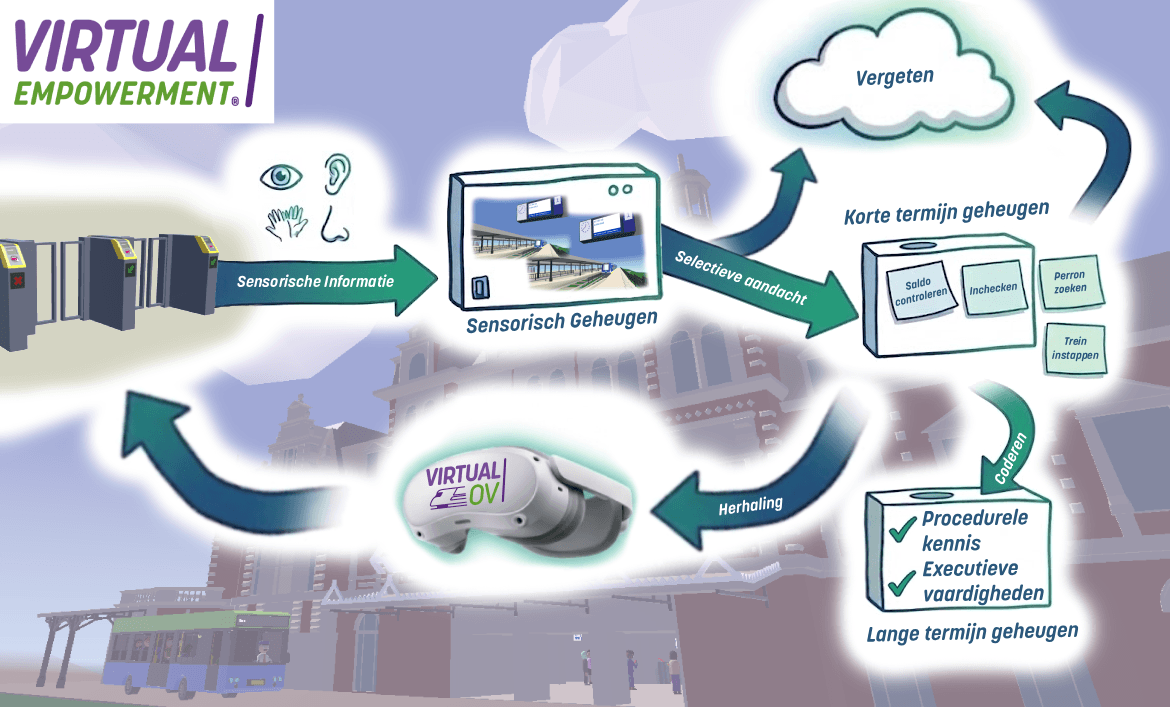
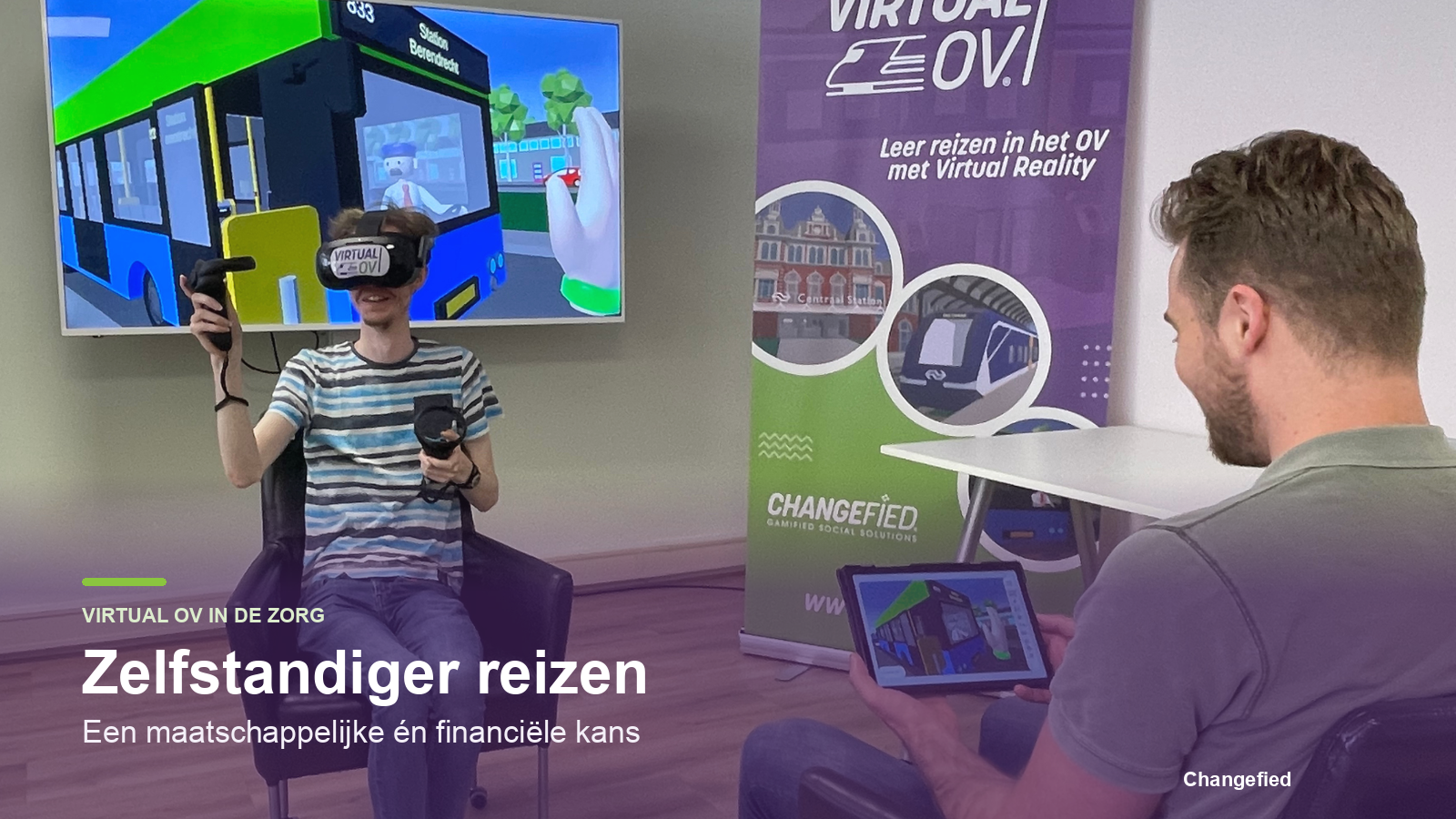
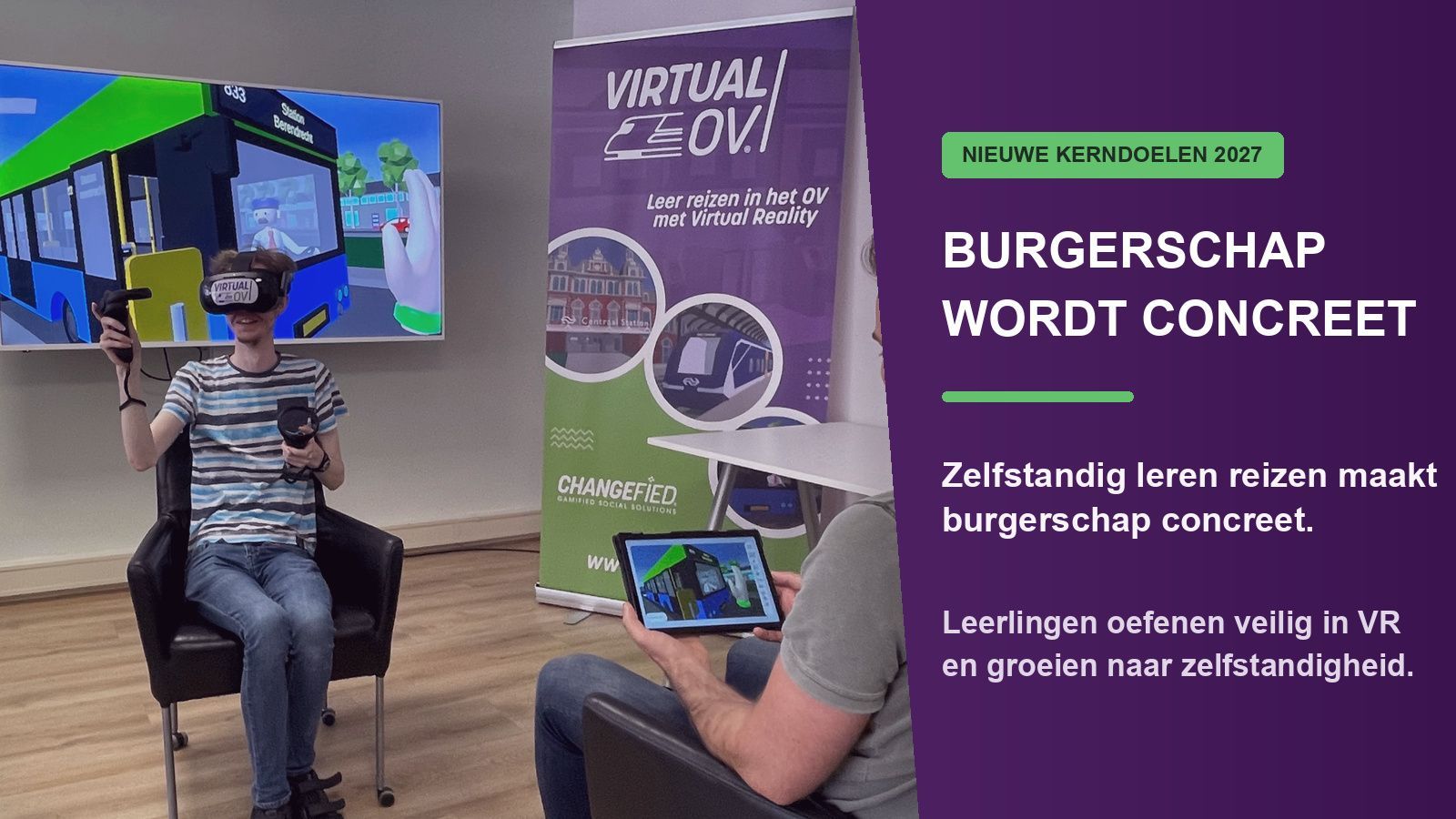
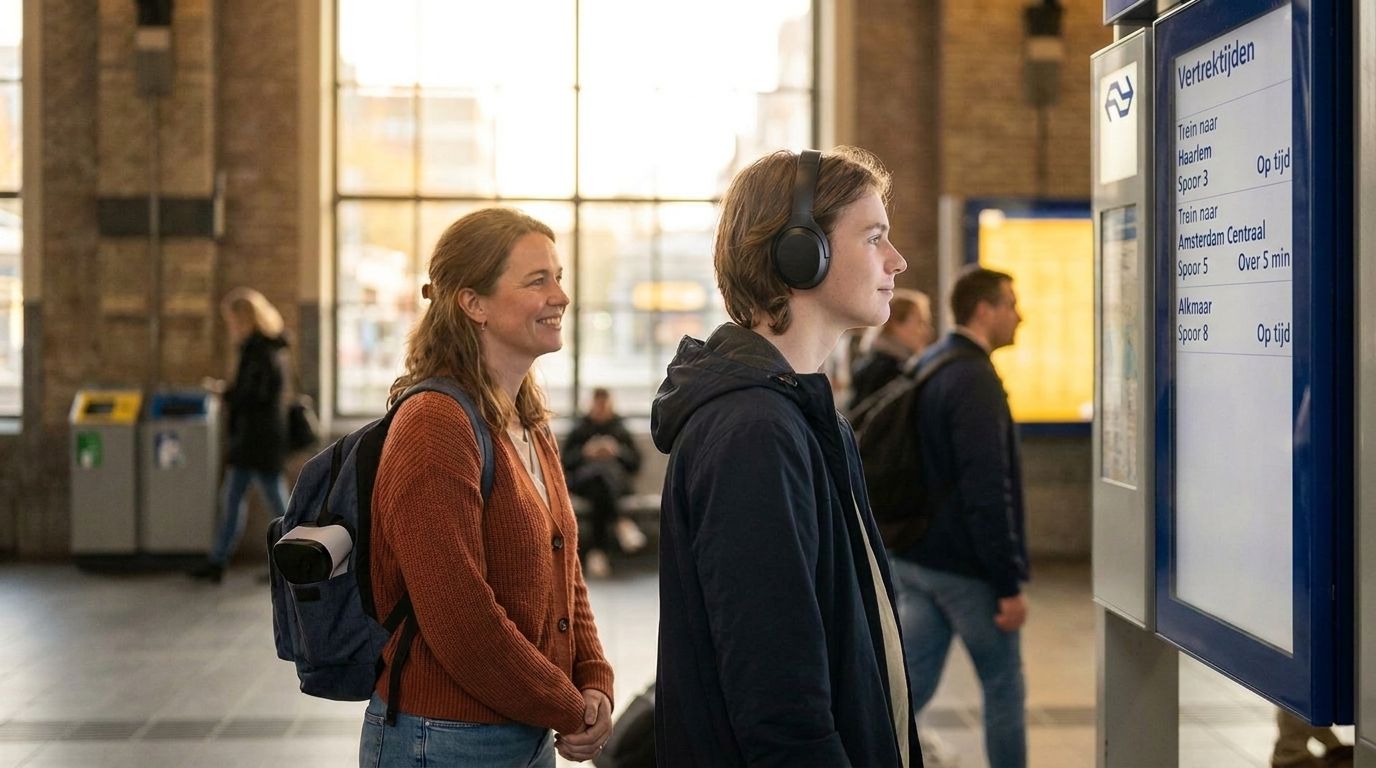
6DoF VR environment (Six Directions of Freedom), we put this into direct practice. Participants are not standing outside the situation, but right in the middle of it: at a station, on a tram, or in a busy shopping street. They look around, hear announcements, walk to an entry gate, and hold out their hand to check in. All senses are involved. In this way, information first lands firmly in sensory and short-term memory and is subsequently—through repetition and feedback—encoded into
long-term and procedural memory. Individual instructions are thus converted into routines step by step.
From knowledge to automatic skill
Because you can move freely in 6DoF VR, the experience aligns perfectly with how your brain learns in the real world. Participants choose their route, react to stimuli, and make mistakes that are immediately visible. This makes learning concrete: not theoretically knowing how to do something, but experiencing what happens when you miss a town sign, press the stop button too late, or choose the wrong platform. And being able to practice it again immediately afterward. This is how your brain acquires new skills.
Three crucial elements in every virtual experience
At Changefied, we build every VR experience around three pillars:
● Repetition in a safe context
Checking in, transferring, checking out, asking for directions; you practice these steps over and over again in the same situation. This way, the behavior becomes ingrained and turns into natural patterns.
● Immediate feedback
Mistakes are immediately visible, so you can learn from them right away. Chose the wrong gate? Forgot your public transport chip card? You notice it immediately and can correct it on the spot.
● Meaning through recognizable context
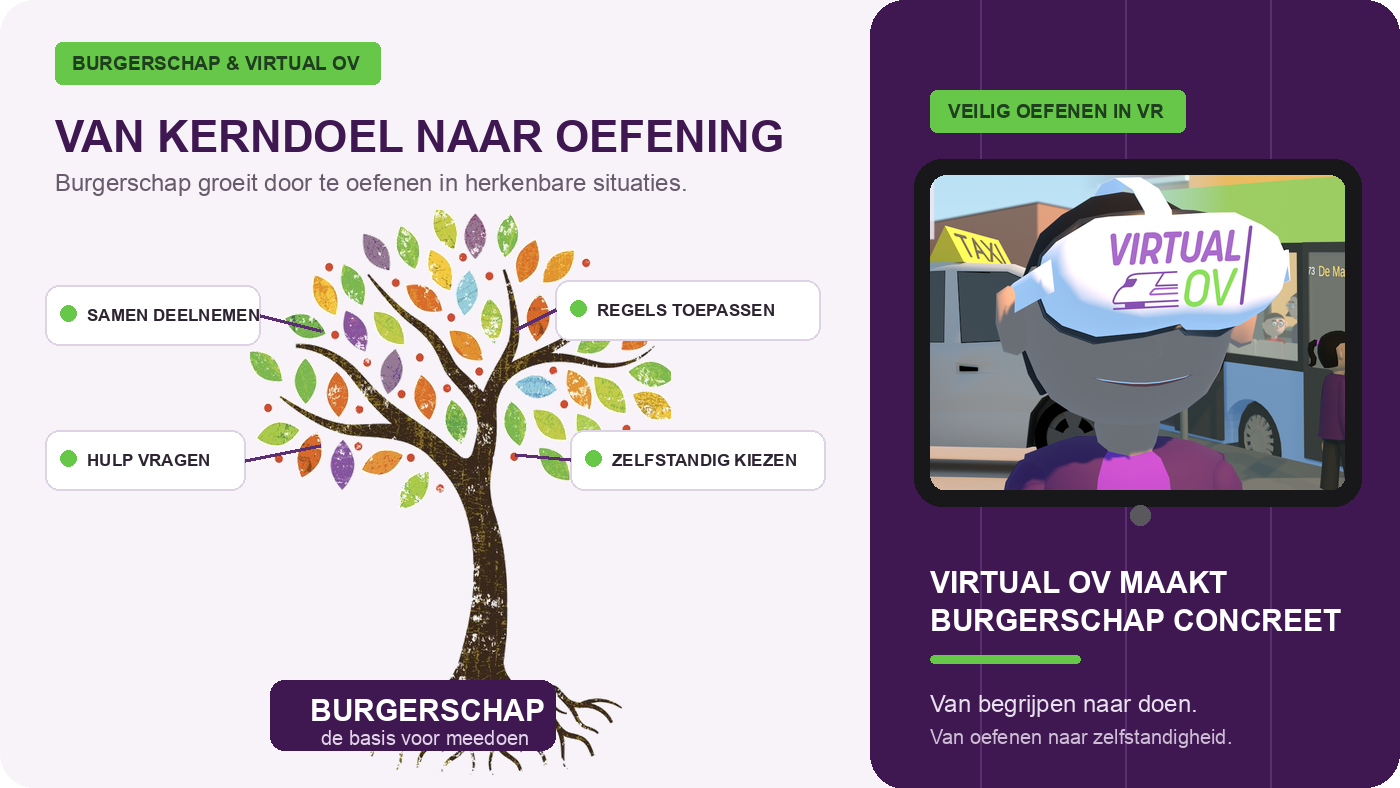
Virtual Public Transport is not an abstract exercise, but a real-life situation. What you learn is relevant and directly applicable in daily life. That is motivating.
Executive functions: training the invisible
Learning with 6DoF VR goes beyond practical actions. It also trains
executive functions – the controllers of our brain that ensure you not only know what is needed, but also do what is needed:
● Inhibition: Learning to wait, not reacting impulsively, but consciously choosing the right platform.
● Attention: Focusing on relevant signs and signals, despite all the surrounding stimuli.
● Working memory: Remembering multiple instructions and executing them in the correct order.
● Planning and organizing: Breaking down a trip into steps and adjusting in unexpected situations.
● Emotion regulation and flexibility: Remaining calm during busy periods, delays, or track changes.
By always practicing these skills in a meaningful context, they become directly linked to action – and therefore much more transferable to real-world situations.
Blended learning: VR + human guidance
6DoF VR never works alone. Changefied solutions are always
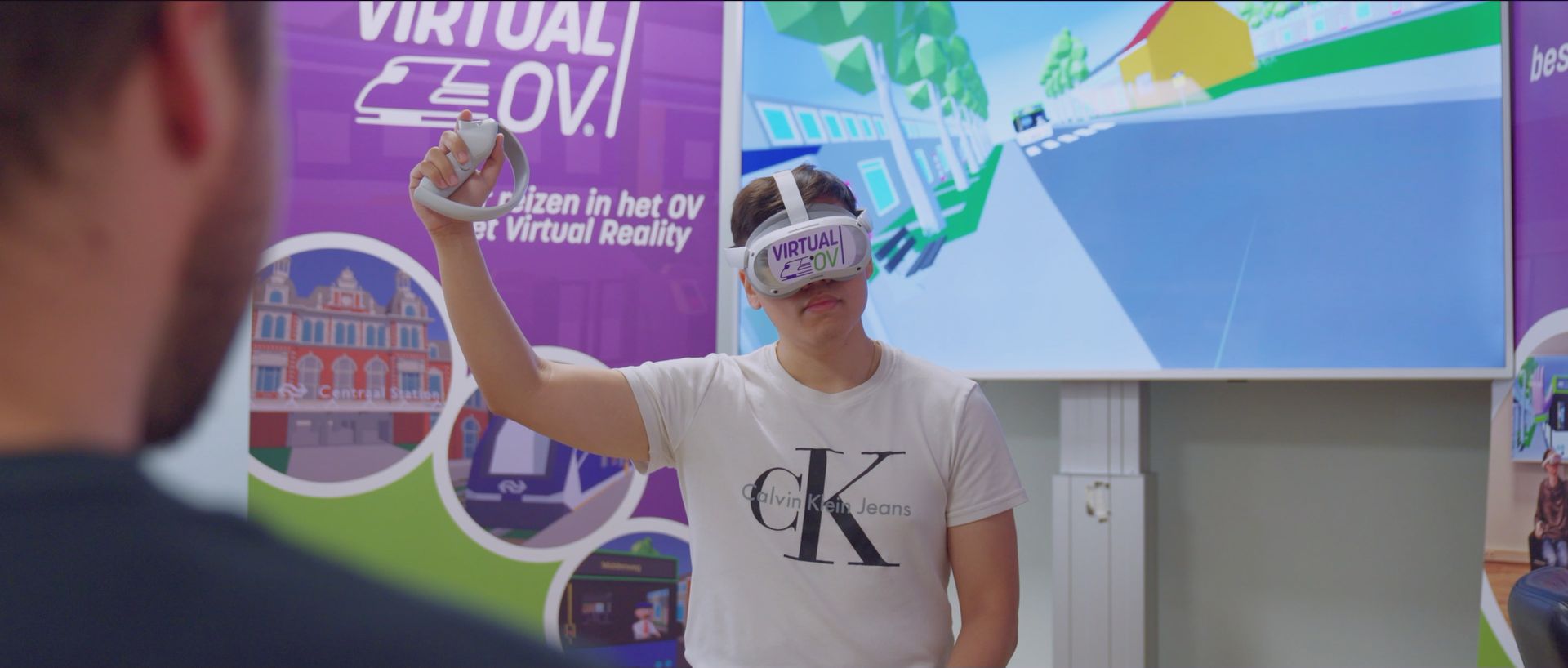
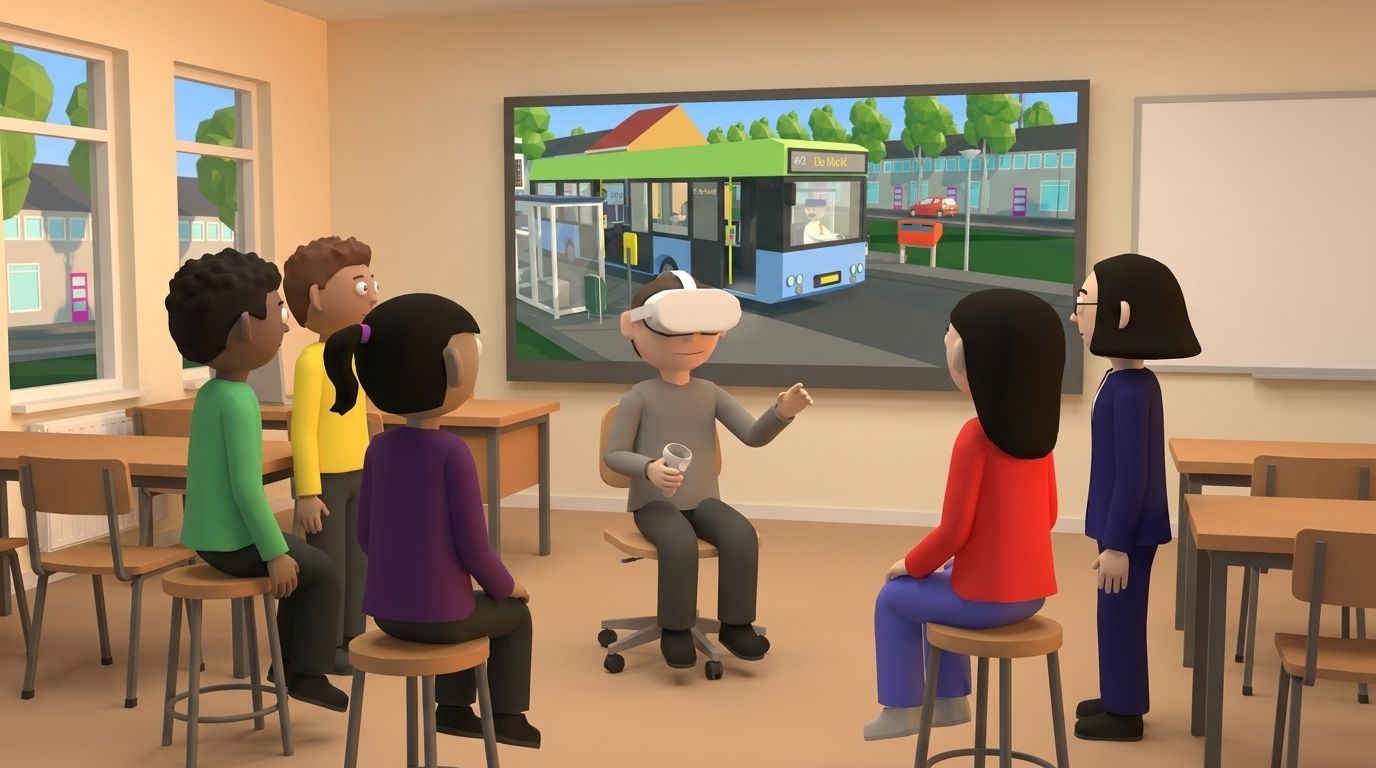
blended: supervisors, coaches, or job coaches watch along on a screen, provide real-time tips, and celebrate successes with their pupil or student. Mistakes are discussed together, and successes are reinforced. This builds self-confidence: "I can already do it in VR, so I can do it in real life too."
Our mission
At Changefied, we view technology not as an end, but as a means. This is how we make complex skills more accessible, safer, and easier to acquire – especially for people with a mild intellectual disability or autism.
Our learning platform lowers cognitive and social barriers, so that more people can participate in society independently, sustainably, and with self-confidence.