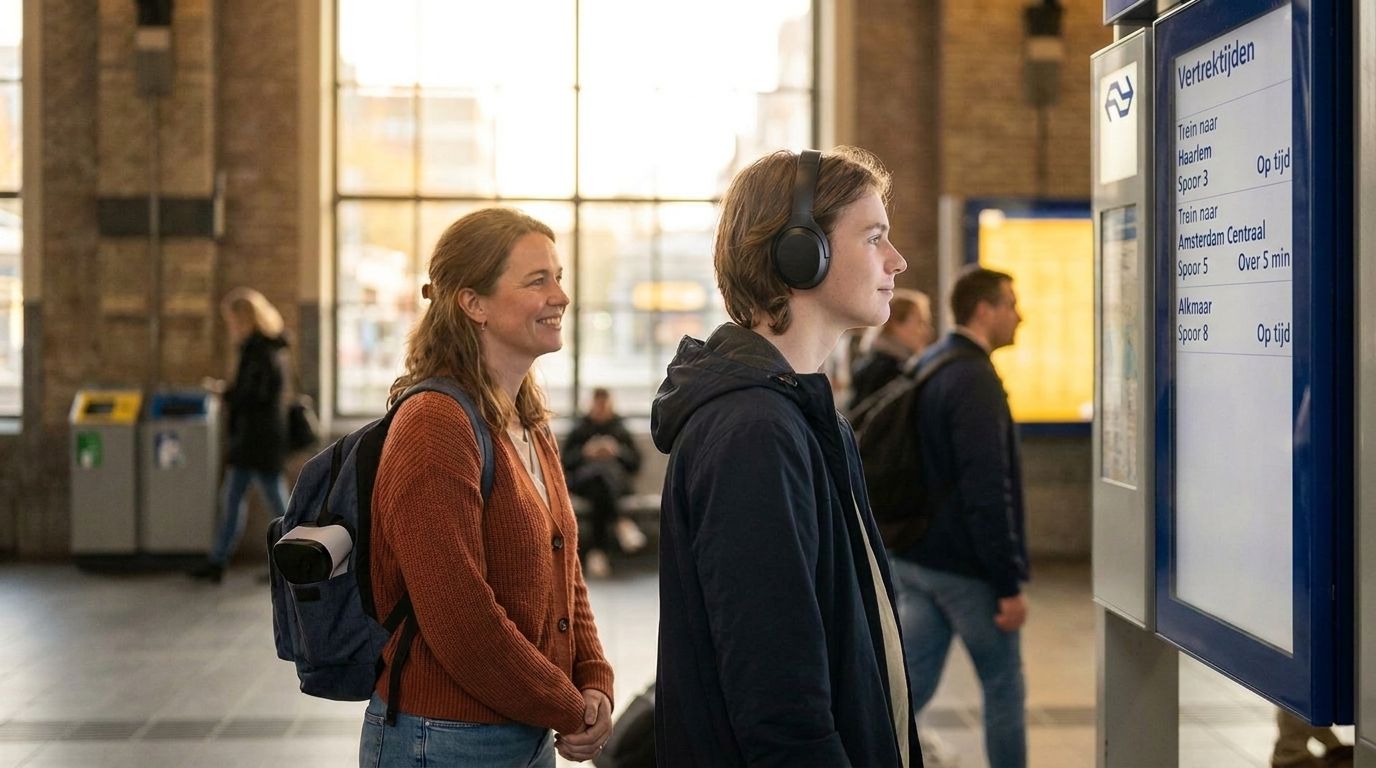
Traveling by public transport is a matter of course for many people. But for neurodivergent individuals – such as people with autism, acquired brain injury, or other cognitive challenges – it can be a challenge. The crowds, unpredictability, and social interactions on buses, trams, and trains require skills that not everyone possesses naturally.
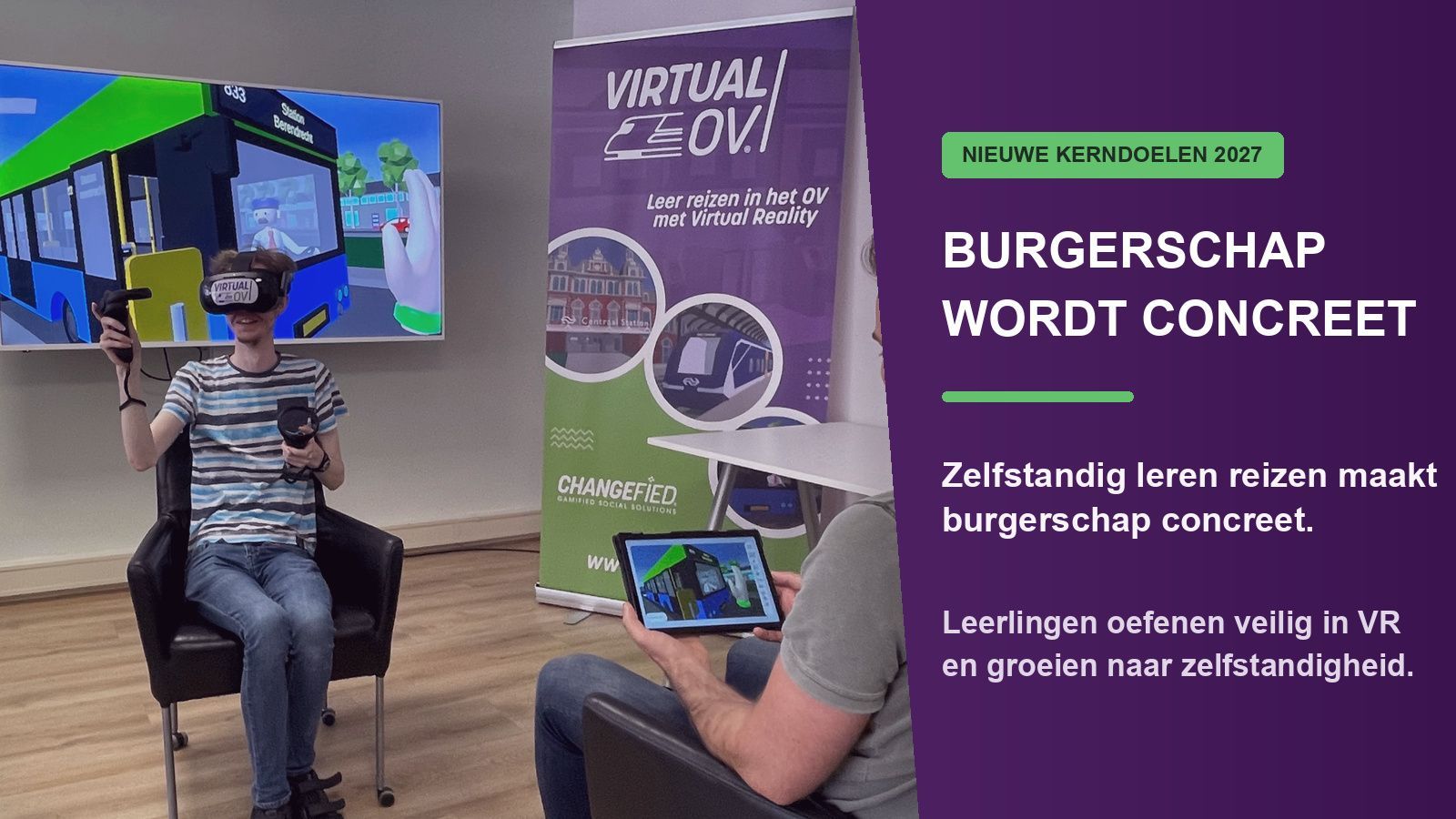
Virtual OV offers an innovative solution to this: a VR learning platform where travelers can safely and repeatedly practice public transport skills in a realistic simulation, without the risks of real traffic. In this blog, we explain how Virtual OV contributes to self-reliance, inclusivity, and cost efficiency in public transport travel training.
The challenges of traditional public transport travel training
Traditional public transport training often takes place in the real world, with all the associated uncertainties:
- Safety risks: Travelers run the risk of ending up in dangerous situations, such as unexpected obstacles or social miscommunication.
- Limited repeatability: Real-life practice depends on available time, location, and supervision.
- Stress and overstimulation: Neurodivergent participants may become overwhelmed by stimuli such as noise, crowds, or unpredictable behavior of fellow travelers.
- Costs: Physical guidance and repetition are time- and money-intensive.
Virtual OV eliminates these obstacles by providing a controlled, secure, and scalable learning environment.
How Virtual Public Transport Works: Simulation-driven mobility training
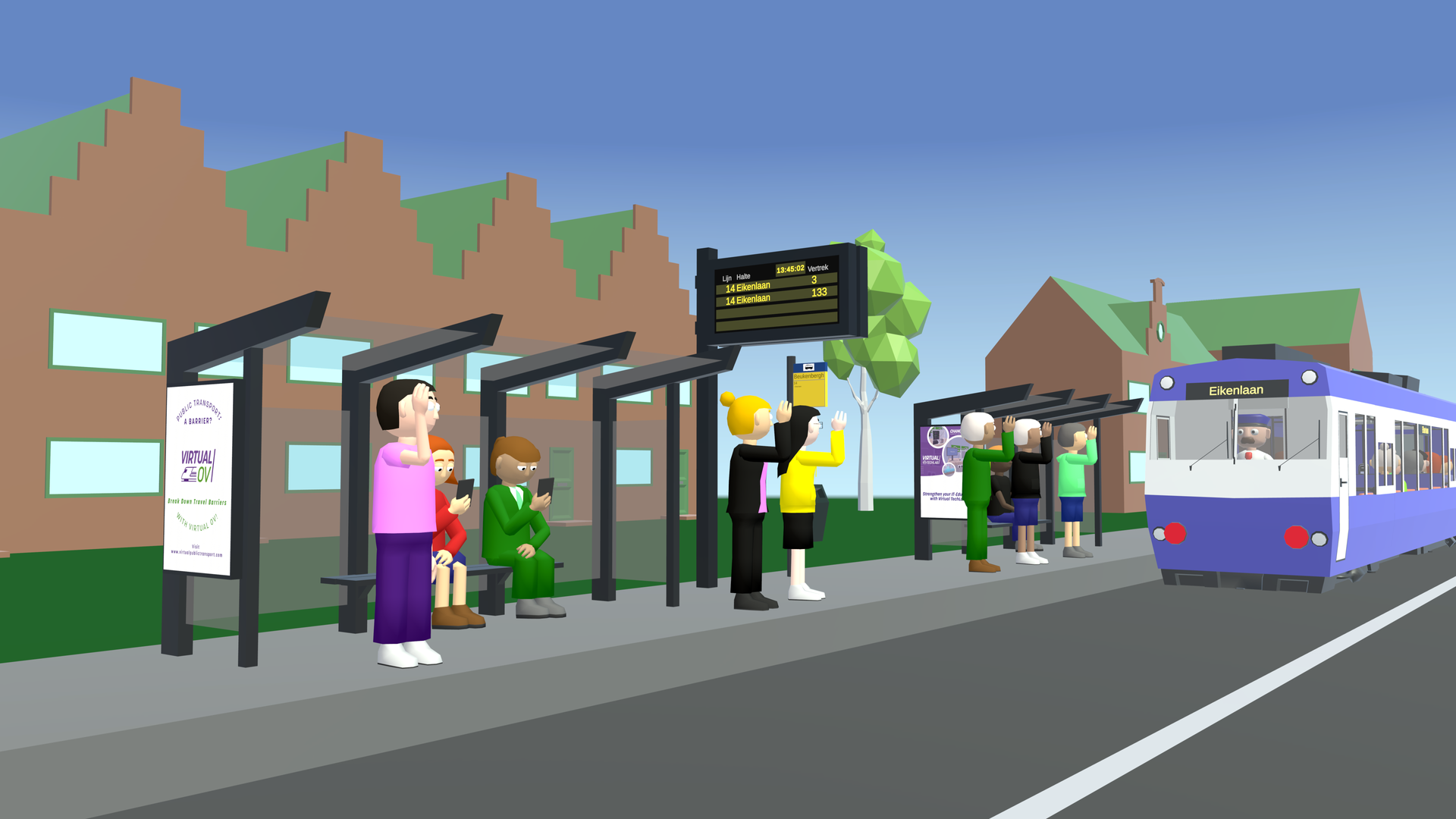
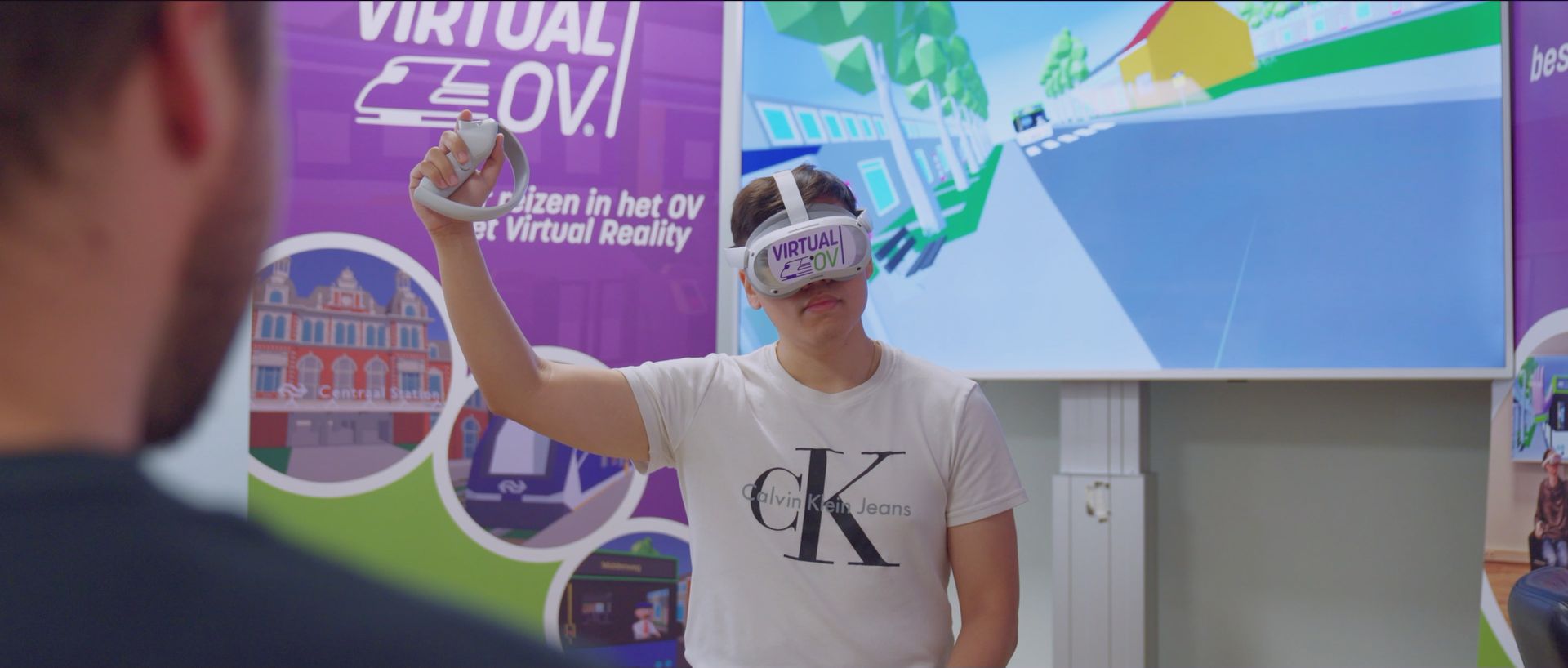
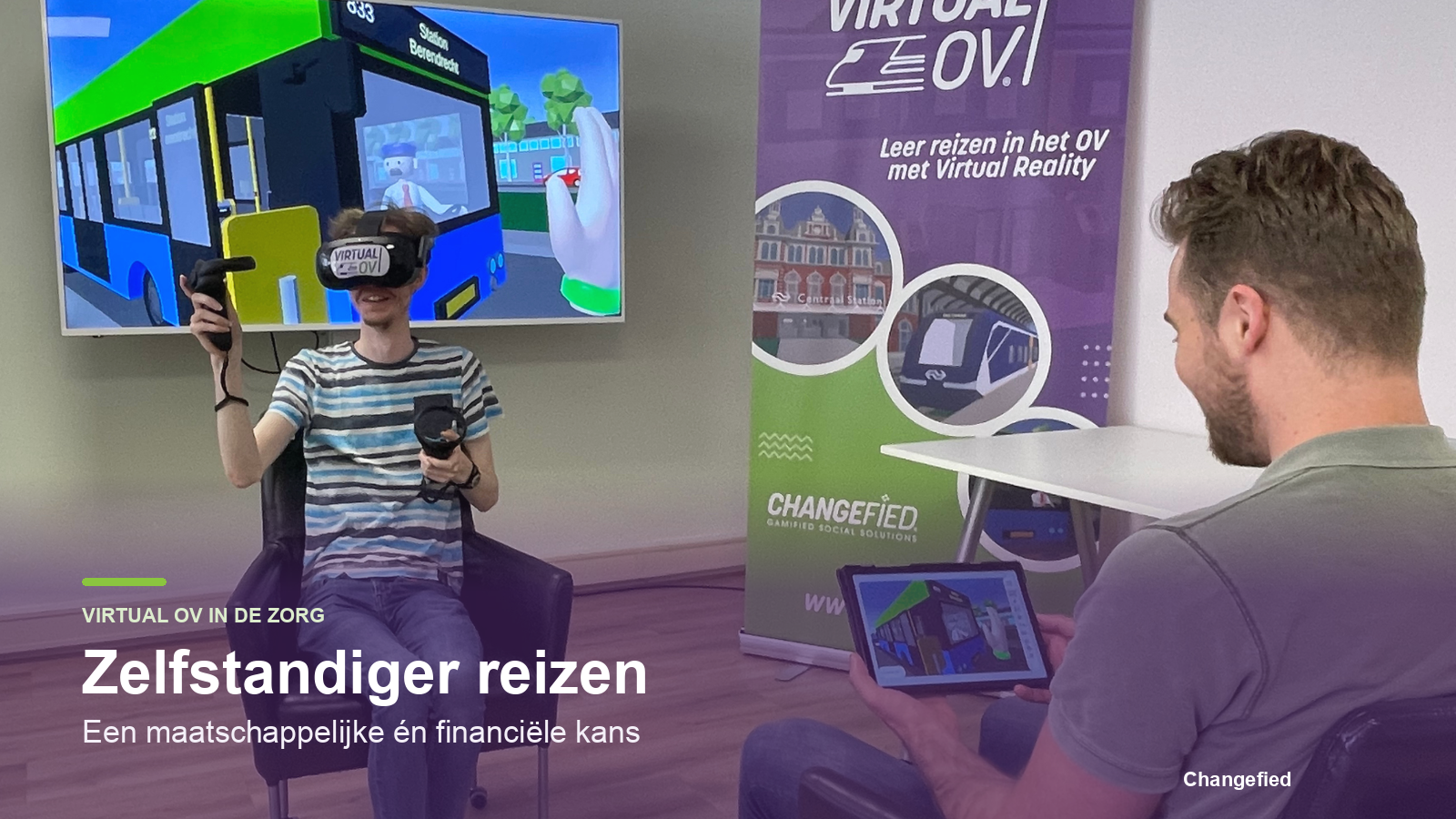
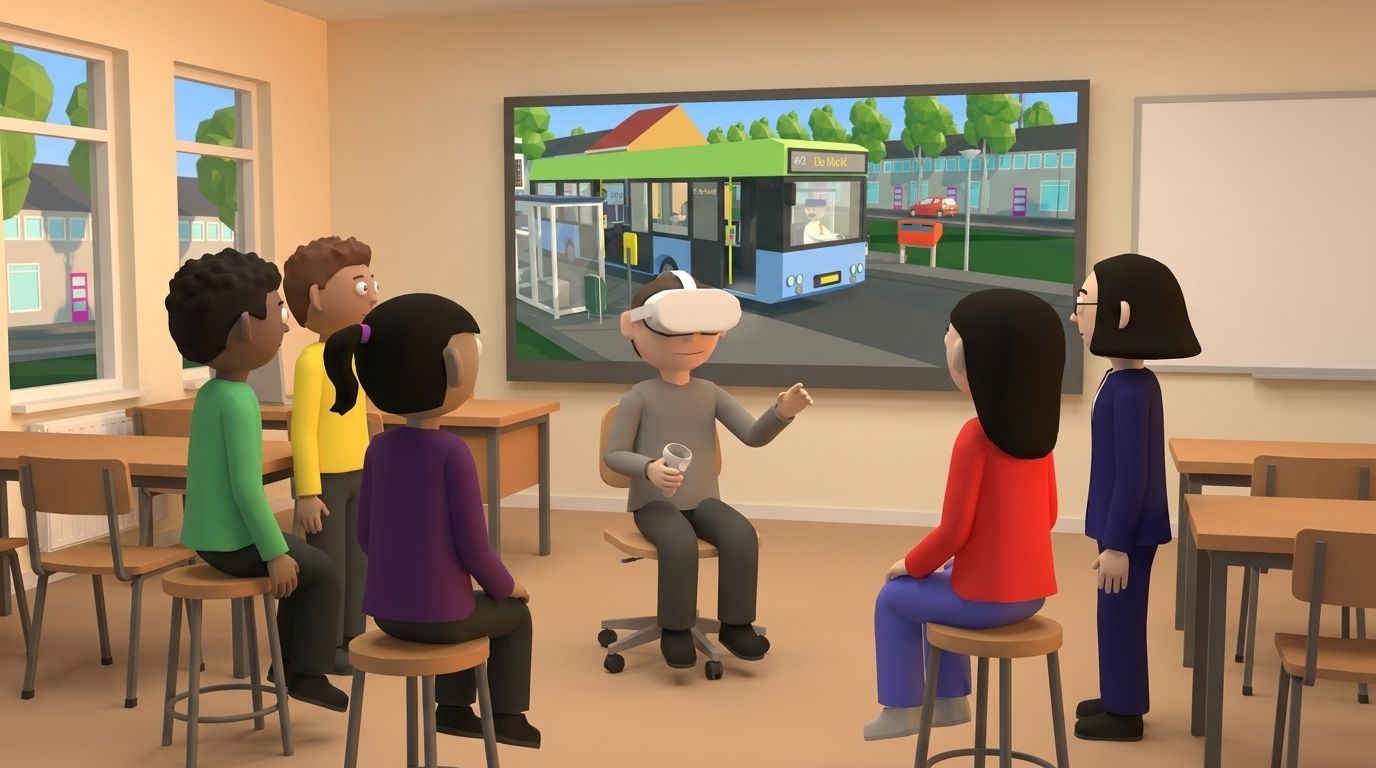
Virtual OV is a VR training platform specifically designed for neurodivergent travelers. Using 6DoF (6 Degrees of Freedom) technology, participants train their procedural memory and executive functions, essential for learning public transport skills.
What makes Virtual Public Transport unique?
✅
Realistic simulation: Participants practice in an
accurate imitation of real public transport situations, such as:
- Greeting the bus driver
- Interactionwith conductors
- Wait until passengers have disembarked before boarding
- Dealing with unexpected events (e.g. delays or crowds)
✅
Safe and repeatable: Making mistakes is allowed – and even encouraged – without consequences. Participants can practice as much as needed until they feel confident.
✅ No cloud storage, but privacy: Virtual OV uses standalone VR headsets, ensuring sensitive data remains local and privacy is guaranteed.
✅
Measurable results: The training is testable and measurable, so that progress becomes visible to facilitators and participants.
The benefits for special education and care
1. Increase self-reliance
Virtual OV aims for self-reliance (independent travel) for neurodivergent travelers. Experience shows that participants make the transition to independent public transport use faster and more confidently after training with Virtual OV. For instance, Changefied has already trained 3,000 young people in the Virtual OV project, of whom at least 25% made the switch from school transport to regular public transport sooner than usual.
2. Inclusivity and accessibility
- Adapted to individual needs: The training can be flexibly deployed for various target groups, such as people with autism, acquired brain injury, or wheelchair users.
- Reduction of social anxiety: By practicing in a safe environment, participants build confidence before taking the step into the real world.
3. Cost efficiency for organizations
- Savings on in-person guidance: Less dependence on real-life 1-on-1 guidance.
- Scalable: Multiple participants can train simultaneously, without extra logistical costs.
- Long-term impact: A one-time investment in VR hardware and software yields years of use.
Virtual public transport in practice: A case study from education
During the
Appropriate Education Platform Day in Amersfoort (March 26, 2026), Changefied, together with Joke de Haan, presented the workshop 'Virtual OV/Virtual Empowerment'. This demonstrated how schools and care institutions use Virtual OV to
hard-to-reach youth . An example:
- Target group: Students with autism at a VSO school (Special Secondary Education).
- Challenge: Many students did not dare to travel by bus independently due to fear of unpredictable situations.
- Solution: With Virtual OV, they practiced
step-by-step in a virtual bus until they felt safe to try it in real life.
- Result : Within a few weeks, several students made
their first public transport trip independently
Future: Virtual Empowerment and beyond
Virtual OV is just the beginning. Within the
Virtual Empowerment platform , Changefied is working on extensions such as:
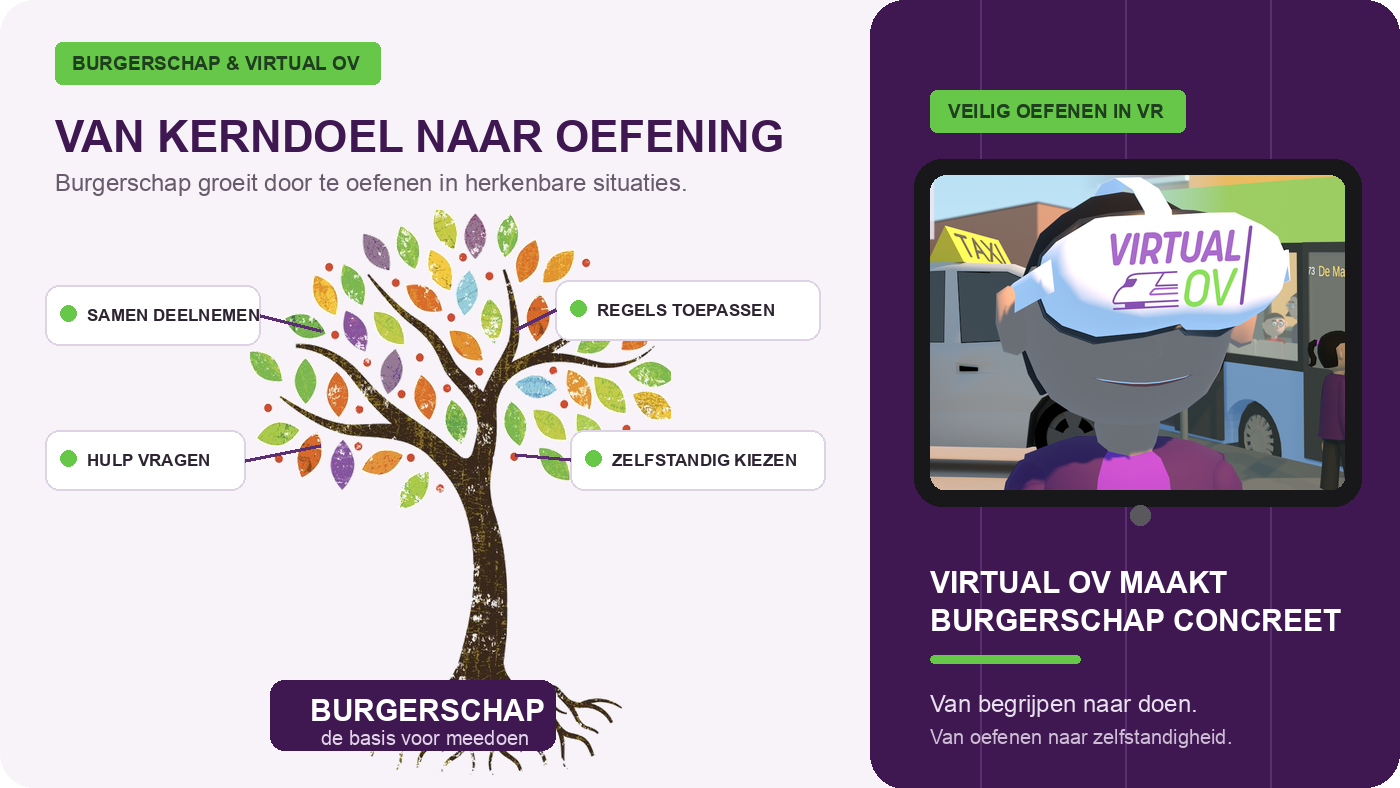
- Citizenship: Training in social skills and civic participation.
- Living at home: Practicing household chores and independent living.
- Crisis-ready: Preparing for emergencies (e.g., floods or power outages).
Conclusion: Why Virtual Public Transport is the future of public transport travel training
Virtual OV proves that
practicing safely in a virtual environment is not only possible, but also
more effective and efficient than traditional methods. For innovation managers and care coordinators, it offers:
✔
A safe, repeatable learning environment
✔
Measurable results and self-reliance
✔
Cost-efficiency and scalability
Curious how Virtual OV can help your organization? Contact Changefied and discover the possibilities.
About Changefied
Changefied BV develops
high-quality, engaging learning materials for everyone, with a focus on
neurodiversity, inclusivity, and social skills. Our solutions, such as Virtual OV and Virtual Empowerment, are used by schools, healthcare institutions, and government bodies throughout the Netherlands.