For years, we have been flooding studentswith information: lessons, PowerPoints, books, online modules. Much of it sticks only briefly. Not because students don't want to learn, but because their brains are made to learn by doing. Virtual Reality (VR) aligns seamlessly with this: it turns learning back into an active experience instead of a passive listening moment.
From consuming knowledge to experiencing knowledge
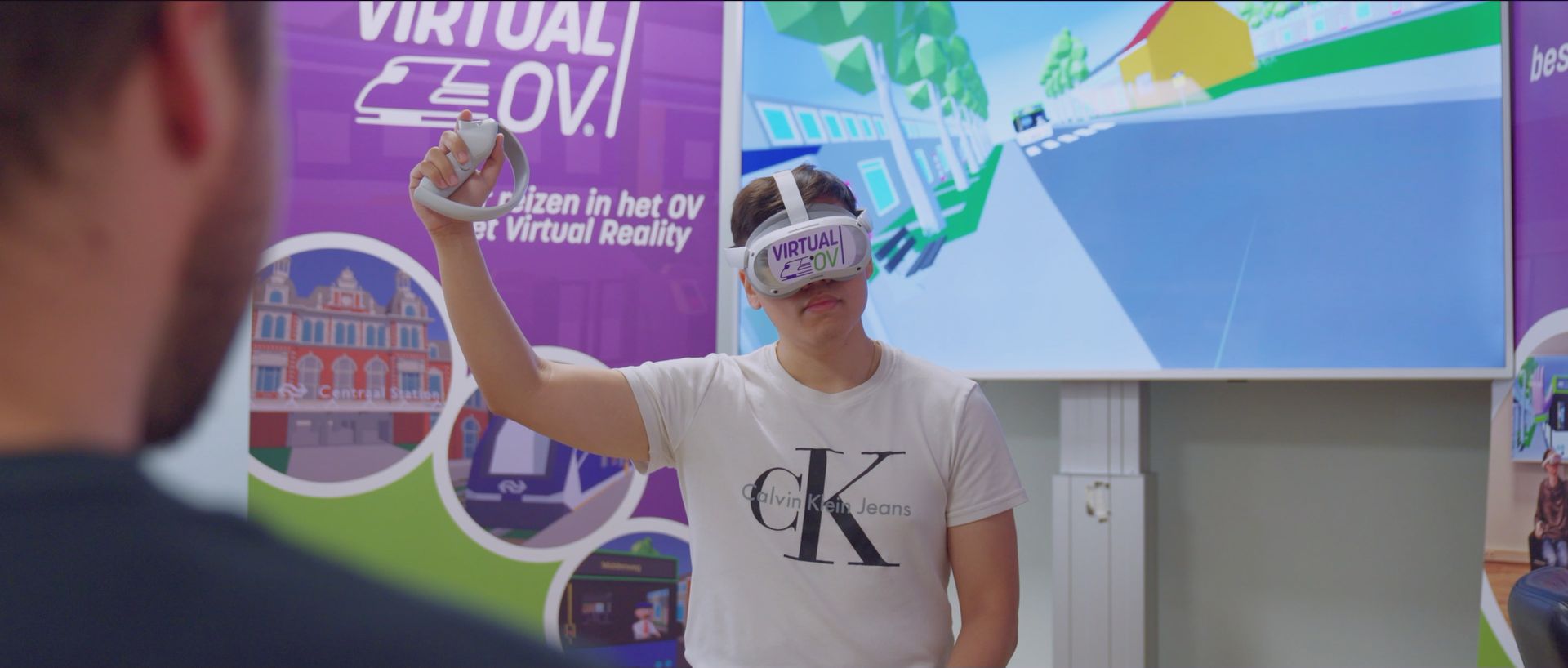
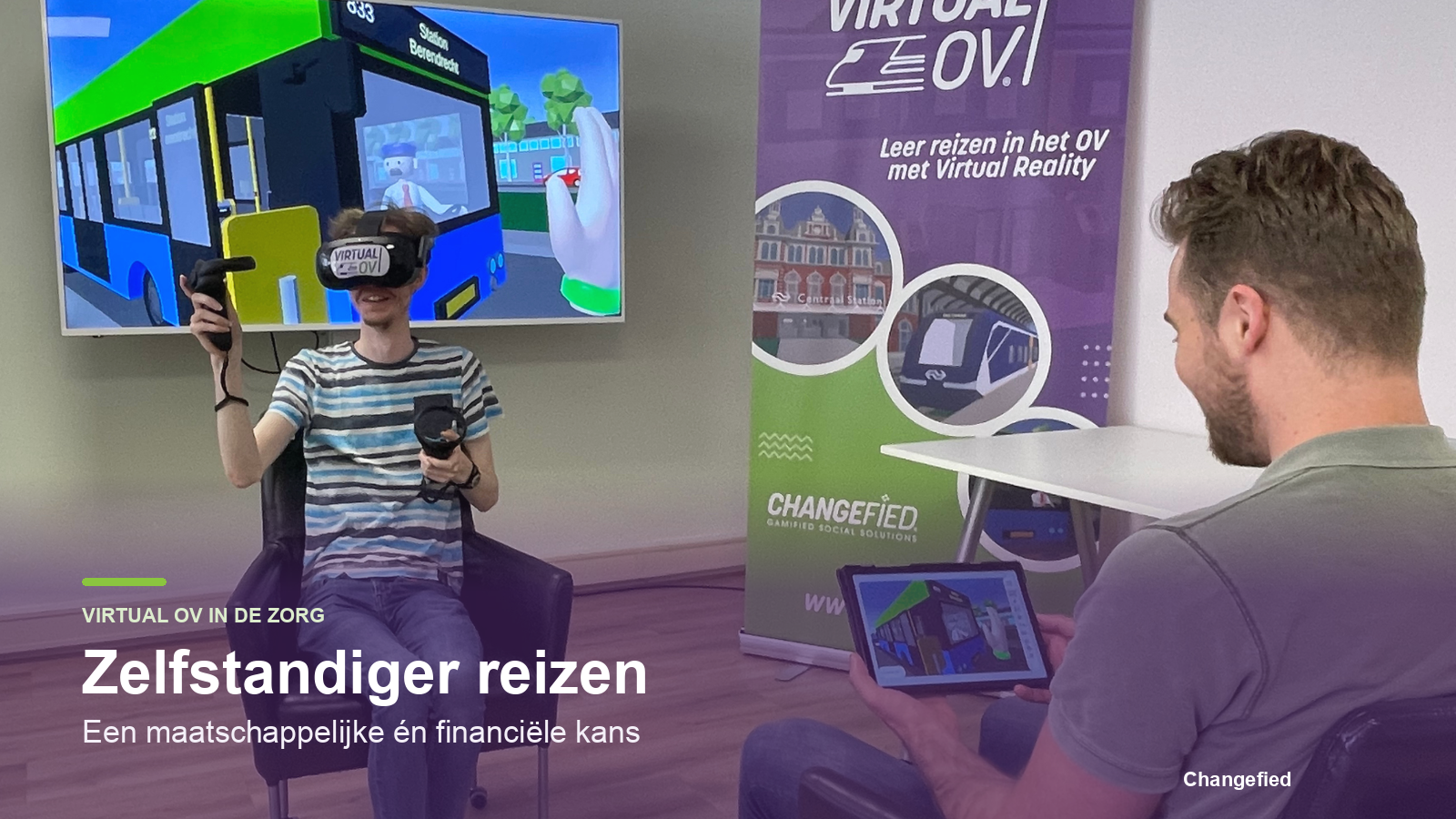
In traditional lessons, students listen, read, or watch a video, remaining largely passive. The brain then remains largely a spectator. In VR, students step into the middle of a situation: they look around, make choices, solve problems, and immediately experience the consequences.
That active role makes all the difference. The body responds, emotions are stimulated, and multiple senses are engaged. This allows for deeper processing in the brain and increases the likelihood that knowledge and skills will stick.
The attention span of today's student
The attention span of today's students is more fragmented than ever, partly due to digital stimuli, social media, and a constant flow of information. Many young people find it difficult to listen to an explanation for twenty minutes straight or to work on a single task for an extended period. Research shows that attention spans don't shrink linearly, but rather fluctuate significantly and are sensitive to variation, task structure, and engagement.
This is precisely where active learning in VR aligns: students aren't sitting idle, consuming, but are constantly doing something – choosing, acting, responding. The alternation of short scenarios, clear goals, and immediate feedback helps to capture and maintain attention repeatedly. Instead of fighting a short attention span, you capitalize on it: compact, meaningful learning moments that follow each other quickly, in an environment that feels like a game rather than a head-to-head lecture.
Active learning triggers other parts of the brain
Active learning with VR combines multiple learning mechanisms simultaneously.
- Contextual learning: you learn in the situation in which you later need the knowledge or skill, which increases transfer to practice.
- Procedural learning: you practice actions step by step, so that “how to do it” is stored as an automatic routine.
- Emotional learning: tension, relief and successful experiences strengthen memory and motivation.
While a theoretical worksheet primarily appeals to declarative memory ("knowing that"), VR also focuses on procedural and emotional memory ("knowing how" and "feeling that"). This makes the step from theory to practice much easier.
Making mistakes safely and repeating endlessly
In real life, practicing is often expensive, difficult to organize, or simply too risky. In VR, you can:
- Making mistakes without real consequences.
- Consciously seeking out and repeating difficult situations.
- Adapt scenarios to the student's level and pace.
This shifts the focus from "getting it right the first time" to "learning through trial and error, failure, and adjustment." This reduces fear of failure and boosts self-confidence, especially for students who quickly drop out in traditional learning environments.
Higher involvement and intrinsic motivation
Active learning in VR feels less like a "lesson" and more like an experience or mission. Students receive clear goals, immediate feedback, and often game elements like points, levels, or challenges. This ensures:
- More focus and less distraction during the learning task.
- Intrinsic motivation: wanting to discover instead of having to absorb.
- Better connection with how young people already interact with digital worlds in their free time.
When students are involved and in control, the teacher's role shifts from transmitter to coach.
The role of the teacher in a VR learning environment
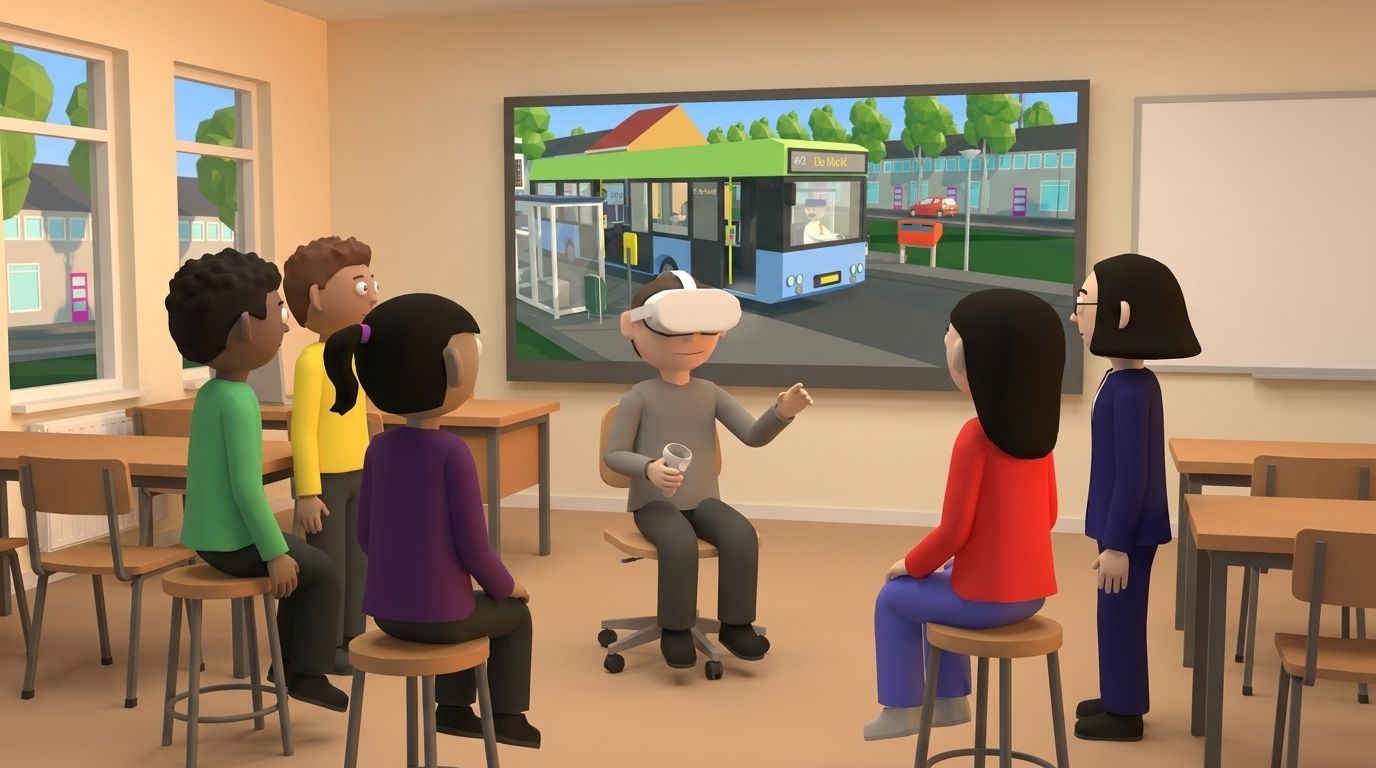
VR doesn't replace the teacher; it changes the dynamic of the lesson. The greatest impact occurs when VR is combined with effective guidance and reflection:
- Beforehand: formulate learning goals together – what are you going to practice and why?
- During: observe, ask questions, have students express what they do and think
- Afterwards: reflecting on choices, feelings and lessons learned, and translating them into the real world.
In this way, active learning in VR does not become a separate gimmick, but a powerful part of a well-thought-out didactic approach.
Active learning in VR is no longer a pipe dream
While VR was considered a "nice to have" a few years ago, it's increasingly becoming a logical component of modern learning environments. The technology has become more affordable, the range of teaching materials is expanding, and schools are seeing that the impact lies not only in the "wow factor," but primarily in:
- Deeper understanding of complex situations.
- Better memory through experience and repetition
- More confidence in practical application.
Active learning with VR shows what education can look like if we take the brain seriously: less transmitting, more experiencing. Not just knowing, but being able to. And above all: daring.
Do you want to use VR for better learning?
Changefied has been developing VR learning solutions for years that cater to the short attention spans and active learning styles of modern students. From executive functions to procedural skills: we create VR that truly works in education.
Discover how Changefied makes active learning accessible – step by step, level by level.