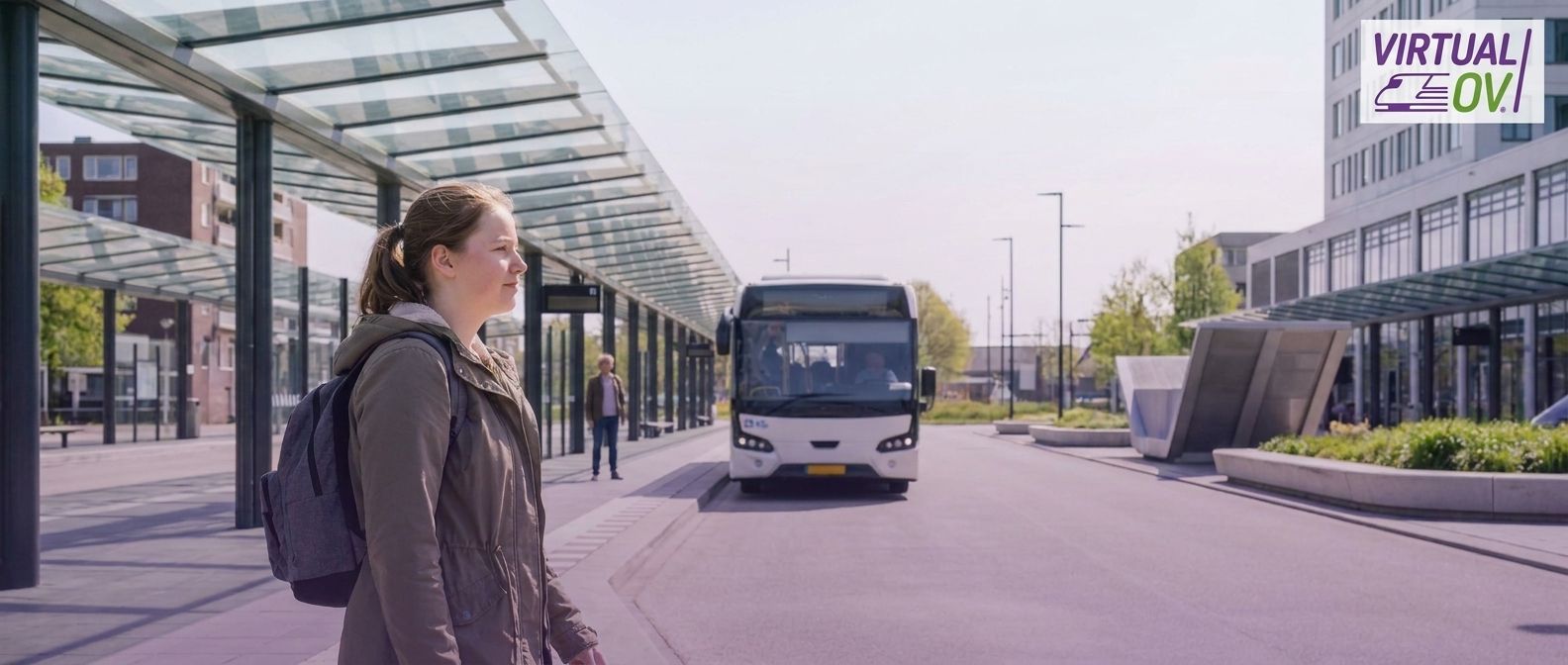
Citizenship education in special secondary education (VSO) and vocational secondary education (MBO) goes beyond theory. It revolves around practical skills: can students take the bus to school or their internship independently? Do they know how to handle unexpected situations on the way? Do they dare to ask for help when needed? These basic skills are essential for full participation in society. For many students—particularly neurodivergent youth—this is a big step. How do you give them the confidence and the tools to take this step?
From theory to practice: Learning by doing
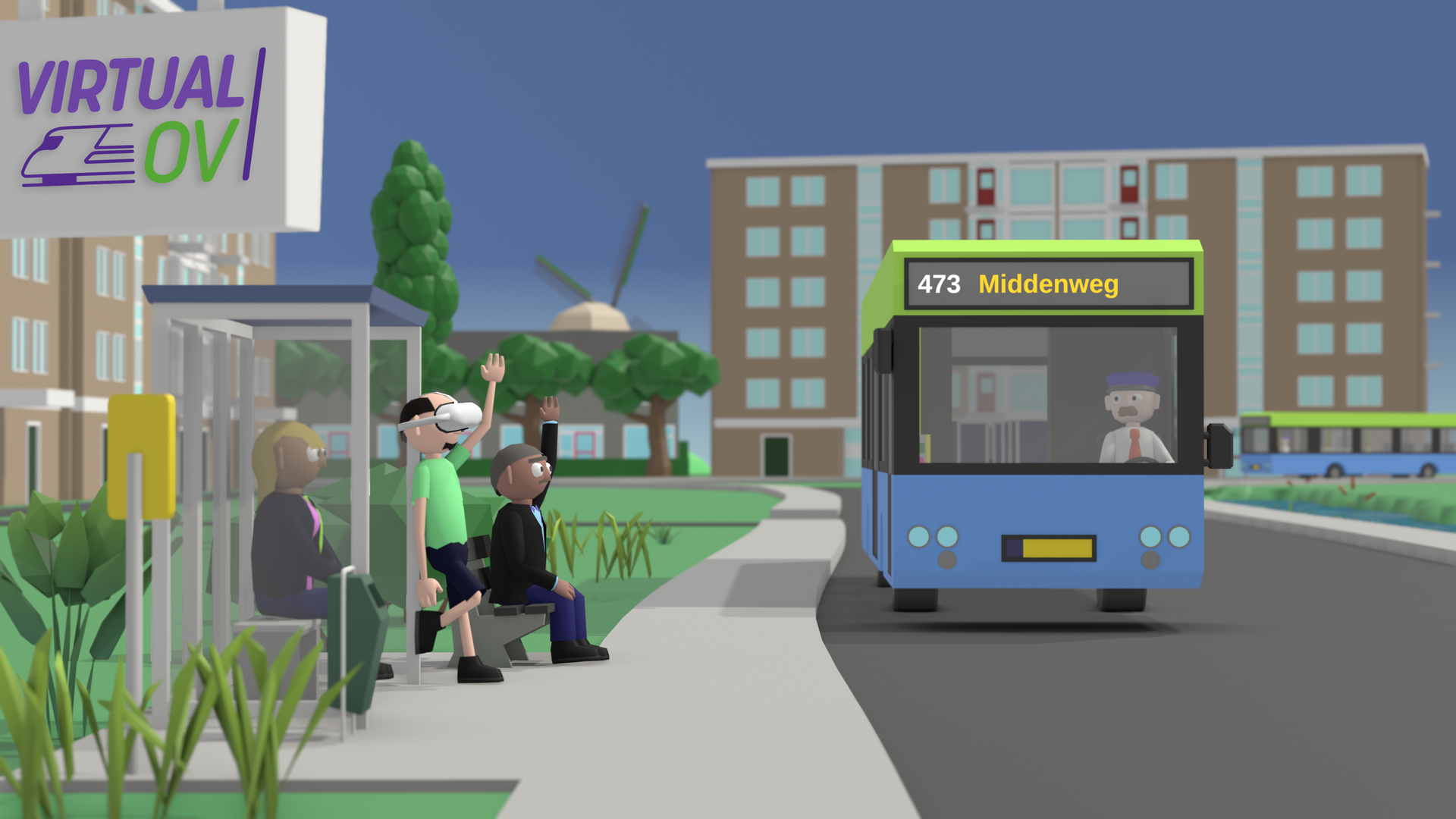
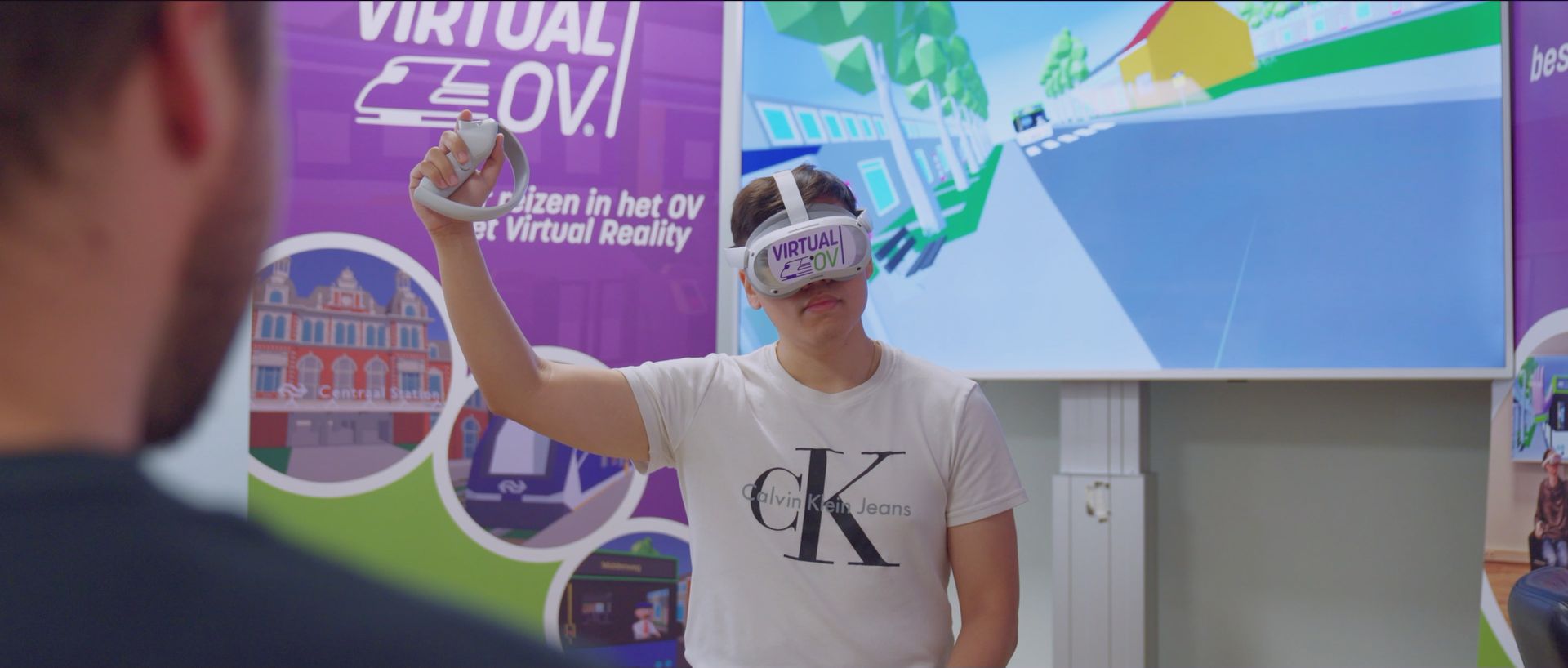
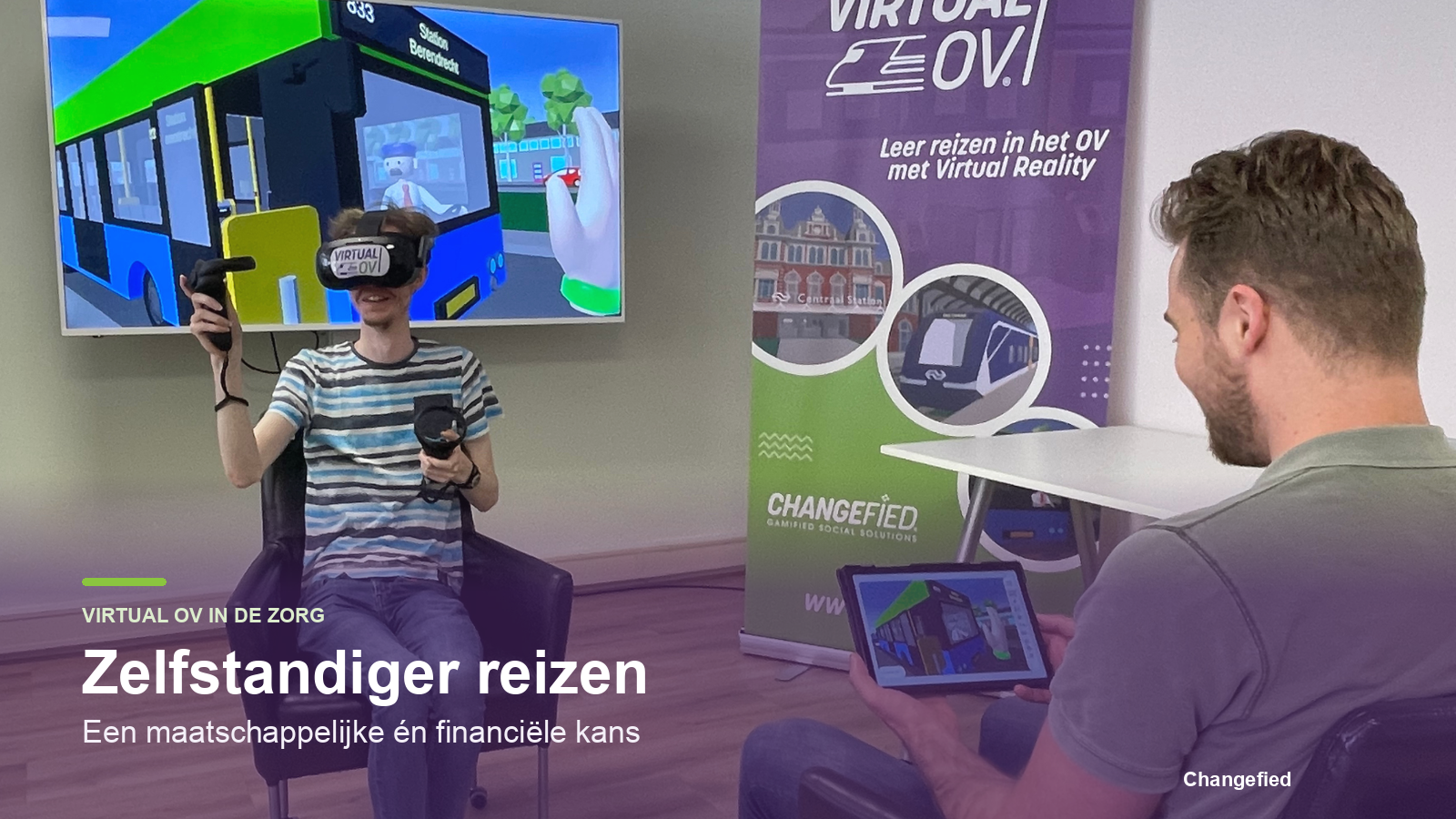
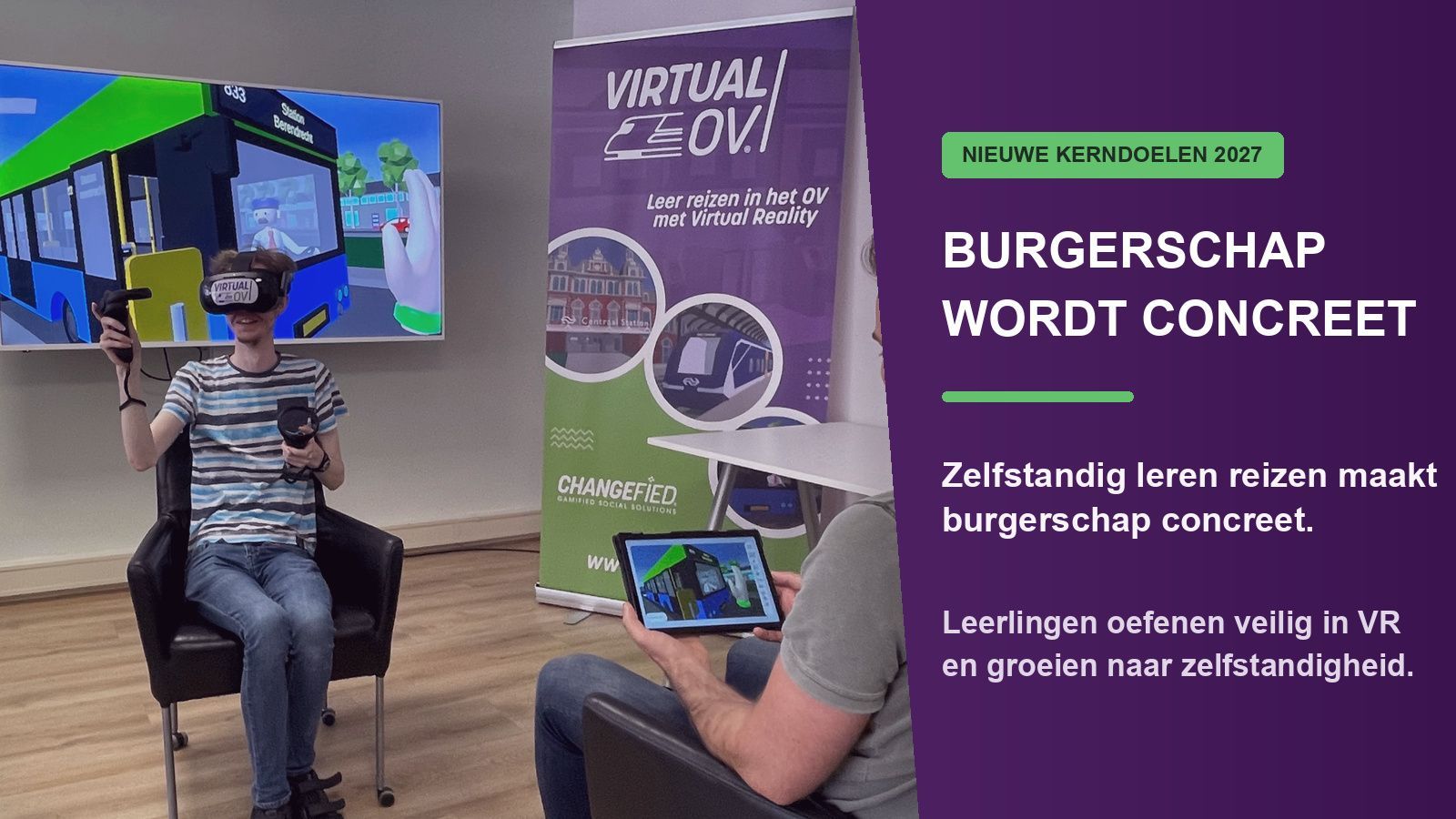
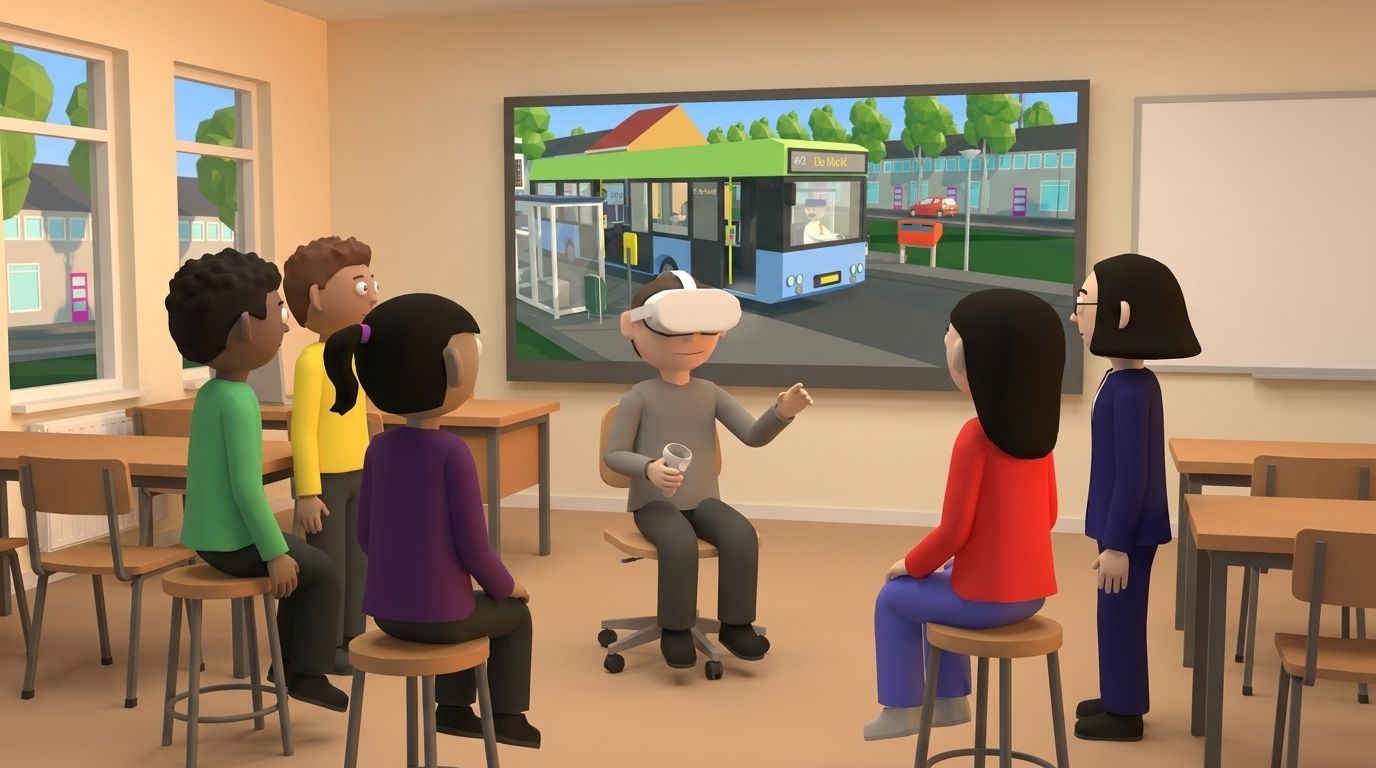
Traditional citizenship education often remains abstract: talking about norms, discussing respect, or practicing role-playing in the classroom. But true self-reliance is learned through experience. Virtual OV offers a safe and controlled environment in which students can practice situations they encounter on public transport. Think of:
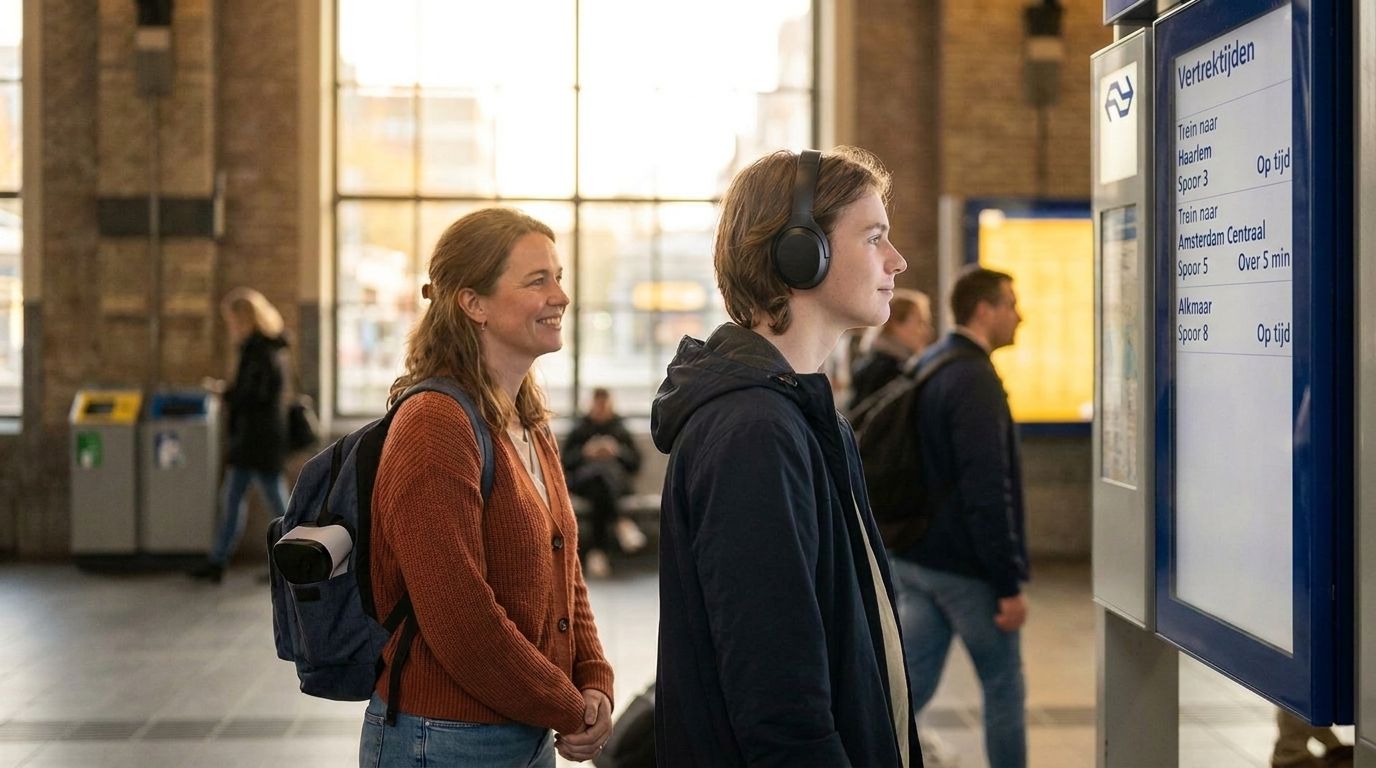
- Buying a ticket at the machine while people are waiting behind you.
- Dealing with delays or an unexpected diversion.
- Make contact with a bus driver or fellow passenger, for example to ask where to get off.
- Responding to social situations, such as someone asking you to move over or striking up a conversation.
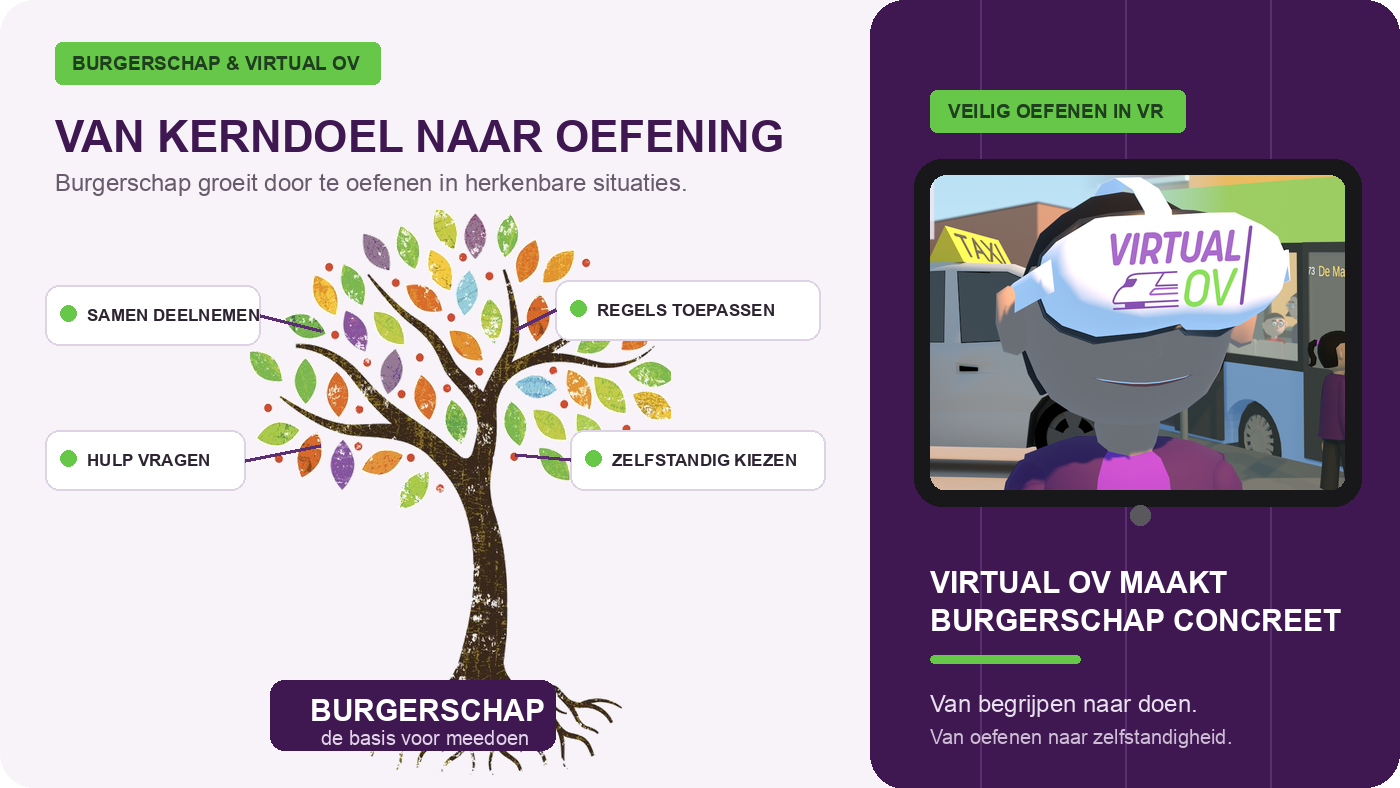
These situations are not only practical but also touch upon core values of citizenship: respect, responsibility, and the ability to hold your own in a complex world.
Self-reliance as the foundation for citizenship
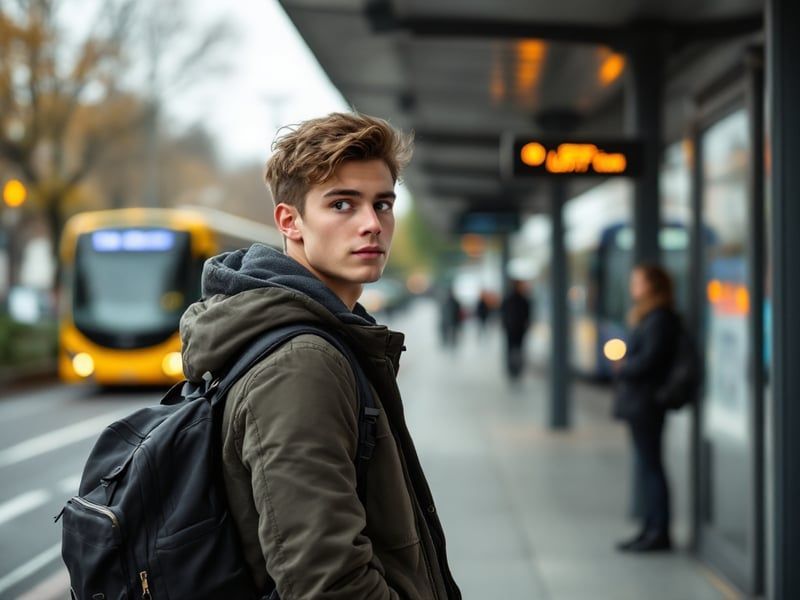
Self-reliance is not an end in itself, but a prerequisite for active citizenship. If a student cannot travel independently, this limits his or her opportunities to attend school, internships, work, or social activities. This has direct consequences for participation in society. Virtual OV helps young people overcome these barriers by gradually familiarizing them with the challenges of public transport.
How does that work in practice?
- It is okay to make mistakes: In Virtual OV, students experience what happens when they make a wrong choice – without real consequences. For example, they learn that it is okay to hesitate for a moment when boarding, or that they can feel free to ask again if they don't understand something.
- Repetition and feedback: Students can repeat situations as often as necessary until they feel confident. Through anonymized data, teachers see how students are making progress: are they quicker to ask a question? Are they able to make eye contact? These insights help to provide targeted coaching.
- Self-direction: By making their own choices in the VR environment, students experience what it means to take responsibilityfor their own actions – an essential skill for citizenship.
From self-reliance to active participation
When students realize that they can travel independently, not only their practical skills but also their self-confidence grows. That confidence radiates into other areas:
- They dare to take new steps, such as setting out alone to an unknown place.
- They feel more competent in social situations, which strengthens their participation in the classroom, during internships, or in their free time.
- They develop a sense of self-worth: I can do this. I belong.
Virtual public transport is not an end in itself, but a means to help young people discover their own potential. It is a springboard to independence and social participation. By letting young people experience that they can handle challenges, you give them the tools to continue growing – not only in public transport, but in all aspects of their lives.
The role of the teacher: Shaping citizenship with Virtual Public Transport
Virtual Public Transport is not a replacement for traditional citizenship education, but a powerful addition. Teachers can link the VR experiences to broader themes:
- Respect and etiquette: Discuss after a VR session: How did it feel to ask for help? Why is it important to be polite to fellow travelers?
- Rights and obligations: What does it mean to be 'a good traveler'? How do you contribute to a pleasant atmosphere on the bus or train?
- Inclusion: How can we ensure that everyone can participate in public transport, including people with disabilities?
By holding these conversations after the VR experience, citizenship education becomes concrete and personal. Students see directly how abstract values such as respect and responsibility take shape in their daily lives.
Virtual Public Transport: A valuable addition to citizenship education
Virtual Public Transport is more than a tool for learning to travel. It is a practical and experience-based method to strengthen self-reliance and citizenship. By letting young people experience that they are capable, you not only give them skills, but also the courage to put those skills to use – on public transport, at school, and in their further development.
In summary:
Virtual OV is a practical and innovative way to strengthen self-reliance and citizenship in special secondary education (VSO) and vocational secondary education (MBO). It offers students the opportunity to practice situations they encounter in real life in a safe environment. This increases their self-confidence, enabling them to participate more actively and independently in society.