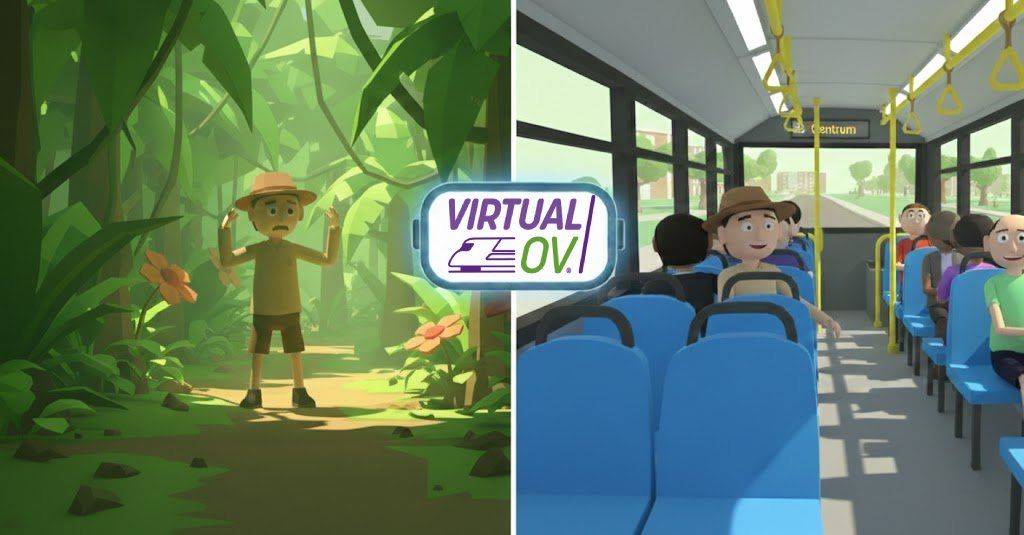
Public transport is a social jungle for everyone, full of unwritten rules: eye contact, maintaining distance, asking for help, or responding to unexpected interactions. Many travelers navigate this intuitively, but for neurodivergent people, it feels different—more overwhelming due to sensory processing, social uncertainty, and fewer automatic adjustments.
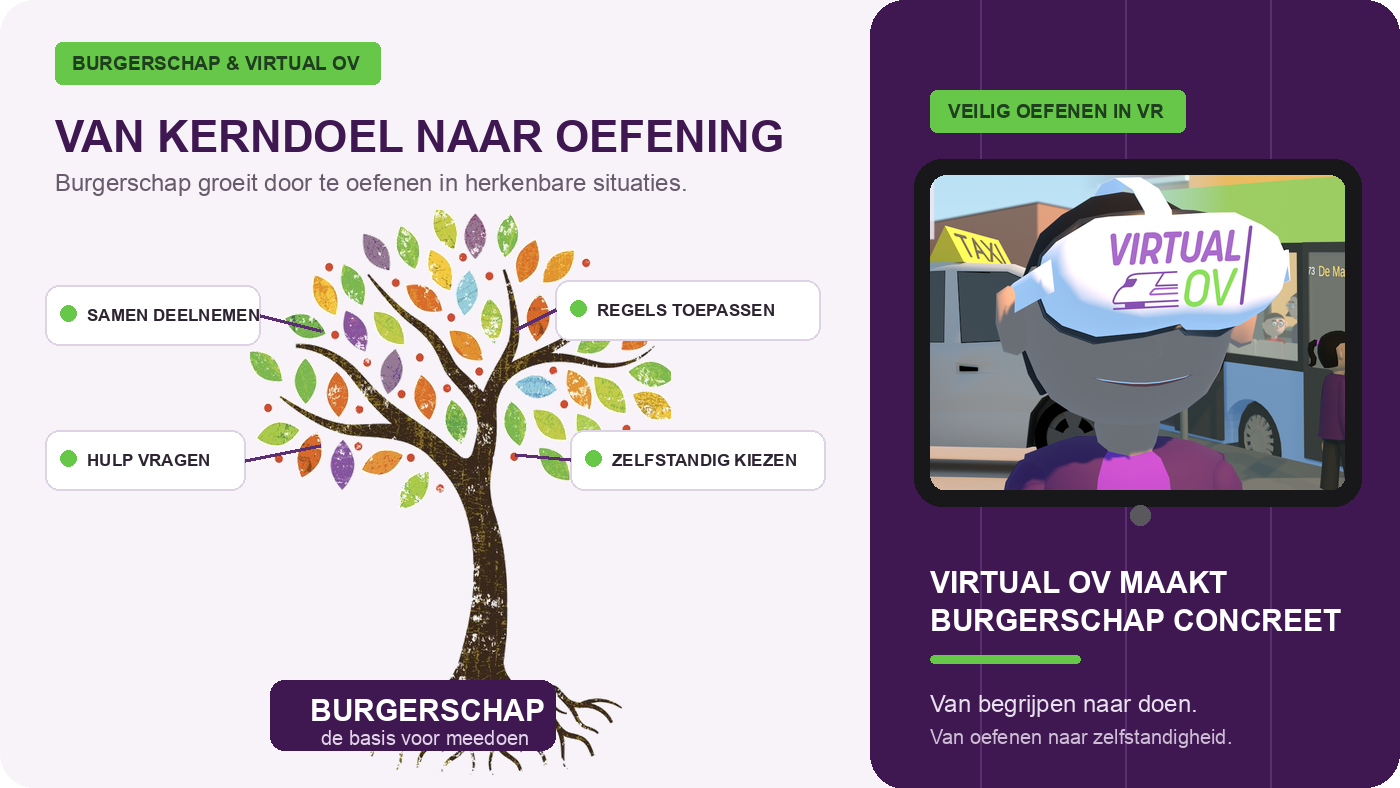
Virtual Public Transport uses Virtual Reality (VR) to safely tame this jungle, focusing on social skills. This way, we make independent travel feasible.
Public transport as a social jungle
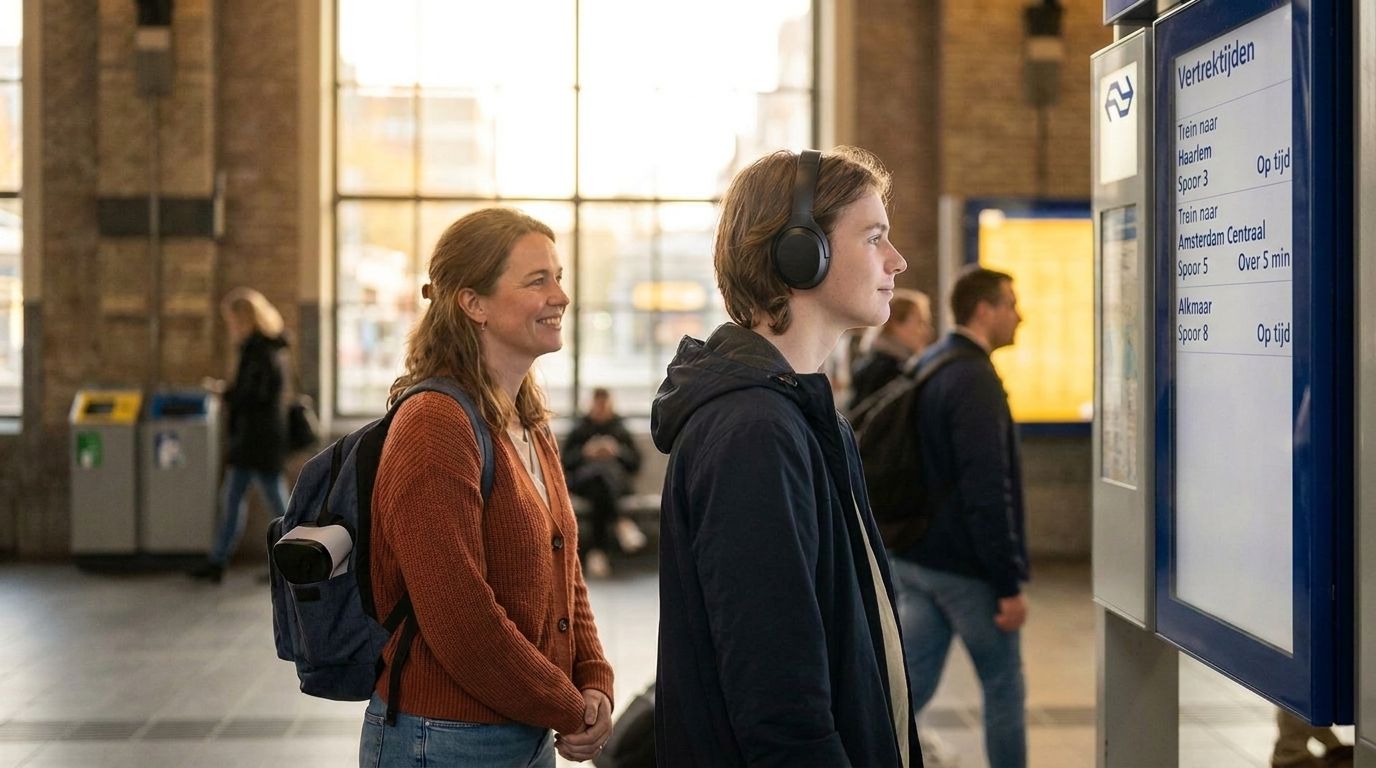
Traveling by public transport revolves around both practice and interaction: greeting a driver, a conductor checking your ticket, crowds on the platform, or an announced delay. For many people, these are automatic; for neurodivergent travelers, they're often a source of stress, because the social rules remain implicit while they're explicitly necessary.
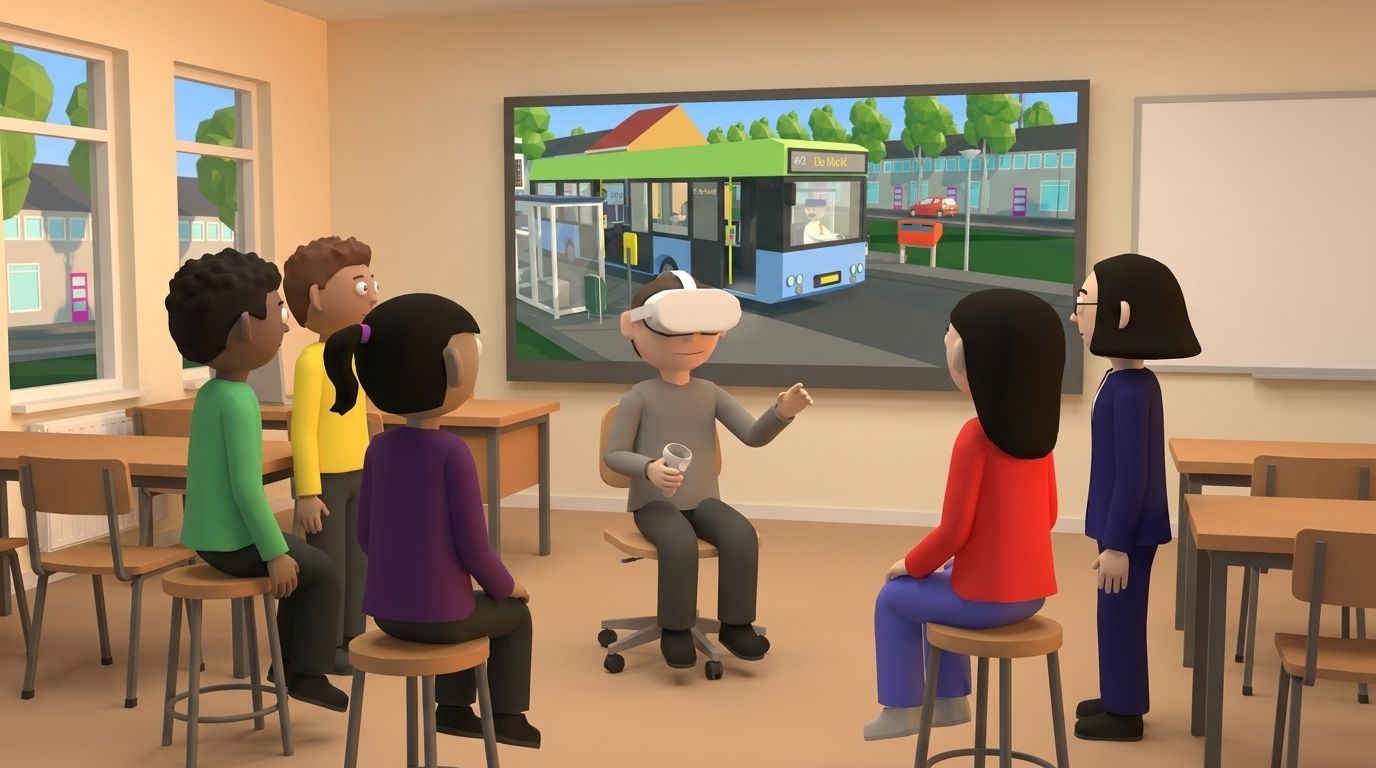
Traditional training helps, but lacks the realism and stimulating context of a bustling station or a full bus. Virtual Public Transport realistically simulates this social jungle: a fellow traveler sitting too close, having to ask someone for help during a diversion, or being called out on your behavior.
Research shows that VR can reduce anxiety and strengthen social skills in these types of contexts.
What exactly does Virtual OV do?
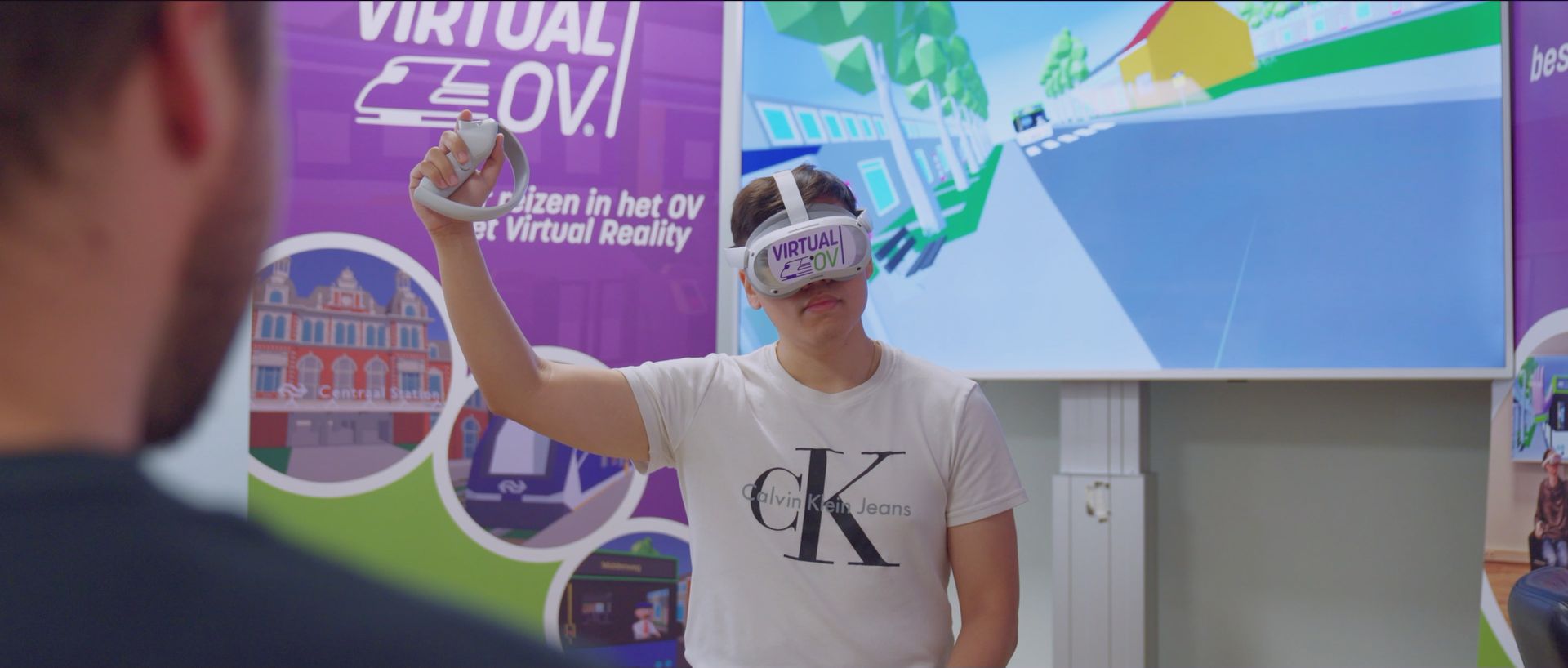
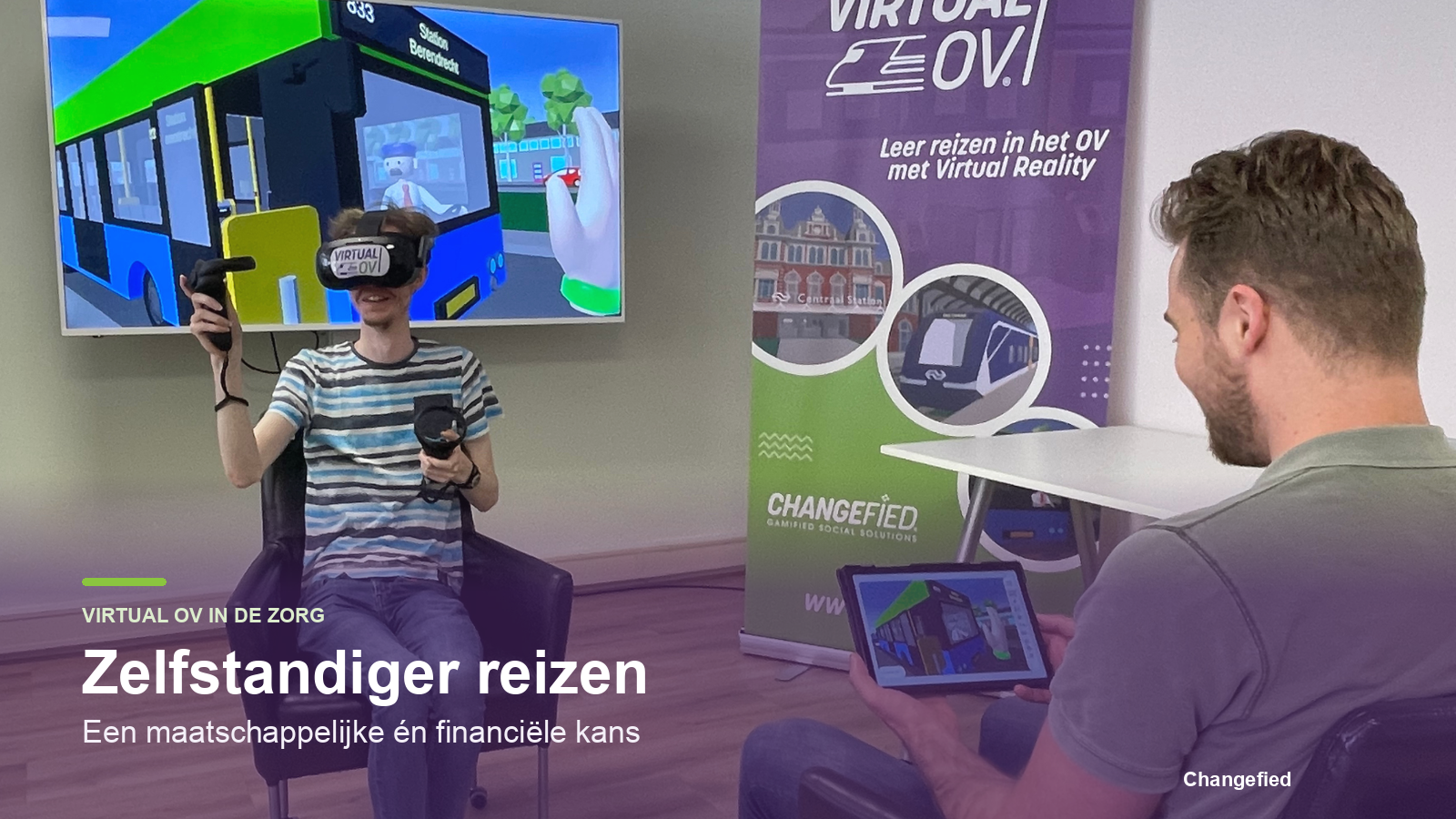
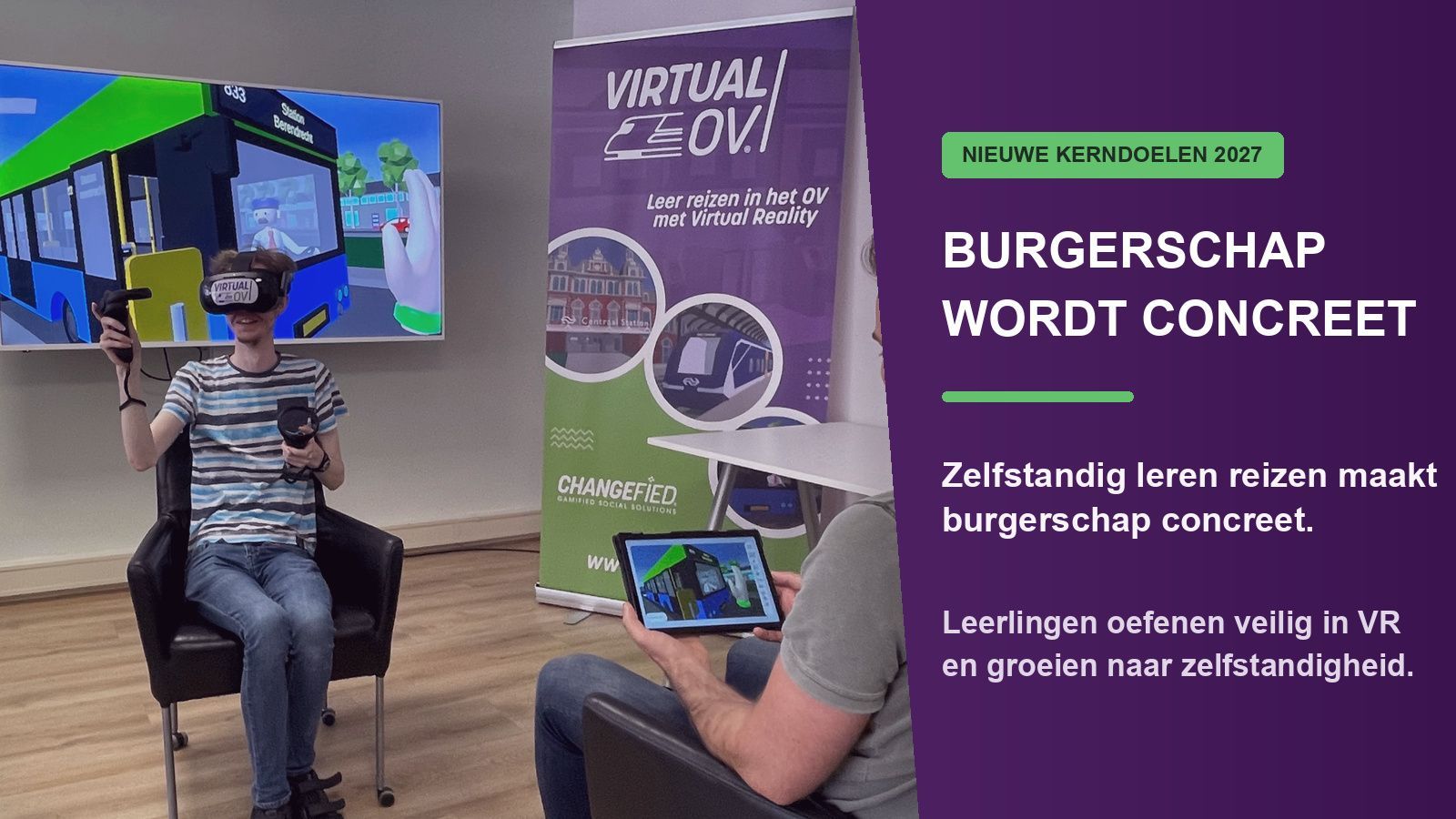
Wearing VR headsets, participants practice in a controlled environment: boarding, route planning, and, most importantly, socializing. Scenarios build from relatively simple (sitting quietly, getting used to the surroundings) to more complex interactions (asking for help, responding to questions or comments).
Three elements are important for training social skills:
- Safe practice space.
Making mistakes has no real consequences. A difficult interaction can be repeated as often as necessary, reducing stress and building self-confidence. - Feedback and reflection
Guides can provide targeted feedback: “What felt difficult? What worked?” In some VR applications, a kind of inner voice or coach is used that helps make social rules explicit during or after the situation. - Customization and structure
Scenarios can be adapted to the level and specific needs: first just greeting, then asking a short question, and later dealing with unexpected stimuli or changes.
From VR to real rides
Virtual public transport is a stepping stone to practical application, not a goal in itself:
- VR practice: getting familiar with the social jungle and typical interactions.
- Guided rides: experiencing the same kinds of moments in real life, together with a coach.
- Reflection: compare what was practiced in VR with what happened in real life, and identify successes.
- Independence: growing step by step from asking for help to (partly) navigating independently.
Participants recognize situations and locations and respond more calmly: “I know this from VR, I know what to do.” Studies of VR training of everyday skills show that such practiced situations can be transferred to the real world.
Technology for inclusion
Virtual public transport combines technological innovation with social impact: VR as a bridge to participation. For (special) education, healthcare organizations, and municipalities, this presents an opportunity to strengthen inclusion – especially for people with mild intellectual disabilities (ID), autism, language disorders (SLI), or acquired brain injury (ABI), for whom the social aspects of public transport are the biggest barrier.
Contact us for a demo or pilot – together we'll tame the social jungle and make social interactions on public transport more manageable.