
Zelfstandigheid en mobiliteit voor cliënten in de zorg en ambulante begeleiding
For care clients or people receiving outpatient support, independence in daily life is essential. Traveling by public transport can play an important role in this, but often also constitutes a barrier. Virtual OV offers a safe and effective way to lower this barrier.
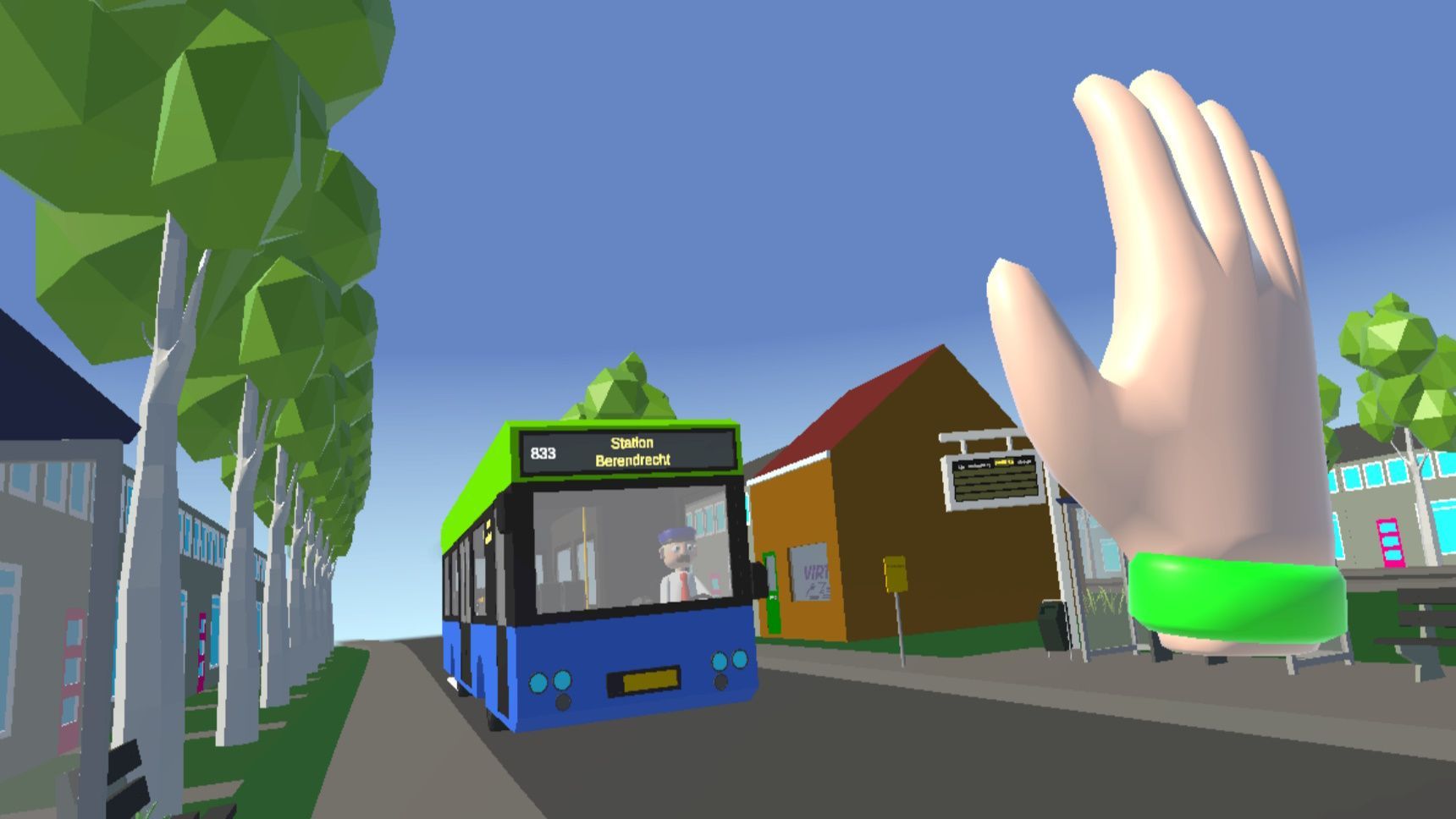
Virtual OV is a Virtual Reality solution that teaches clients the skills to use public transport independently and confidently. It goes beyond just public transport training; it stimulates essential skills needed for active and independent participation in society.
Why Virtual Public Transport?
Your clients can practice various scenarios and situations they might encounter on public transport in a safe, virtual environment. Think of buying a ticket, finding the right bus or train, or dealing with delays. This increases confidence and reduces anxiety.
In addition, Virtual OV can be adapted to the individual needs and pace of the client. This allows you to tailor the training and monitor progress.
Virtual OV: passend binnen uw zorgaanbod
Virtual OV sluit naadloos aan bij de doelstellingen van Wlz en Wmo, zoals het bevorderen van zelfredzaamheid en participatie. De training kan worden geïntegreerd in zorgplannen en is financierbaar via:
- Wlz (Wet langdurige zorg) Voor cliënten met een zware beperking kan Virtual OV worden opgenomen in het zorgplan als onderdeel van behandeling of begeleiding.
- Wmo (Wet maatschappelijke ondersteuning) Voor cliënten met een lichtere beperking kan Virtual OV vallen onder Wmo-financiering, gericht op zelfredzaamheid.
- Flexibele inzet Virtual OV is aanpasbaar aan individuele zorgbehoeften en kan worden ingezet voor groepen.
Door cliënten zelfstandiger te maken, draagt Virtual OV bij aan efficiëntere zorg en dat kan op termijn ook kosten besparen voor uw instelling.
How does Virtual
OV in healthcare and outpatient support?
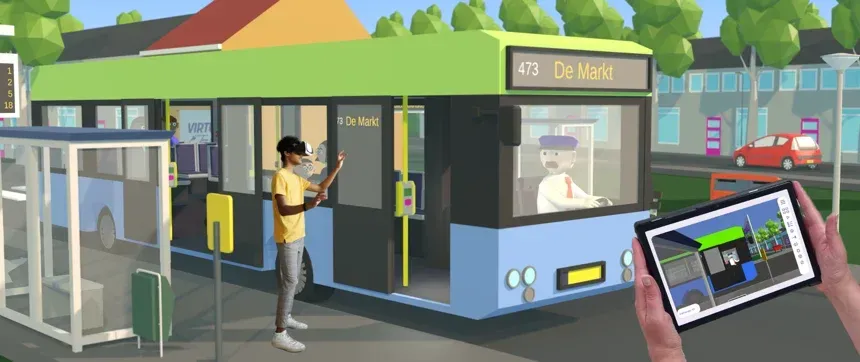
- Individual sessions: The client experiences the virtual environment with a VR headset.
- Guidance: The supervisor monitors progress via a tablet and can provide real-time feedback, repeat instructions, or adjust the simulation.
- Realistic scenarios: Clients practice various travel situations, such as planning a trip, buying a ticket, dealing with delays, and asking for help.
- Evaluation and progress: The supervisor evaluates the client's progress and adjusts the training where necessary.
“If you want to give them the world, teach them to travel.”
Behavioral expert Joke de Haan
"Traveling by public transport has given me the freedom I have now."
Former student - Spinaker Alkmaar
"Teacher, if I learn this, I'll be able to take the train to work later and won't have to take the bus anymore."
Student - The Chameleon Roosendaal
"Virtual public transport is a real game changer for our students."
Marloes Heidekamp - Kranenburg Practical Education
What makes Virtual Public Transport so effective is the fun factor. When our young people enjoy something, their responsive brain kicks in.
Dmitri Hazes – Head Care Alkmaar
Development of essential skills
Independence and self-reliance
Building confidence to travel independently and overcome obstacles.
Social skills
Practice interactions with fellow travelers, such as asking questions or offering help.
Executive functions
Planning, organizing and problem solving in a realistic context.
Procedural memory
Through repetition, routines become deeply ingrained, making them natural.
Virtual OVsupports travel buddies, coaches, and ambassadors
In practice, it is difficult to practice all unexpected situations (such as delays, cancelled buses, or changed platforms) during a training trip. Virtual Public Transport offers the solution: all scenarios are integrated into our learning platform, allowing travel buddies, coaches, or ambassadors to train with their clients in VR first. This enables them to safely and repeatedly practice all possible situations, as often as needed.
After the VR training, they will make one or more journeys in practice together with their client or student. Through this combination of preparation in Virtual Public Transport and guided practical experience, they build self-confidence and lower the threshold for taking the first step towards using public transport independently.
In Practice
Curious about what Virtual Public Transport looks like in practice?
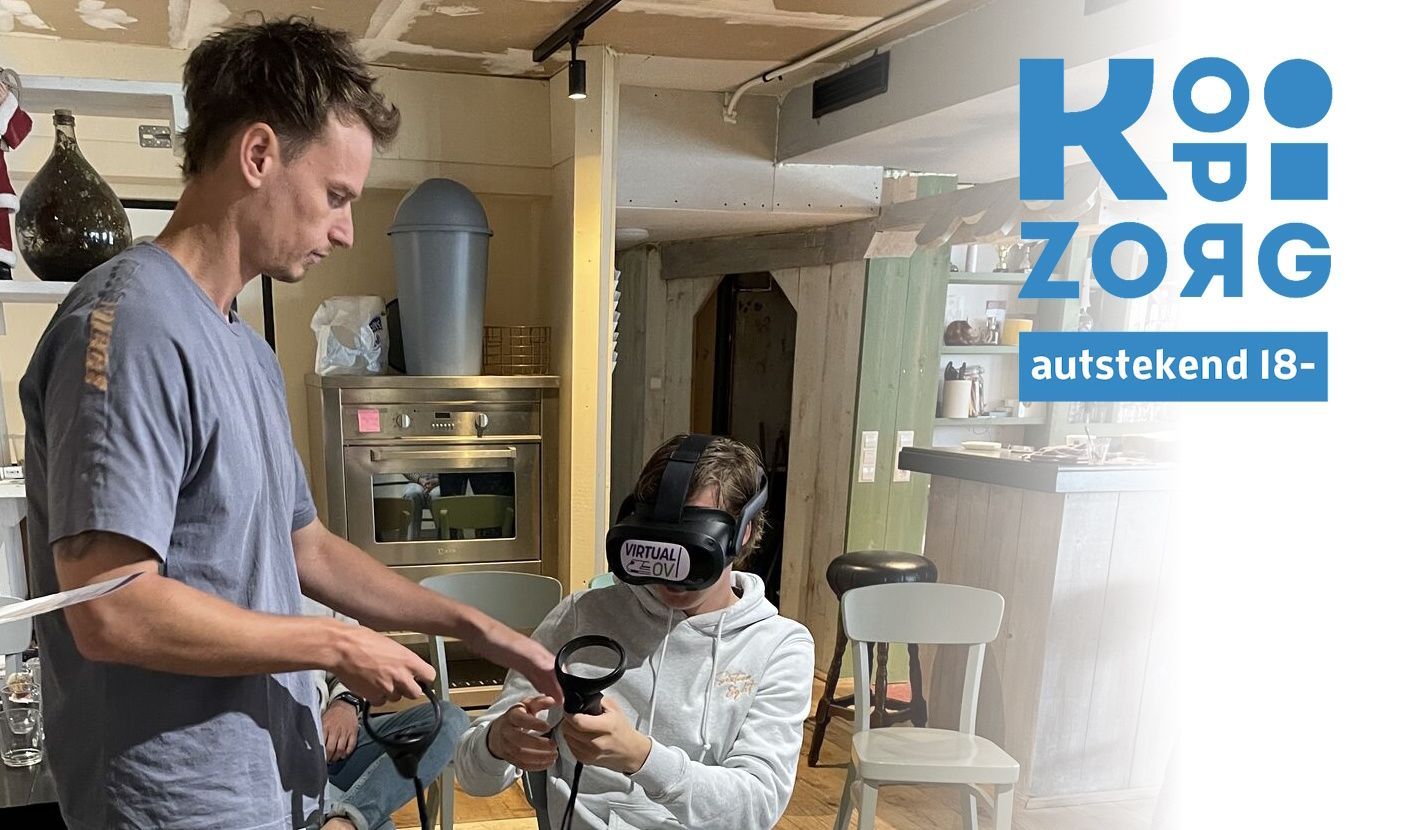
Outpatient counselor Dmitri from KopZorg shares how he uses Virtual Public Transport (VPT) with young people with autism, the power of playful learning, and how Virtual Public Transport helps to ease the transition to independent travel.
Read the story and discover the impact of Virtual Public Transport from the instructor's perspective!
Who we work with




Thank you for contacting us.
We'll get back to you as soon as possible.
We got it.
As excited as we are?
Let your clients learn to travel independently with
Virtual
Public Transport, for greater self-reliance and self-confidence.