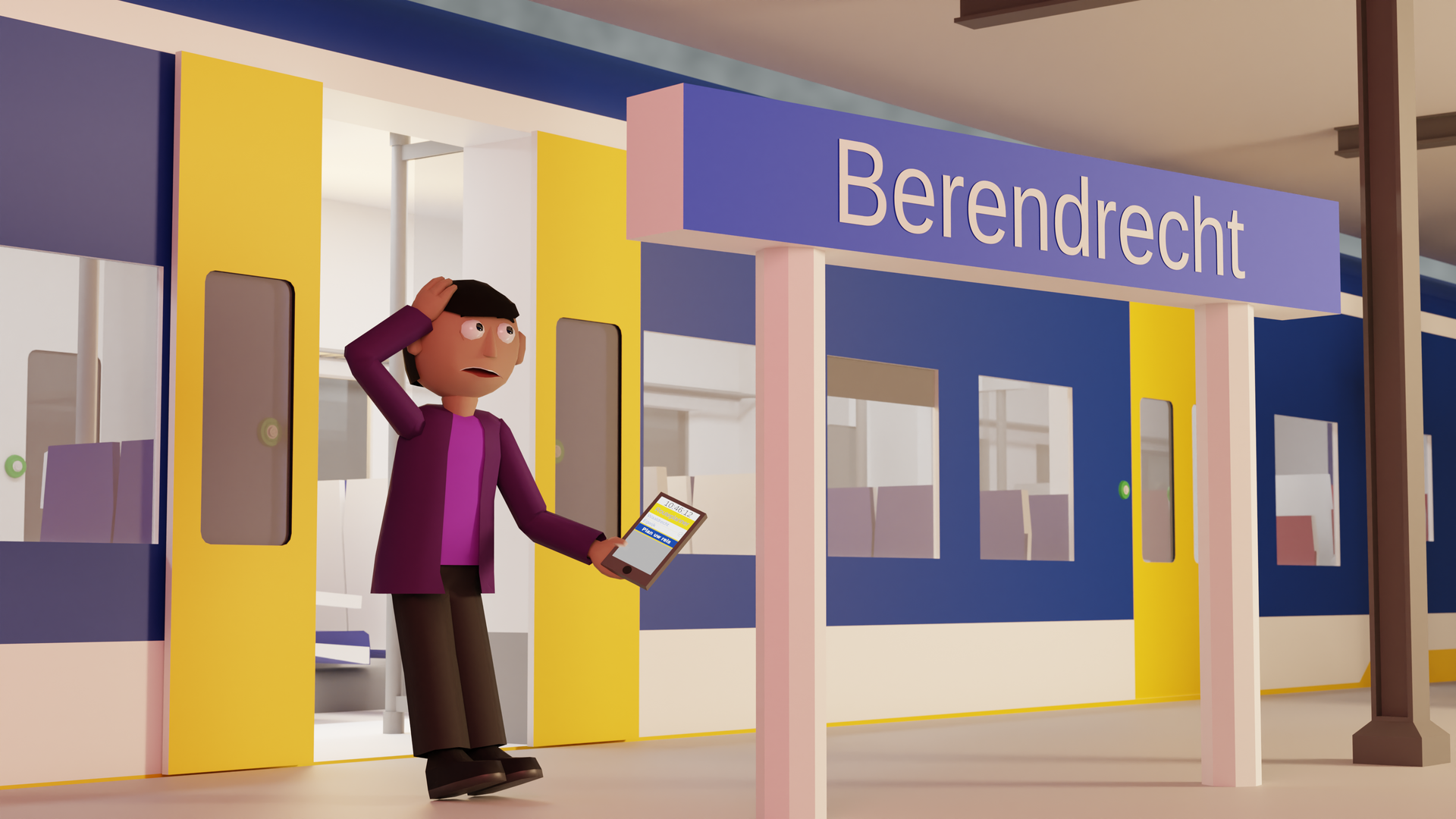
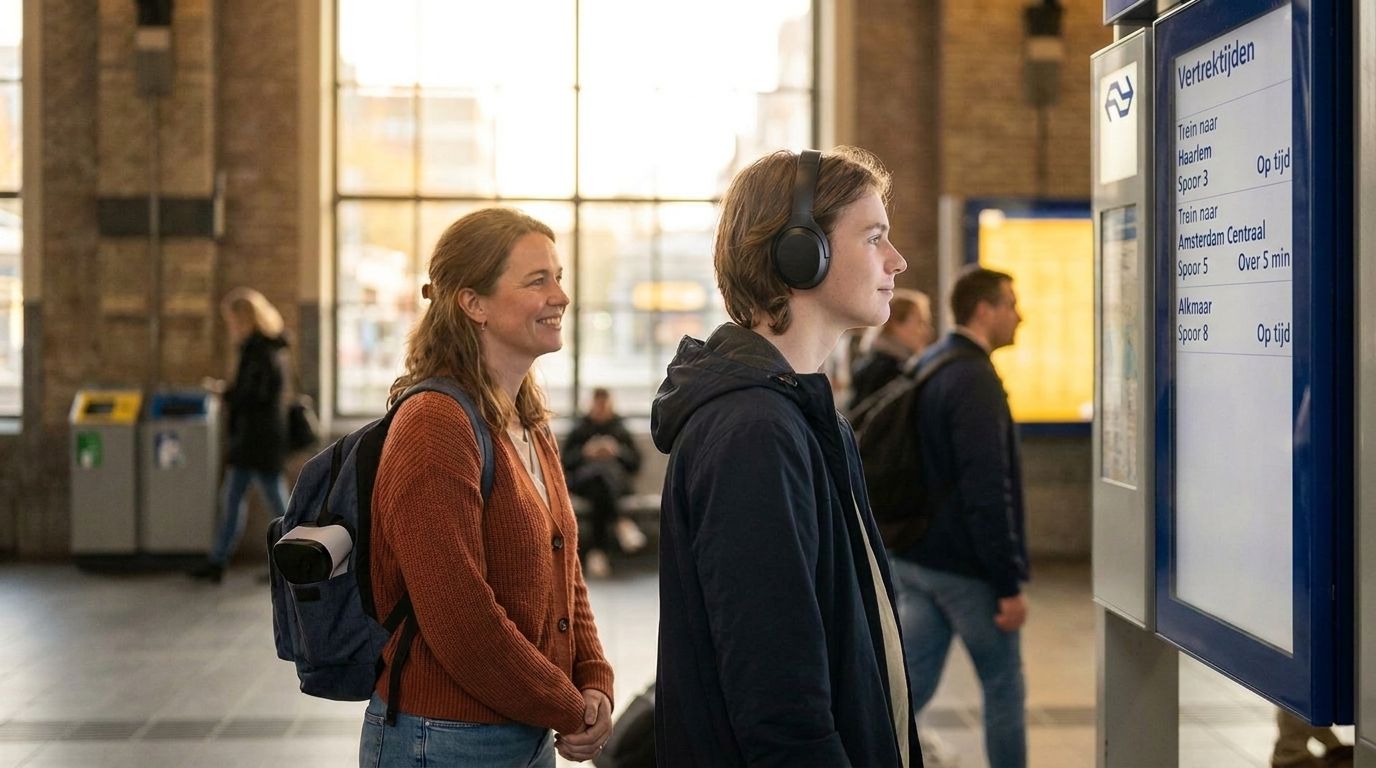
On real public transport, a mistake immediately feels significant. Taking the wrong train, getting off at a stop too late, or panicking in a crowded station: for many young people—especially neurodivergent young people like those with autism—that's reason enough to avoid travel altogether. Traveling then becomes something threatening instead of something you can learn.
Virtual OV reverses this principle. In this VR environment, young people are allowed to make mistakes. In fact, mistakes are an essential part of the training.
A safe environment to try
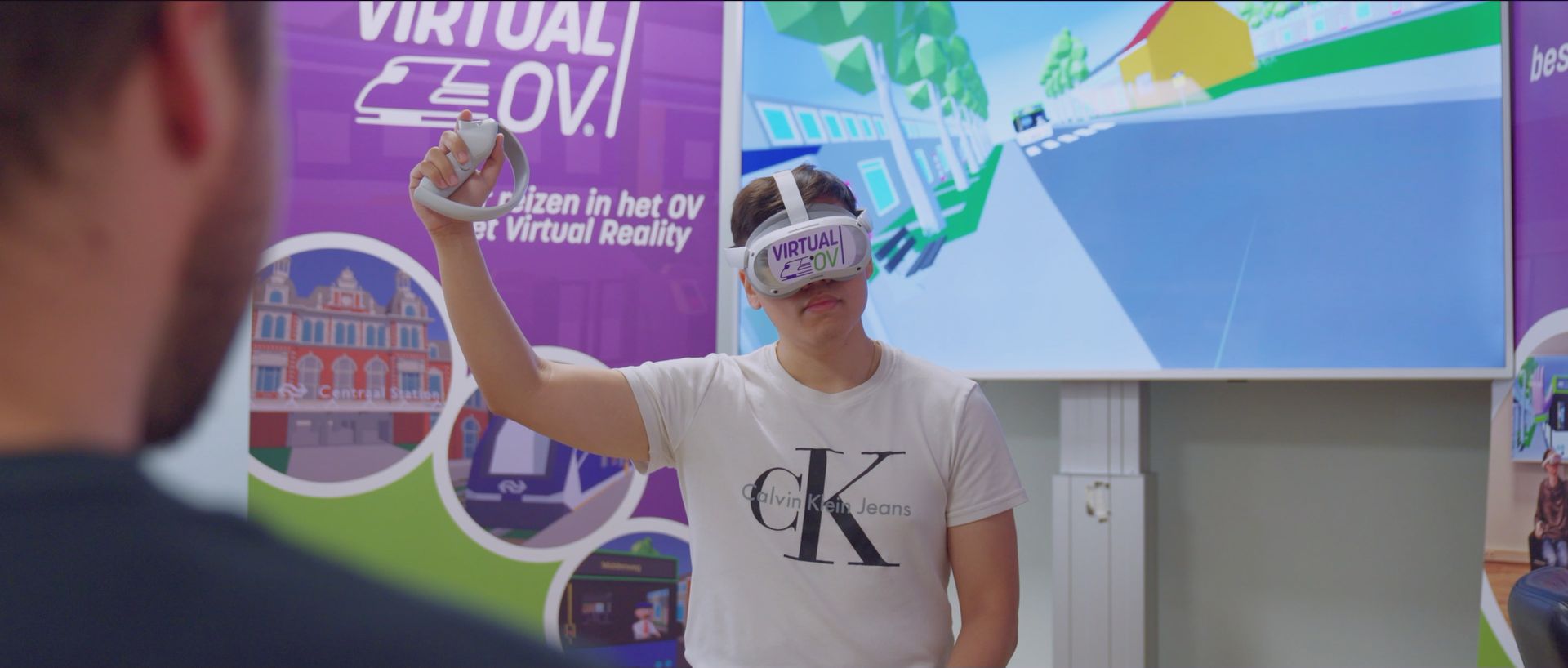
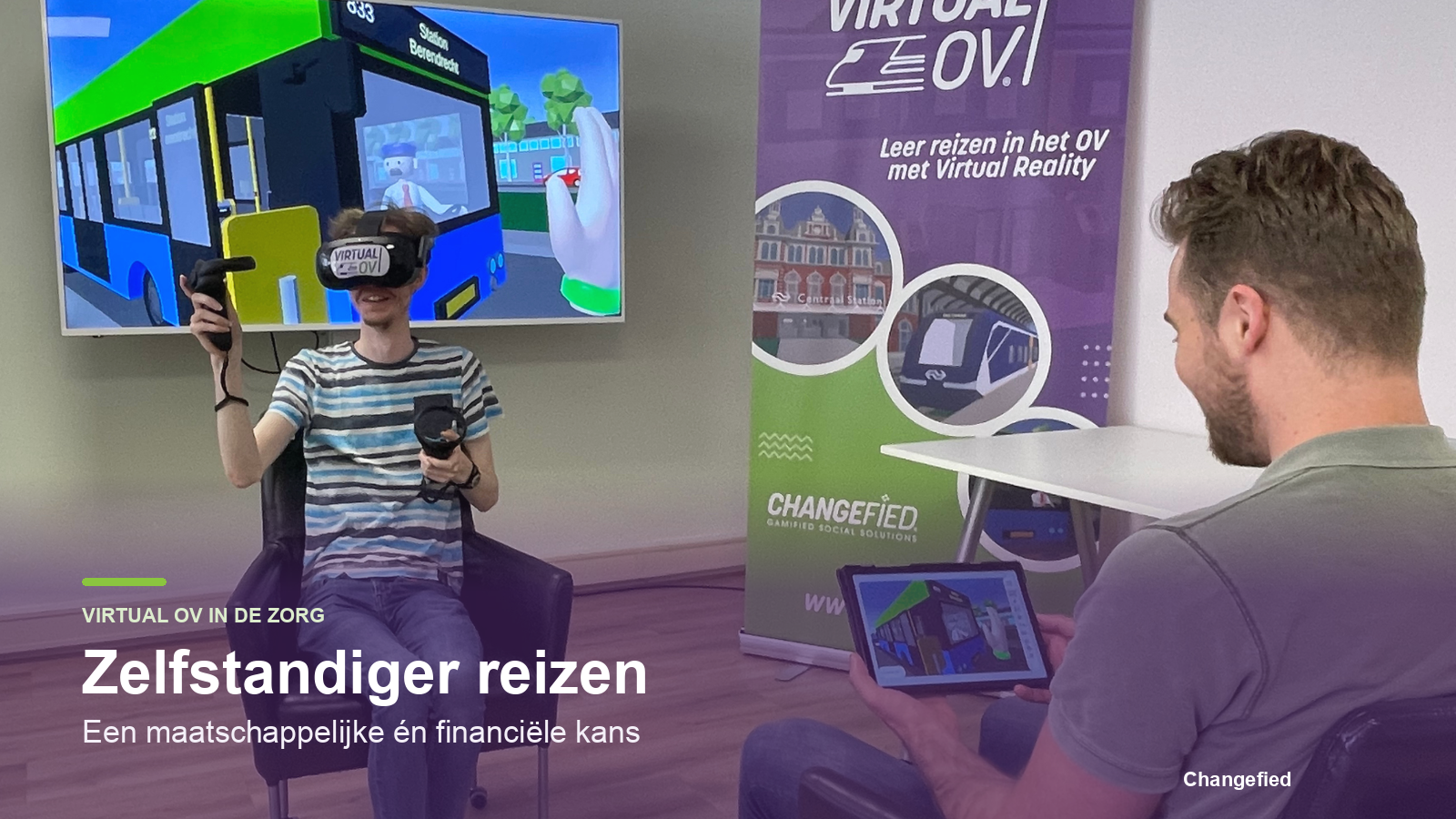
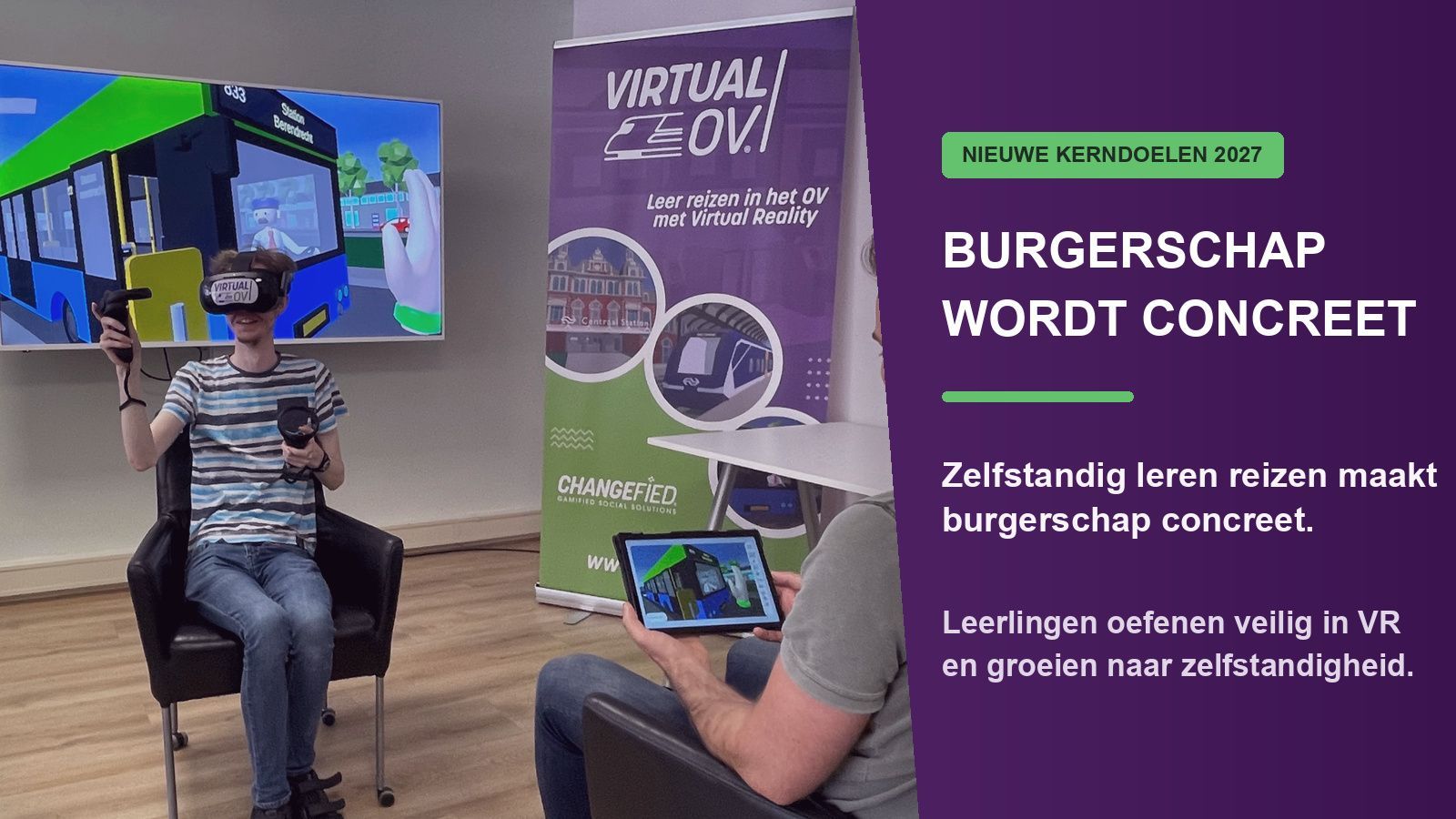
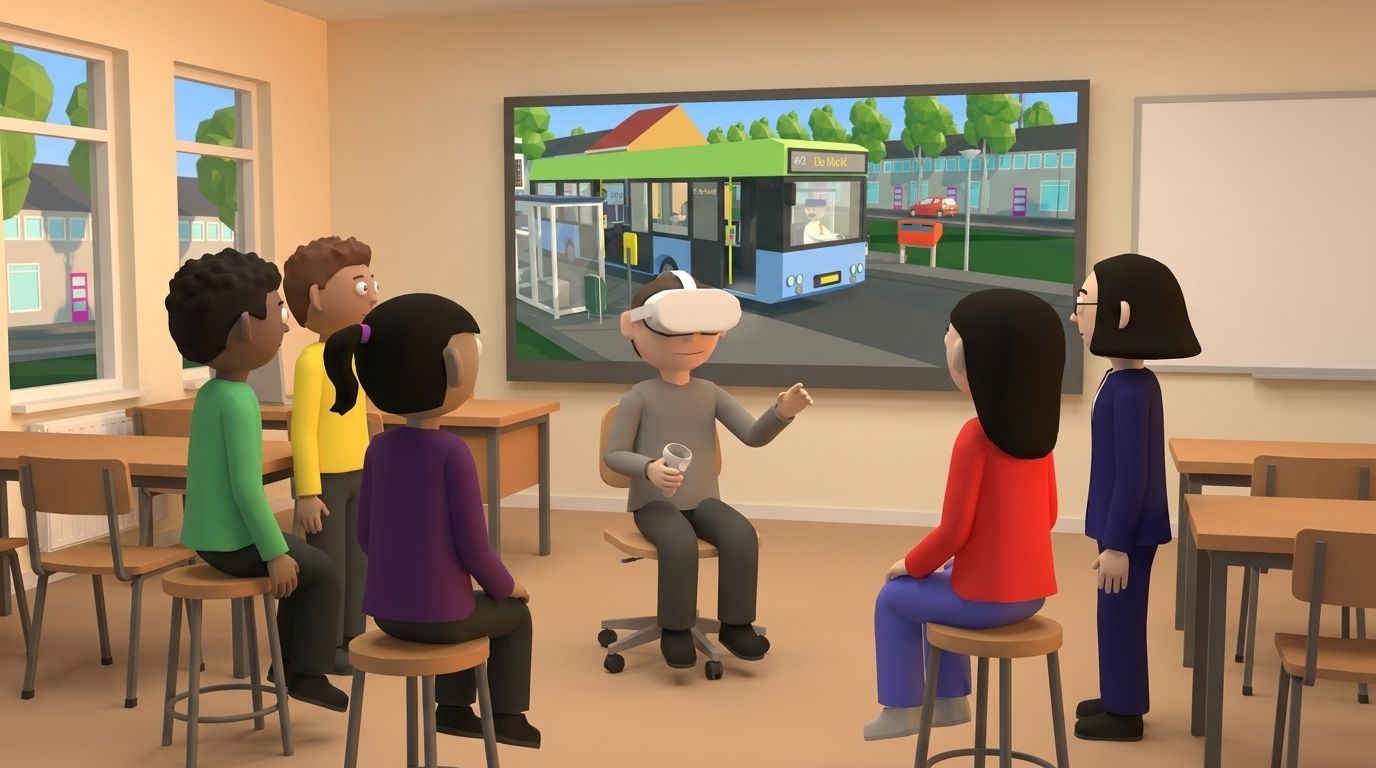
In Virtual Public Transport, a young person puts on a VR headset and enters a lifelike public transport world. Everything feels familiar: platforms, signs, announcements, crowds. The difference from the real world is simple but crucial:
- Are you taking the wrong transfer?
- Did you miss a broadcast message?
- Are you getting off too late or too early?
Then… nothing serious happens. No angry driver, no missed appointment, no stressful homecoming. The "error" stays within the safe confines of the simulation.
That safety lowers the threshold enormously. Young people are more daring: they dare to try, to experiment, and sometimes even to consciously ask: "What happens if I do this?" It's precisely at that moment that deep learning occurs.
Learning Executive Functions in Action
Traveling by public transport requires more than just knowing which train to take. It calls upon
executive functions: the regulatory functions of your brain. In Virtual Public Transport, you can practice these step by step, without external pressure.
Making mistakes trains these functions, among others:
- Planning and organizing
Choosing the wrong route or missing a connection immediately reveals whether the plan was correct. Together with a supervisor, the young person looks back:
“What information did you miss? What would you do differently next time?” - Inhibition:
In a busy station, there is a strong tendency to simply follow others. In VR, you can demonstrate what happens when you board without thinking. That moment is ideal for practicing:
“First pause, check, and only then board.” - Problem-solving and flexibility.
the train ? Wrong direction? Instead of panic, a learning situation arises:
“Okay, this went wrong. What options do we have now? How do you still get to your destination?”
In this way, young people learnthat a mistake is not the end, but a starting point for a solution.
Errors as fuel for procedural memory
Every error and every correction contributes to
procedural memory: the memory for actions and routines. By going through situations more often, a kind of “muscle memory” develops for traveling by public transport.
For example, a young person automatically learns:
- read the sign first,
- then check whether the train, track and time are correct,
- only then step inside.
Because mistakes have no real consequences, young people are more likely to repeat this process. And it's precisely this repetition that's necessary for behavior to become automatic. What was once exciting and cognitively demanding increasingly becomes routine.
Self-confidence grows where punishment is absent
Perhaps the most important effect of making mistakes without consequences in Virtual OV is the growth of
self-confidence.
Where a mistake in the real world often feels like failure – “See, I can’t do this?” – that same mistake in VR becomes a practice opportunity:
- The young person sees what went wrong.
- Get direct, constructive feedback.
- Try again, in a similar situation.
Every time this succeeds, a new experience arises: "I can do this. Even if it went wrong at first."
For many neurodivergent young people, that difference is enormous. Traveling changes from something you're judged for to something you can learn step by step.
The step to real public transport
Critics sometimes ask: "But do they actually learn it for outdoor use?" Precisely because Virtual Public Transport is so close to reality, the step is relatively small. The environment, information signs, sounds, and situations are very similar to real public transport. Young people not only gain knowledge, but especially:
- trained executive functions;
- automated actions;
- and the experience: “I've been through this before – and I was able to solve it then.”
When they board that real train for the first time, it is no longer a leap into the unknown, but a logical next step after countless safe practice laps.
Conclusion
Avoiding mistakes seems safe, but it hinders development. Virtual OV consciously chooses the opposite:
inviting mistakes in a safe setting.
By allowing mistakes to arise without real consequences, analyzing them, and trying again, young people build:
- their executive functions,
- their procedural memory,
- and their confidence to travel independently.
This way, "mistakes" no longer become an endpoint, but an essential part of learning. And that's precisely what makes Virtual OV a powerful tool for anyone who finds the transition to independent travel just a little bit more daunting.