Introduction: Why Virtual Public Transport for your region?
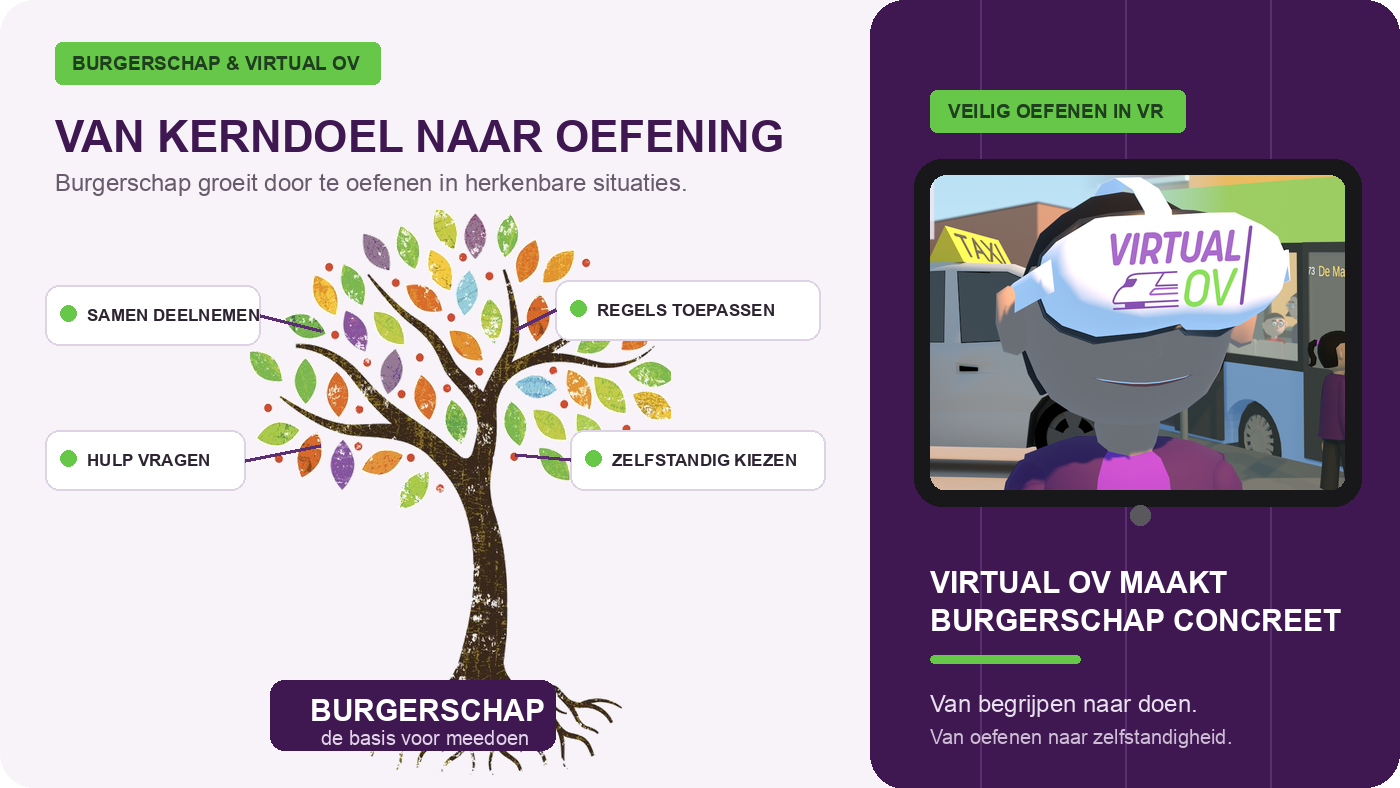
Municipalities and provinces want to promote self-reliance, inclusion, and social participation. Virtual OV offers an innovative, scalable, and measurable solution to enable vulnerable groups, such as neurodivergent youth, seniors, or people with disabilities, to travel safely and independently using public transport.
Initial teacher feedback indicates that at least 25% of participants make the switch to independent public transport travel 6 months earlier.
Your role as a municipality or province?
Facilitate the deployment of Virtual OV at local educational institutions, libraries, care centers, or other suitable locations, so that as many target groups as possible can benefit from this training.
The Challenge: Independent Travel as a Key to Inclusion
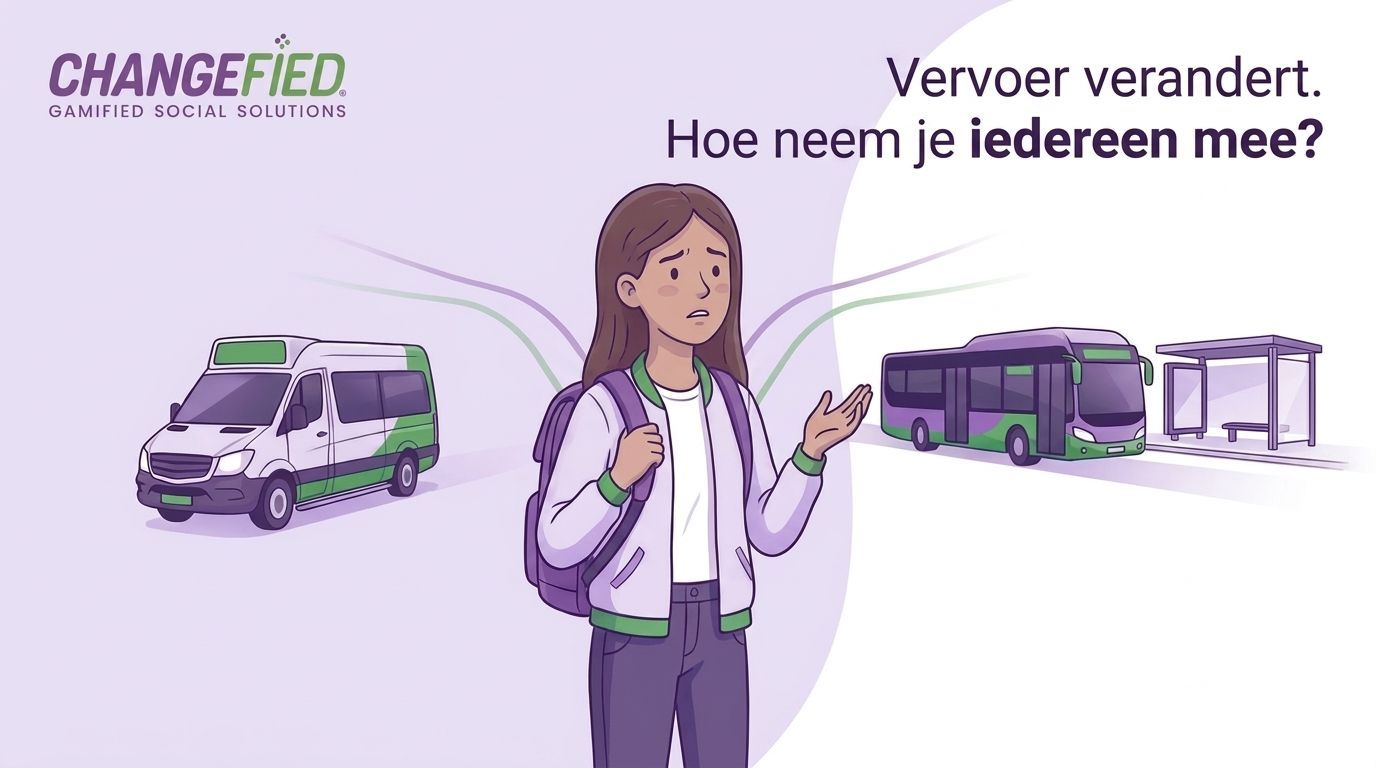
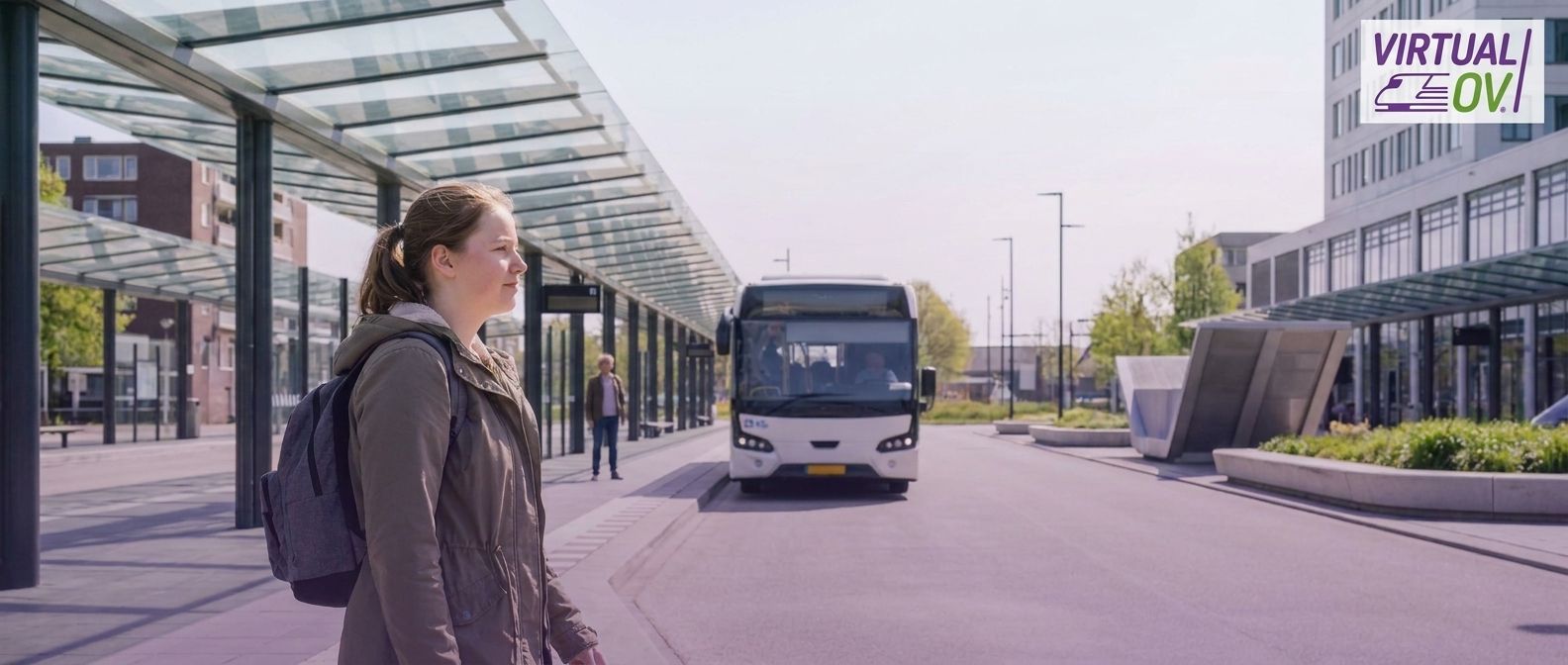
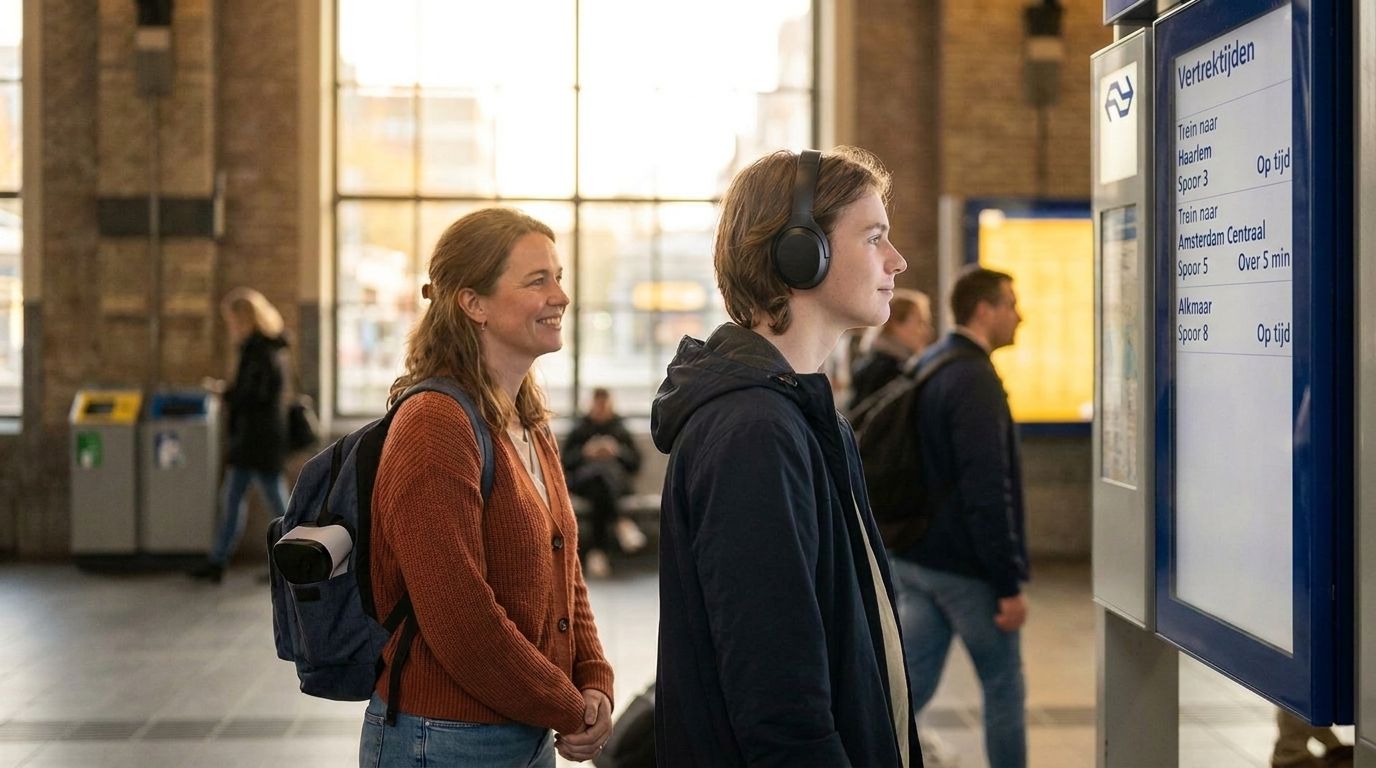
For many people, traveling independently by public transport is a challenge. Sensory overload, unpredictable situations, and a lack of confidence lead to dependence on school transport or supervision. This hinders participation in education, work, and social activities and results in high costs for municipalities.
The consequences for your region:
✔
High costs: Student transport is a structural burden on municipal budgets.
✔
Limited self-reliance: Dependence on transport hinders social participation.
✔
Lack of scalability: Traditional supervision is time- and cost-intensive.
Virtual Public Transport as a Solution: Safe Learning, Fast Results
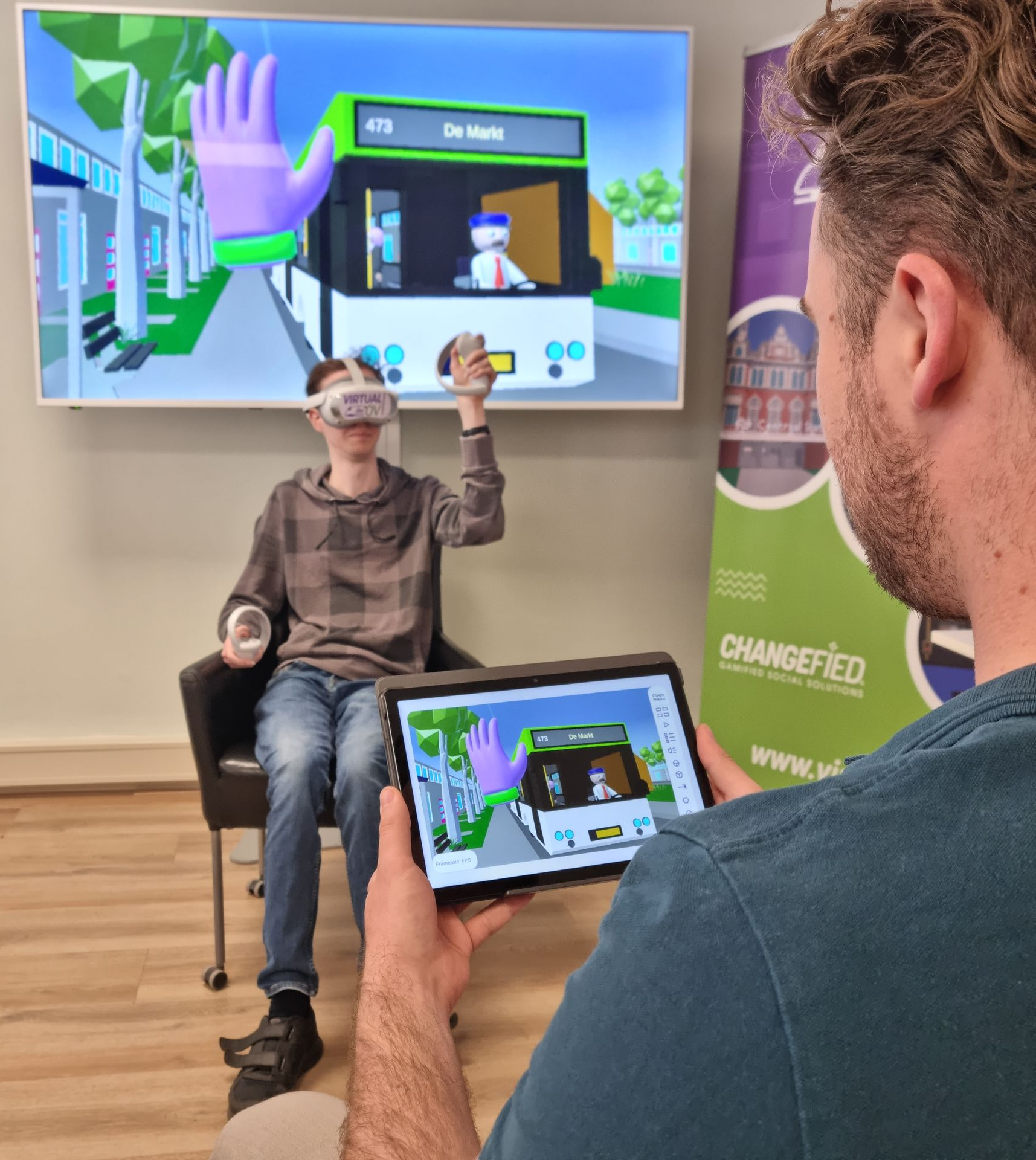
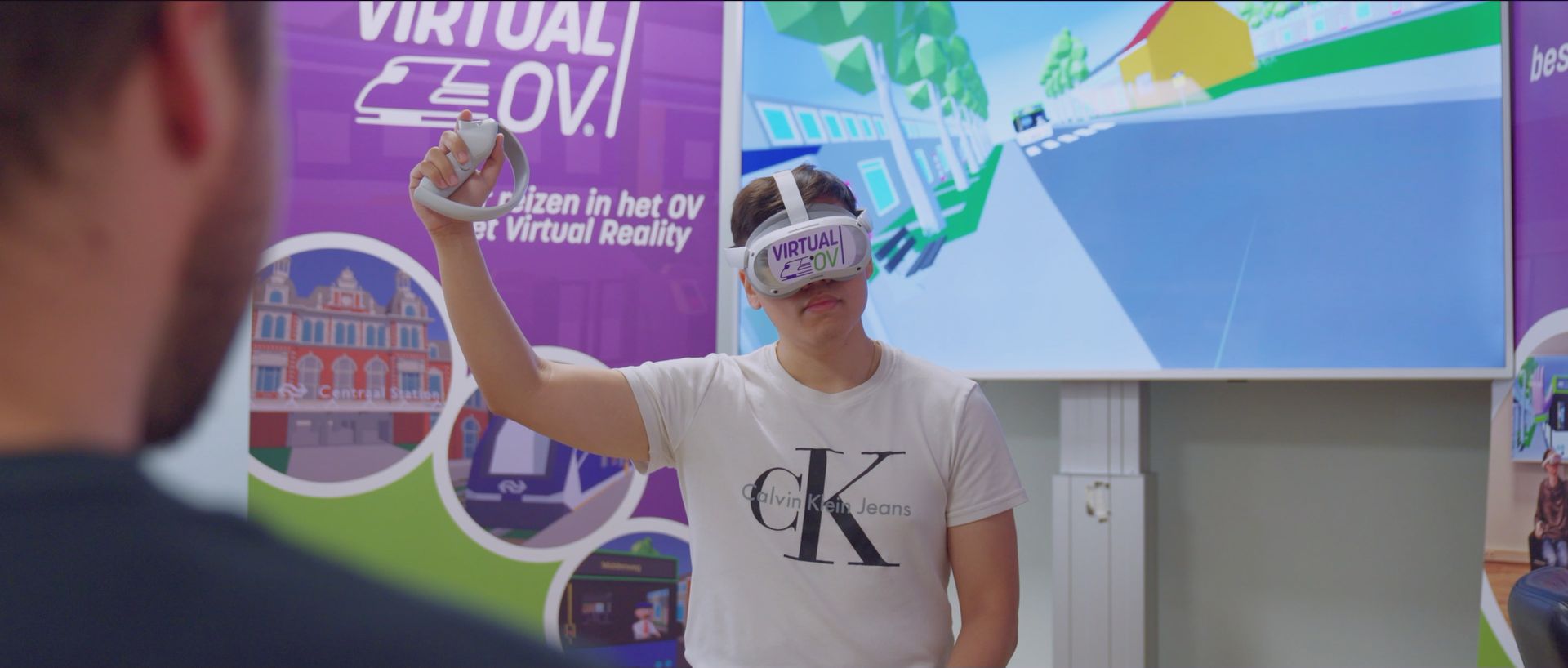
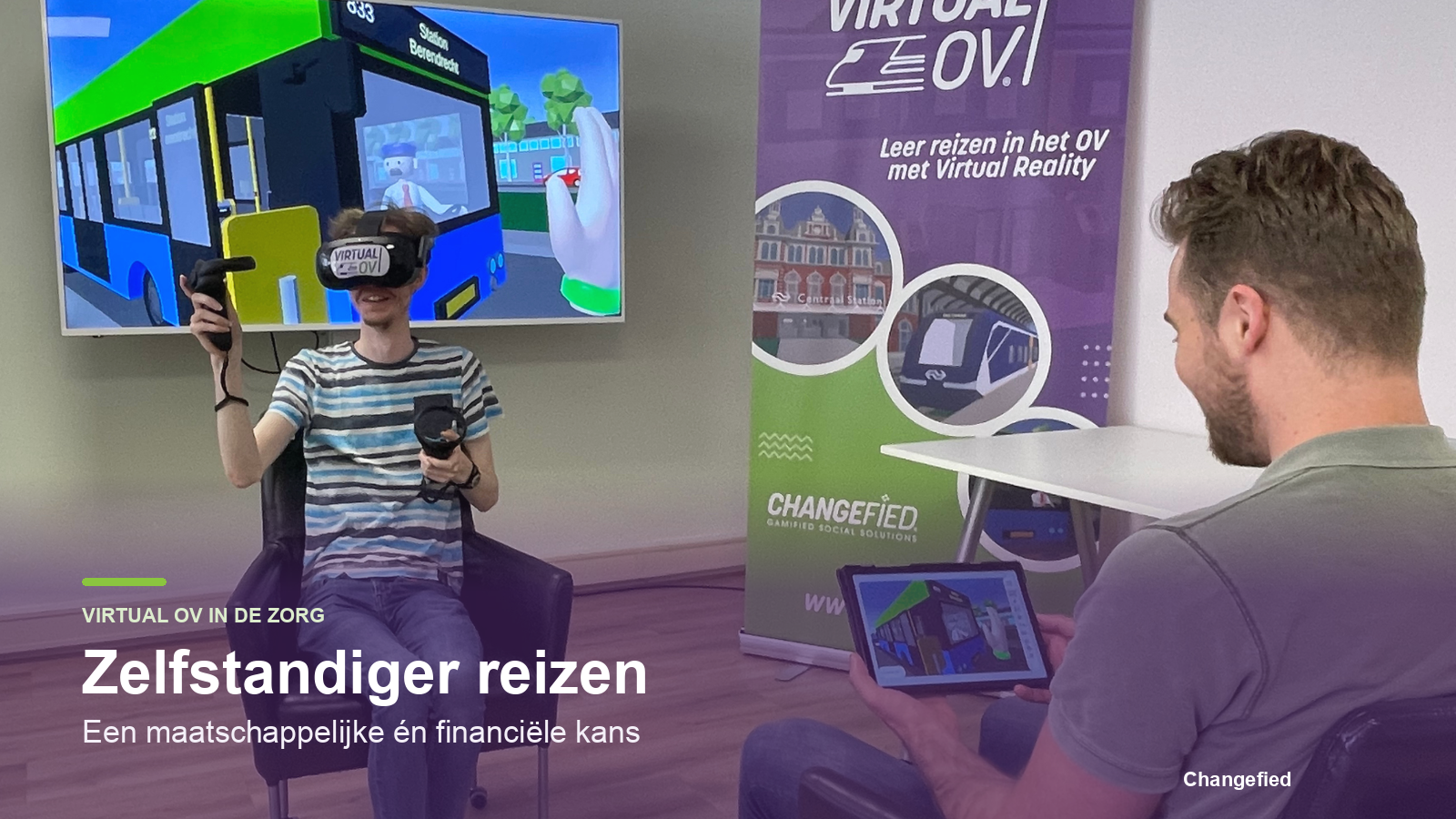
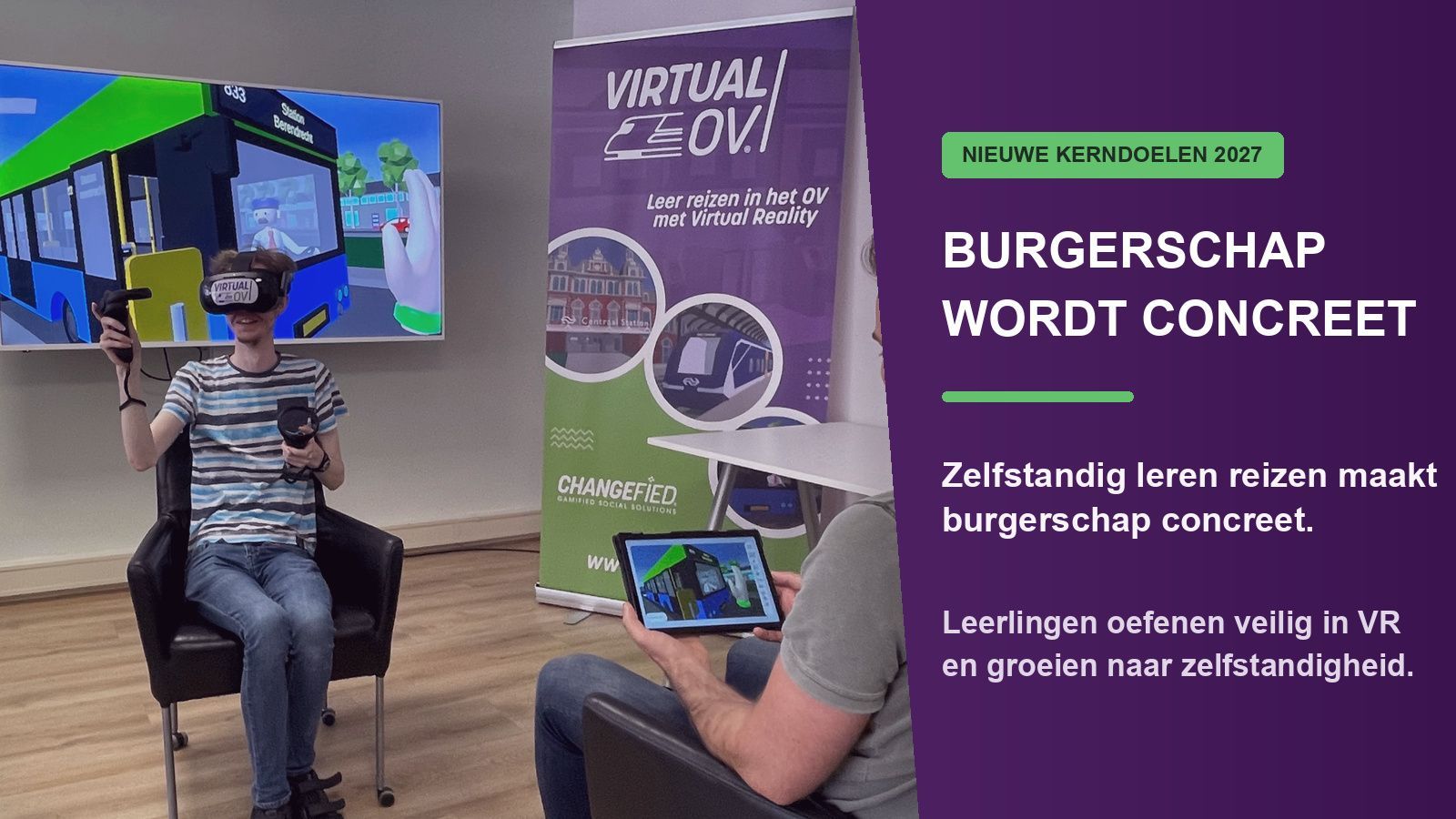
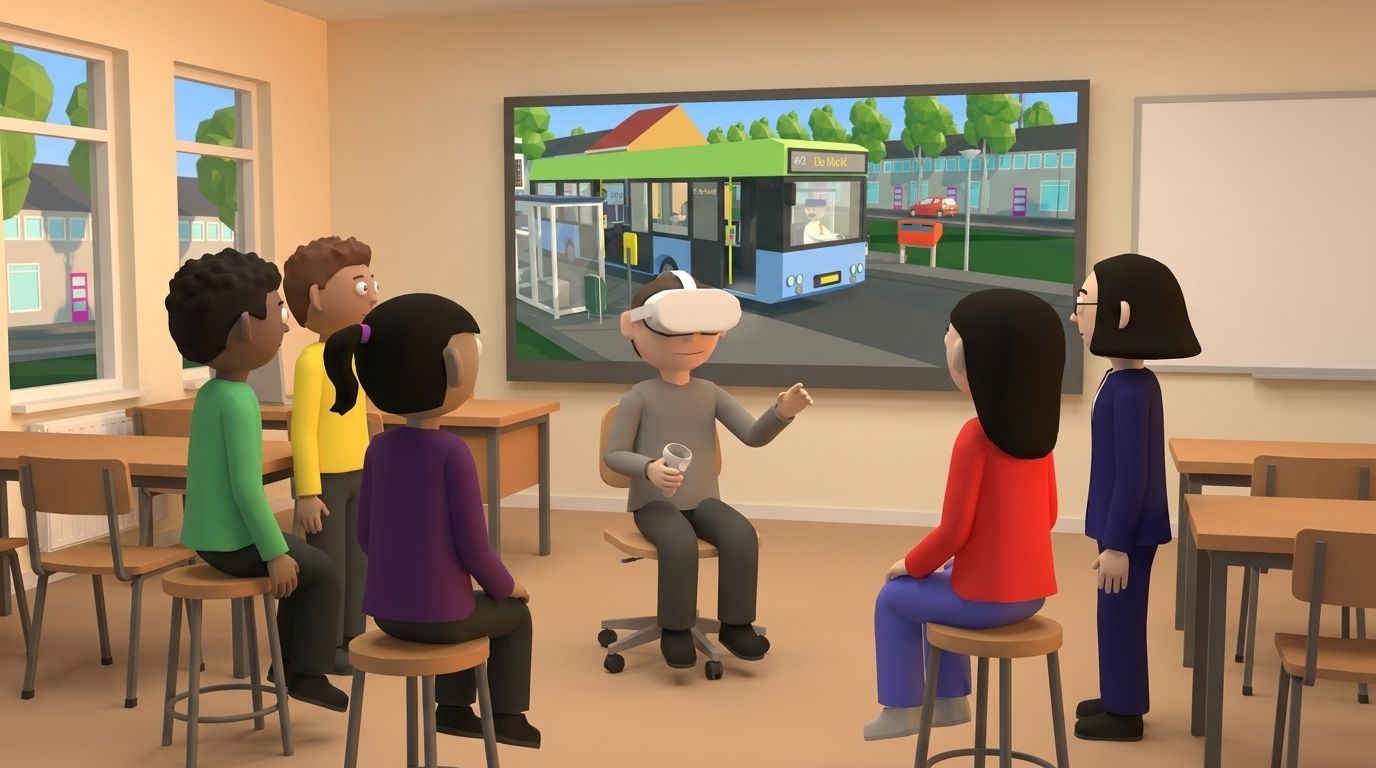
Virtual OV is a VR learning platform that allows participants to practice all aspects of using public transport in a realistic, risk-free environment. From checking in and out to dealing with delays or crowds – everything is practiced step by step until confidence is built.
What can you achieve with Virtual Public Transport in your region?
1. Accelerated Independent Travel
- Participants learn to travel independently faster and more safely, which reduces dependence on school transport.
- Potential for cost savings: An accelerated transition can lead to lower costs for student transport in the long term.
2. Increasing Inclusion: Everyone Participates
- Neurodivergent young people, seniors, newcomers, and people with disabilities learn to participate independently in society.
- Social participation: Independent travel opens doors to education, work, and social contacts.
- Equal opportunities: Virtual Public Transport is accessible to all levels, with adaptations for sensory sensitivity.
3. Measurable Impact: Transparency for Your Policy
- Anonymous gameplay data (e.g., level progress, error analysis, playtime) demonstrate concrete progress.
- Reports for municipalities and provinces: proof of effectiveness for grant applications or policy choices.
- GDPR-compliant: No personal data, only aggregated data for insights at the group level.
Your Role as a Municipality or Province: Facilitating and Connecting
Municipalities and provinces can facilitate Virtual Public Transport by:
✅ Collaboration with local parties: Support schools, libraries, healthcare institutions, and other locations in the implementation of Virtual Public Transport.
✅ Financial support: Make subsidies or budgets available for the purchase of VR sets or training.
✅ Networking and knowledge sharing: Bring educational institutions, healthcare providers, and public transport companies together to coordinate the deployment of Virtual Public Transport.
✅ Monitoring and evaluation: Collaborate with Changefied to measure the impact of Virtual Public Transport in your region
Success Stories: Virtual Public Transport in Practice
Practicalexperience with Virtual Public Transport shows:
"Virtual OV has helped our studentstake the step towards independent travel. The VR environment feels so real that they can immediately put the skills into practice."
—
Special Education Teacher
Results:
- Participants feel safer and more competent on public transport.
- Scalable: One VR set can serve dozens of participants.
How does Virtual Public Transport fit into your policy?
Virtual Public Transport aligns seamlessly
with national and regional goals:
- Self-reliance: Part of
the Social Support Act (Wmo) and the Participation Act.
- Inclusion: Contributes to the UN Convention on the Rights of Persons with Disabilities and local inclusion policy.
- Sustainability: ReduceCO₂ emissions by
reducing student transport.
- Innovation: Fits withindigital transformation and e-government initiatives.
Collaborating with Virtual Public Transport: Step-by-step plan for your region
- Introduction:
with a free demo .
- Local collaboration: Identifyschools, libraries, or healthcare institutions that want to use Virtual OV.
- Facilitate: Support these locationswith budget, training, or logistics.
- Monitoring : Measure the impact in
your region together with Changefied
Changefied arranges:
✅
Training for facilitators (train-the-trainer).
✅
Logistical support (delivery and setup of VR sets).
✅
Data reports for insight into impact.
Conclusion: Virtual public transport as a lever for your region
Virtual Public Transport is
more than training – it is a proven tool to:
✔
Increase self-reliance.
✔
Promote inclusion.
✔
Reduce costs in the long term.
Your role as a municipality or province?
Facilitate the deployment of Virtual Public Transport by local parties, so that as many people as possible can benefit from this innovative solution.
Would you like to know how Virtual Public Transport can be deployed in your region?