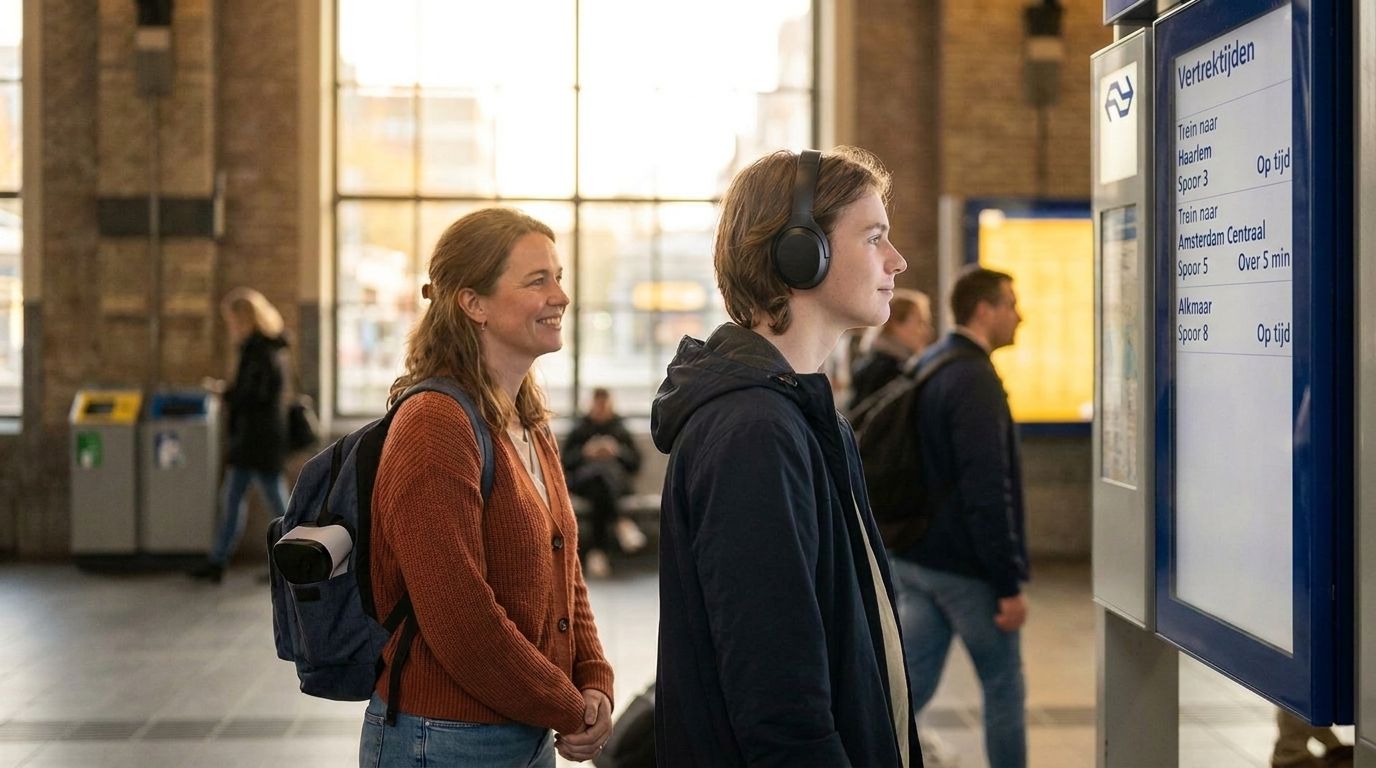
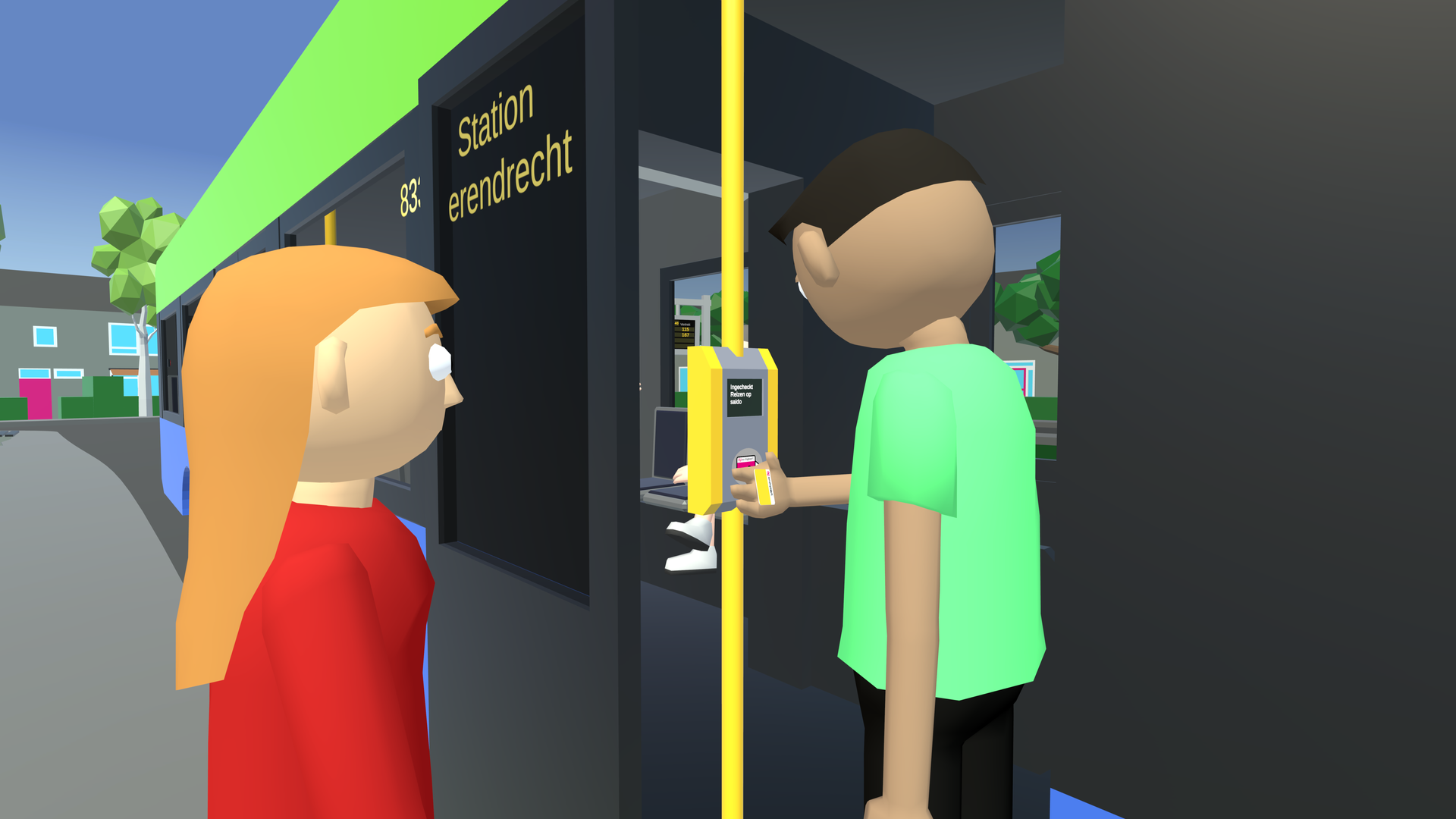
Traveling independently by public transport is an important skill for young people to become self-reliant. However, many young people experience fear of failure during public transport training. This fear often arises from a combination of practical, social, and psychological factors. Fortunately, Virtual OV offers a safe and effective way to overcome these fears.
In this blog we discuss:
- The most common causes of fear of failure in public transport training.
- How Virtual OV helps young people build confidence.
- Practical tips for supervisors and parents.
Why do young people develop performance anxiety on public transport?
Performance anxiety during public transport training is recognizable and often has multiple causes. Below are the 8 most common reasons:
1. Fear of making mistakes
Young people are afraid of:
- To take the wrong bus or train.
- To miss a stop.
- Changing at the wrong time.
- Forgot to check in or out.
- To lose the way.
Because public transport is perceived as a "real" situation with direct consequences, the fear of making mistakes can be strong.
2. Unpredictability of public transport
Delays, track changes, crowds, and unexpected situations make travel less predictable. Young people, in particular, who need structure, may experience stress as a result.
3. Social pressure
Young people are sensitive to what others think of them. They worry about:
- having to ask strangers for help.
- Speak to a driver or conductor.
- Be observed when they seem uncertain.
- Making mistakes witnessed by others.
4. Lack of self-confidence
When young people have little experience traveling independently, they sometimes doubt their own abilities. A single negative experience can reinforce that feeling.
5. Overprotection or few practice opportunities
Some young people have received years of guidance from parents, caregivers, or tailored transport. As a result, the step towards traveling completely independently can feel daunting.
6. Previous negative experiences
Examples are:
- Getting lost.
- Missing a connection.
- Being bullied on the way.
- An unpleasant encounter with fellow travelers.
- Sensory overload in a busy station.
Such experiences can lead to a fear of failing again.
7. Performance-oriented expectations
Young people may feel that they have to do everything right immediately. When training is viewed as a "test" instead of a learning process, the risk of fear of failure increases.
8. Specific support needs
For some young people, additional factors play a role, such as:
- Autism Spectrum Disorder (ASD).
- Attention Deficit Hyperactivity Disorder (ADHD).
- Social anxiety.
- Mild intellectual disabilities.
- Sensory hypersensitivity.
These characteristics do not automatically cause fear of failure, but can make dealing with complex and unpredictable travel situations more challenging.
How Virtual Public Transport reduces fear of failure
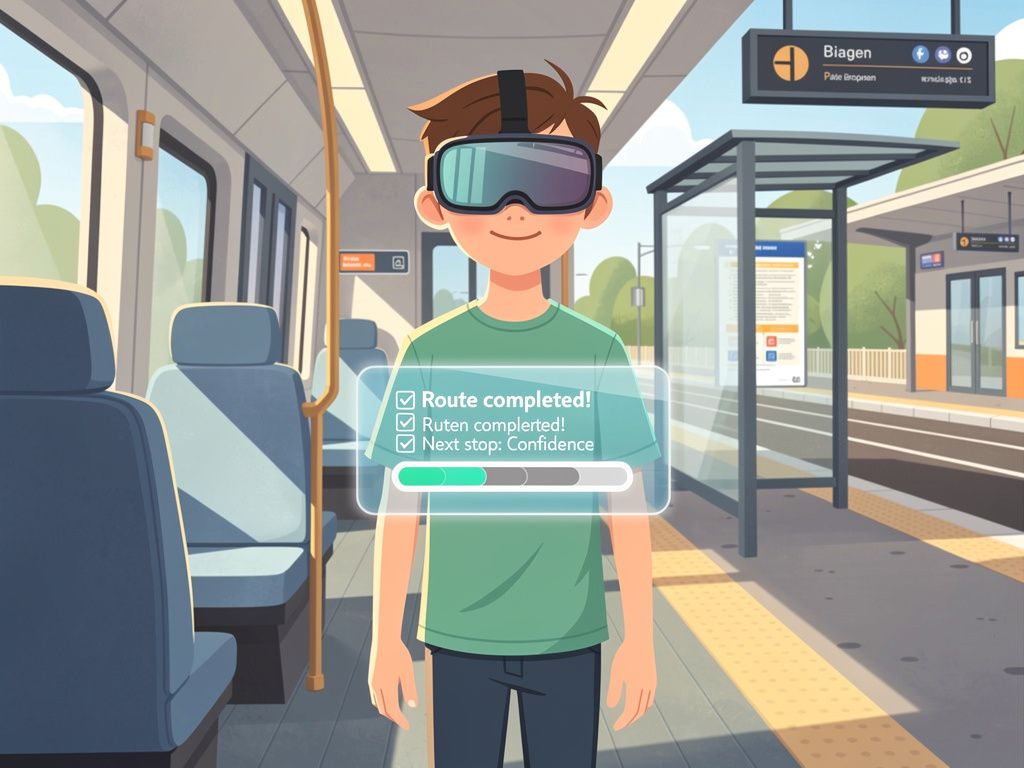
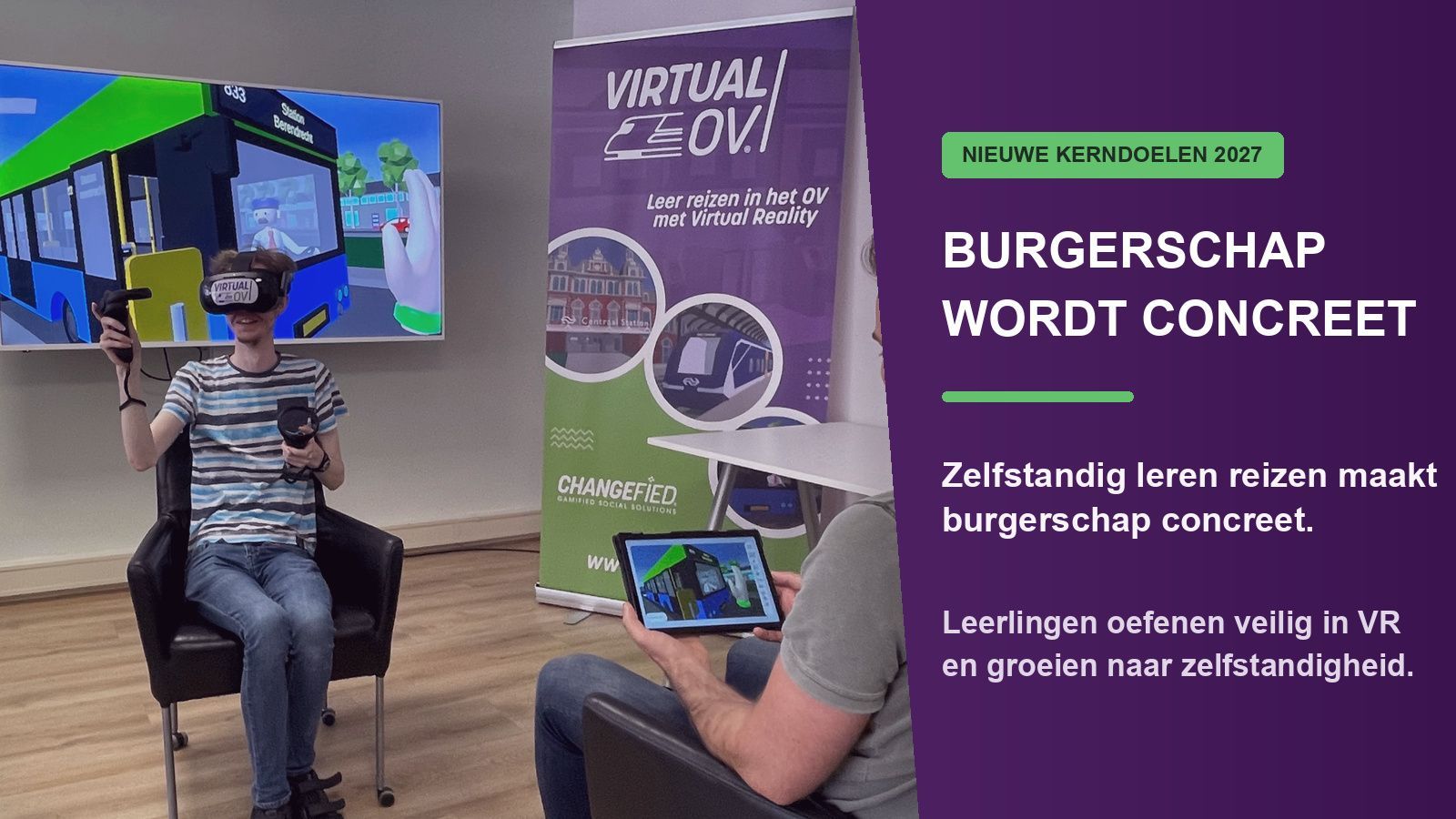
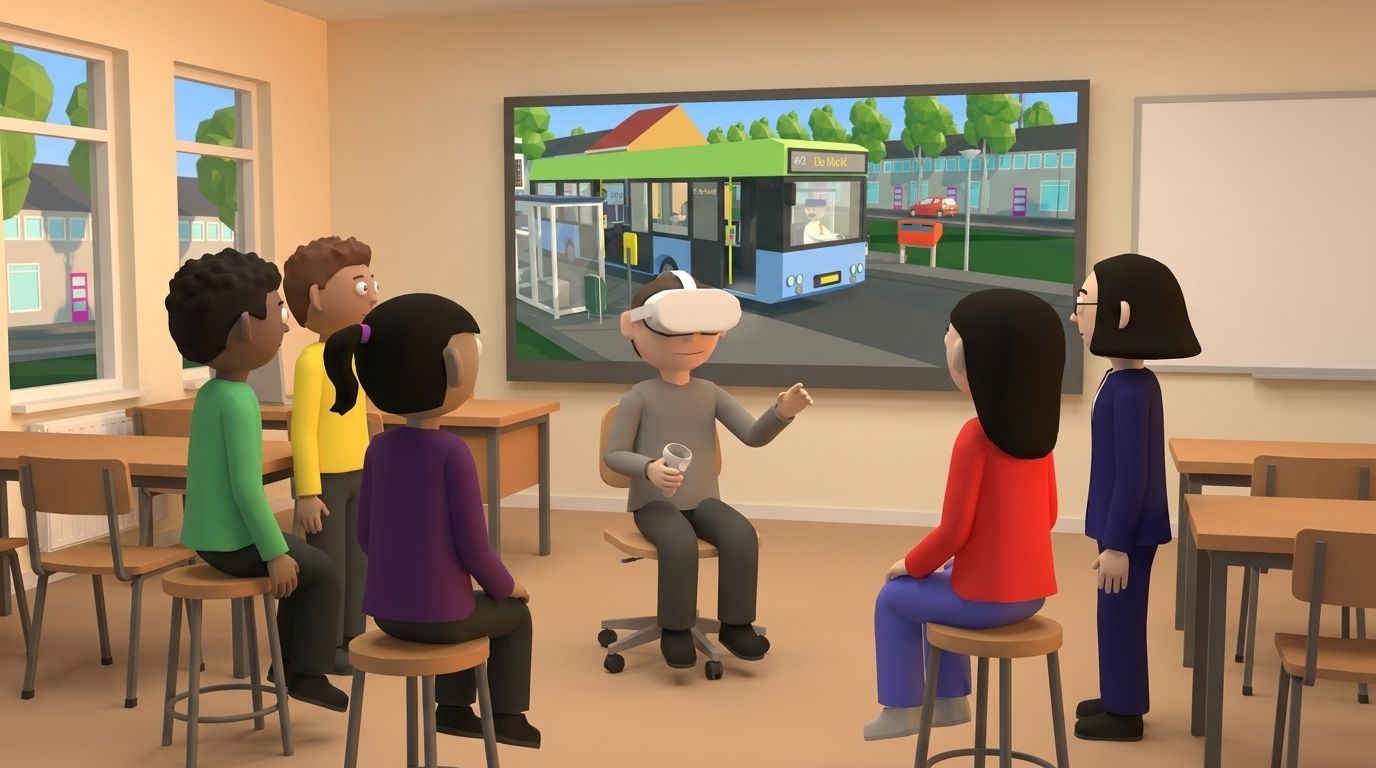
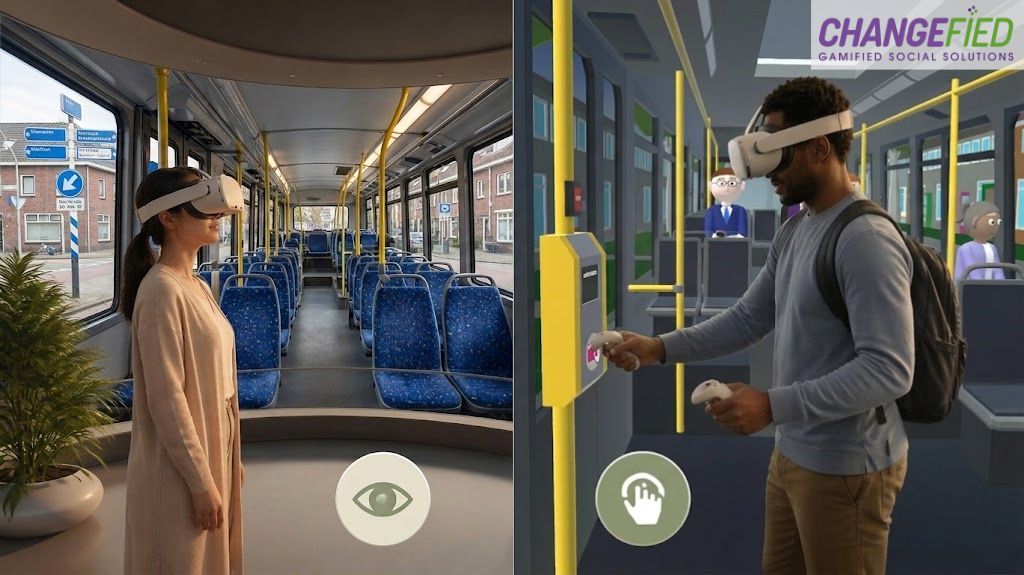
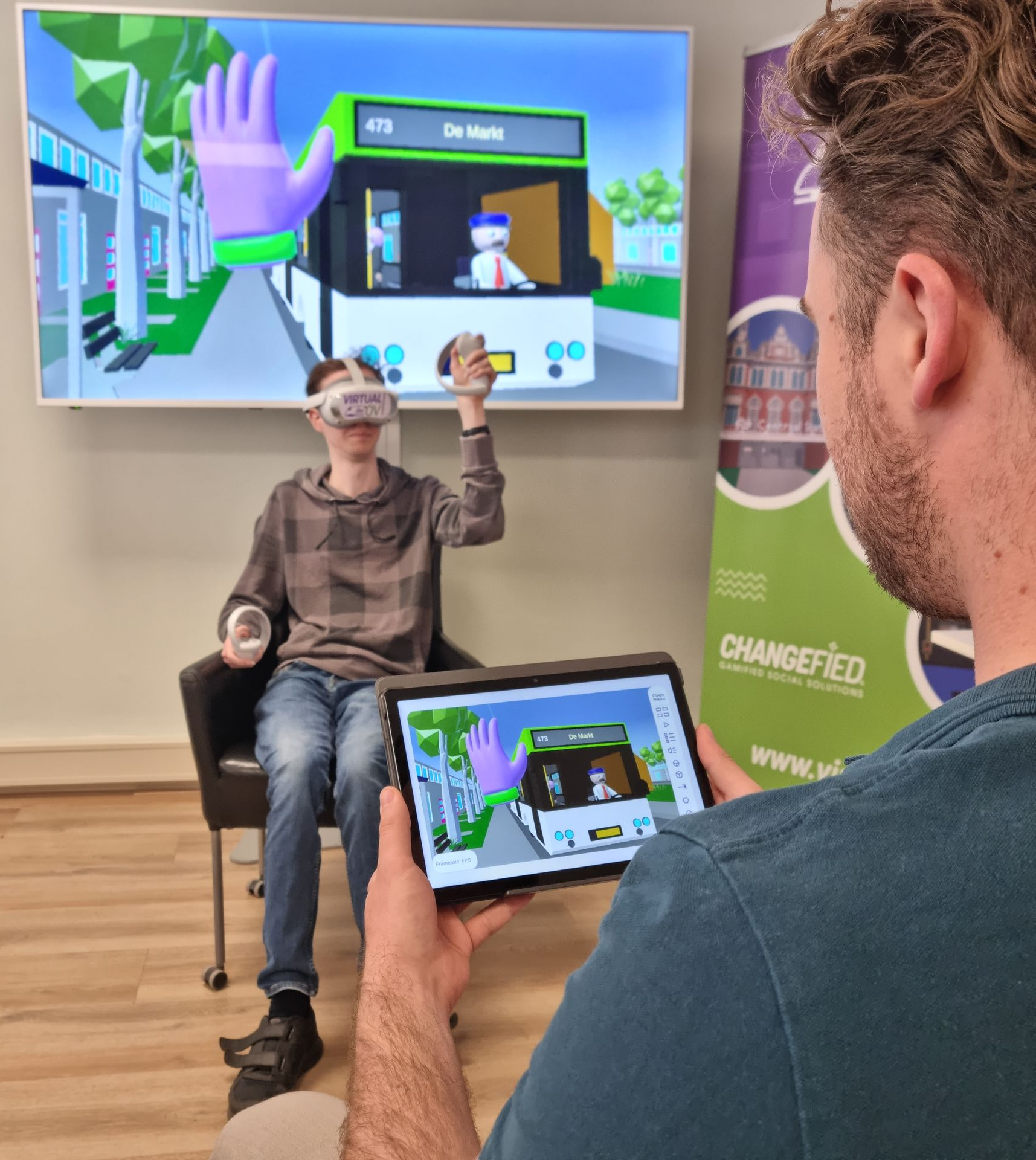
Virtual OV offers a safe, controlled environment where young people can practice without the pressure of real consequences. Here is how Virtual OV specifically addresses the causes of fear of failure:
Safe practice environment
- No real consequences: In VR, it doesn't matter if you take the wrong bus or miss a stop. Young people learn to deal with mistakes without stress.
- Repetition without pressure: Routes can be practiced endlessly until the young person feels confident.
Structured layout
- Levels and challenges: Virtual Public Transport builds skills in small steps, from simple routes to complex situations (e.g. transfers or unexpected changes).
- Gradual complexity: Young people start with basic skills and build confidence before tackling more difficult scenarios.
Practicing social interactions
- Conversations with conductors: In VR, young people can practice approaching a driver or asking for help, without fear of social stares.
- Dealing with unexpected situations: For example, a detour or delay. Young people learn how to handle these.
Building confidence through successful experiences
- Mistakes as learning opportunities: In Virtual OV, mistakes are viewed as part of the learning process. Young people experience that they can correct a mistake without anything serious happening.
- Visible progress: Through repetition and successful experiences, young people's self-confidence grows.
Scientific substantiation
Virtual OV is based on principles from:
- Cognitive behavioral therapy (CBT): VR training works according to the same principles as exposure therapy, but in a controlled environment.
- Self-efficacy theory (Bandura): Confidence grows through one's own experiences of success, precisely what Virtual OV facilitates.
Research into VR training for anxiety disorders shows that repeated exposure in a safe environment significantly reduces fear of failure.
Practical tips for teachers, supervisors, and parents
Howcan you best guide young people in overcoming fear of failure during public transport training? Here are concrete tips:
✅ Start small
- Start with short, simple routes in Virtual Public Transport.
- Gradually build up to more complex scenarios.
✅ Emphasize that mistakes are learning opportunities
- Ask after a mistake: "What would you do differently next time?"
- Show that mistakes are normal and part of the learning process.
✅ Build trust through repetition
- Let young people practice the same route multiple times until they feel confident.
- Four small successes (e.g., "You took the right bus!").
✅ Gradually phase out guidance
- VR exercises: Let young people practice in Virtual Public Transport first.
- Guided authentic trips: Join the journey and provide support where needed.
- Independent travel: Eventually let young people travel independently, with the assurance that they have mastered the skills.
Conclusion
Fear of failure when traveling by public transport is a recognizable problem, but fortunately, it is surmountable. By building skills in small steps, viewing mistakes as learning opportunities, and allowing confidence to grow through successful experiences, young people can learn to travel independently and confidently.
Virtual OV plays a unique role in this by providing a safe, structured, and repeatable practice environment. In this way, young people experience that they can correct mistakes and handle unexpected situations, without the pressure of real consequences.
Do you want to see how Virtual OV helps young people overcome fear of failure, or get more info?