Virtual public transport and its connection to core objectives and curricula!
Practical learning to travel for more independence and social participation in secondary education
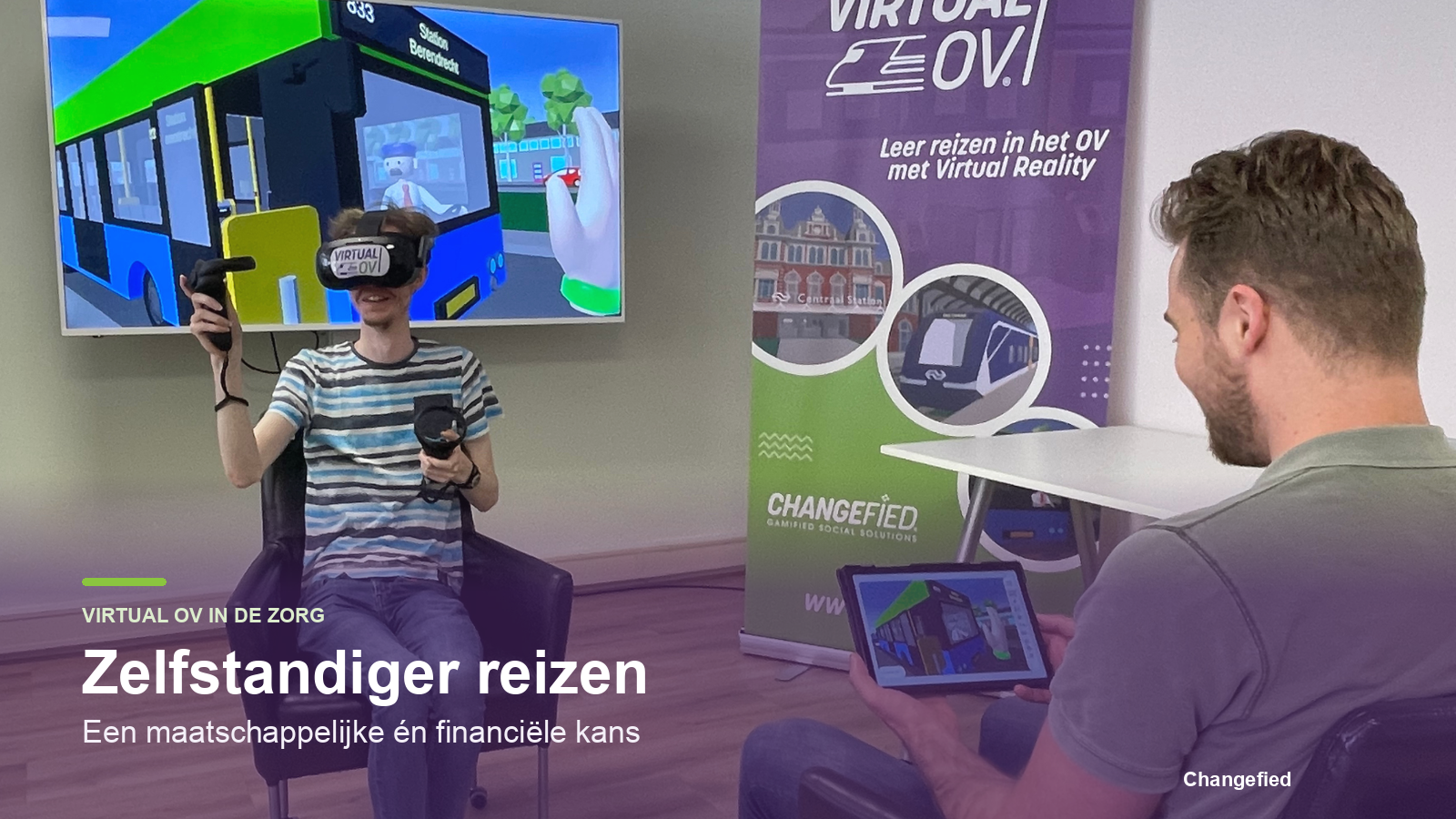
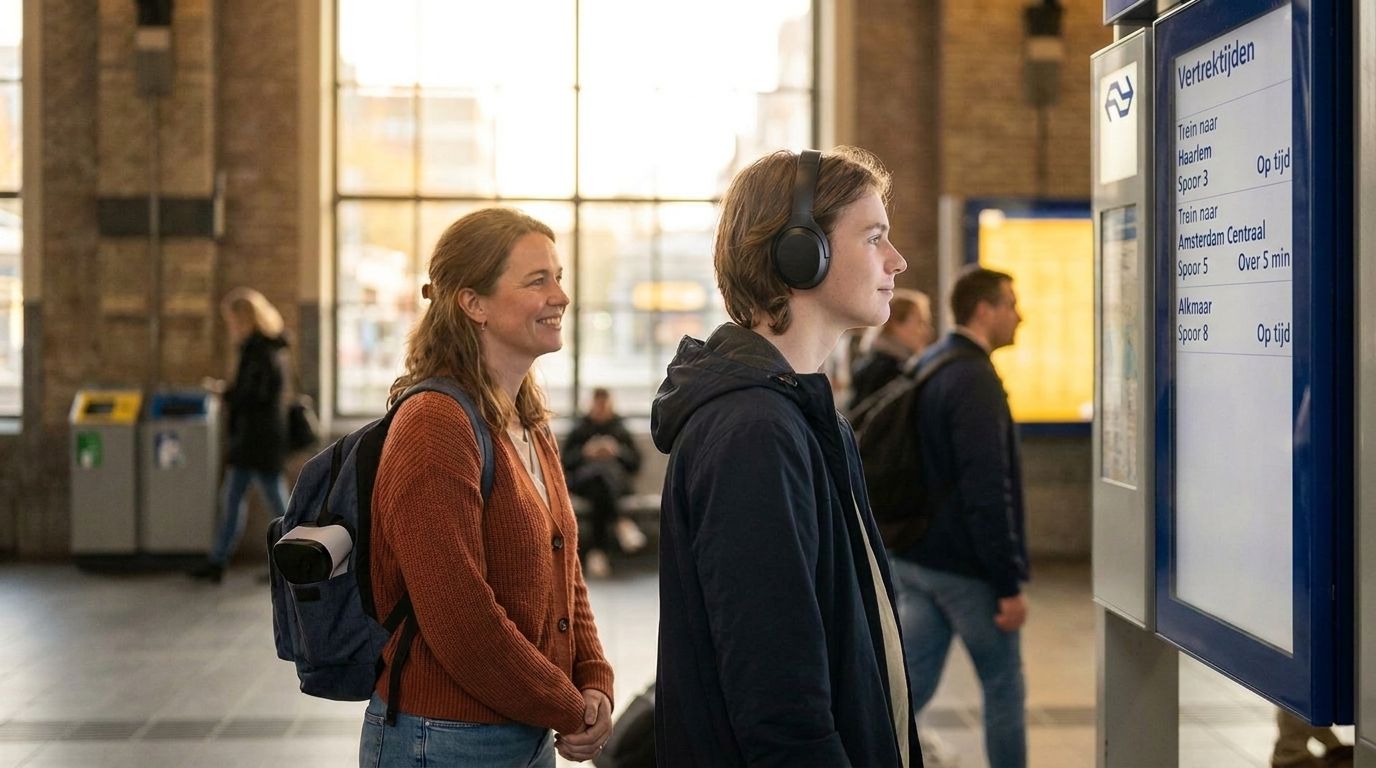
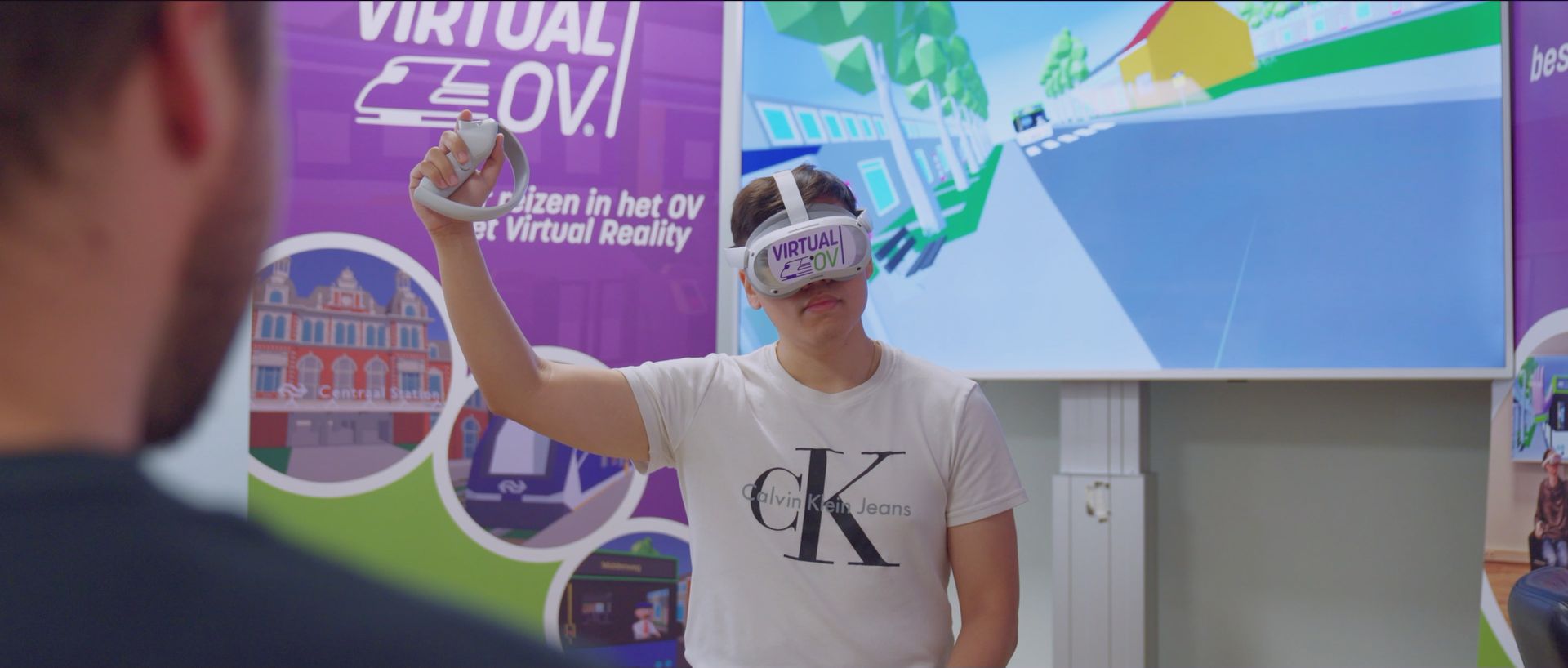
For young people in secondary special education (VSO), developing independence and self-reliance is essential. Virtual public transport plays a special role in this by lowering the threshold for young people to travel independently on public transport. But how exactly does this align with the core objectives and curricula of VSO?
Within VSO, broad development and social participation are central. The CED Group's curriculum, which Virtual OV aligns with, emphasizes the importance of practical skills that prepare young people for their future in work, daytime activities, housing, and leisure. For example, the "Preparation for Daytime Activities and Work" curriculum provides a solid foundation in which young people learn to plan, organize, and perform daily tasks. Independent travel contributes directly to this; it's a concrete skill that contributes to young people's self-confidence and independence.
This curriculum is based on the CED learning objectives , which include concrete and measurable developmental goals such as learning to follow instructions and procedures, systematically carrying out work-related tasks, delivering quality in work situations, and developing a work ethic focused on attentive and motivated behavior. Virtual Public Transport offers a practical approach that aligns with these objectives by helping young people use public transport independently and thus plan and carry out daily tasks outside of school.
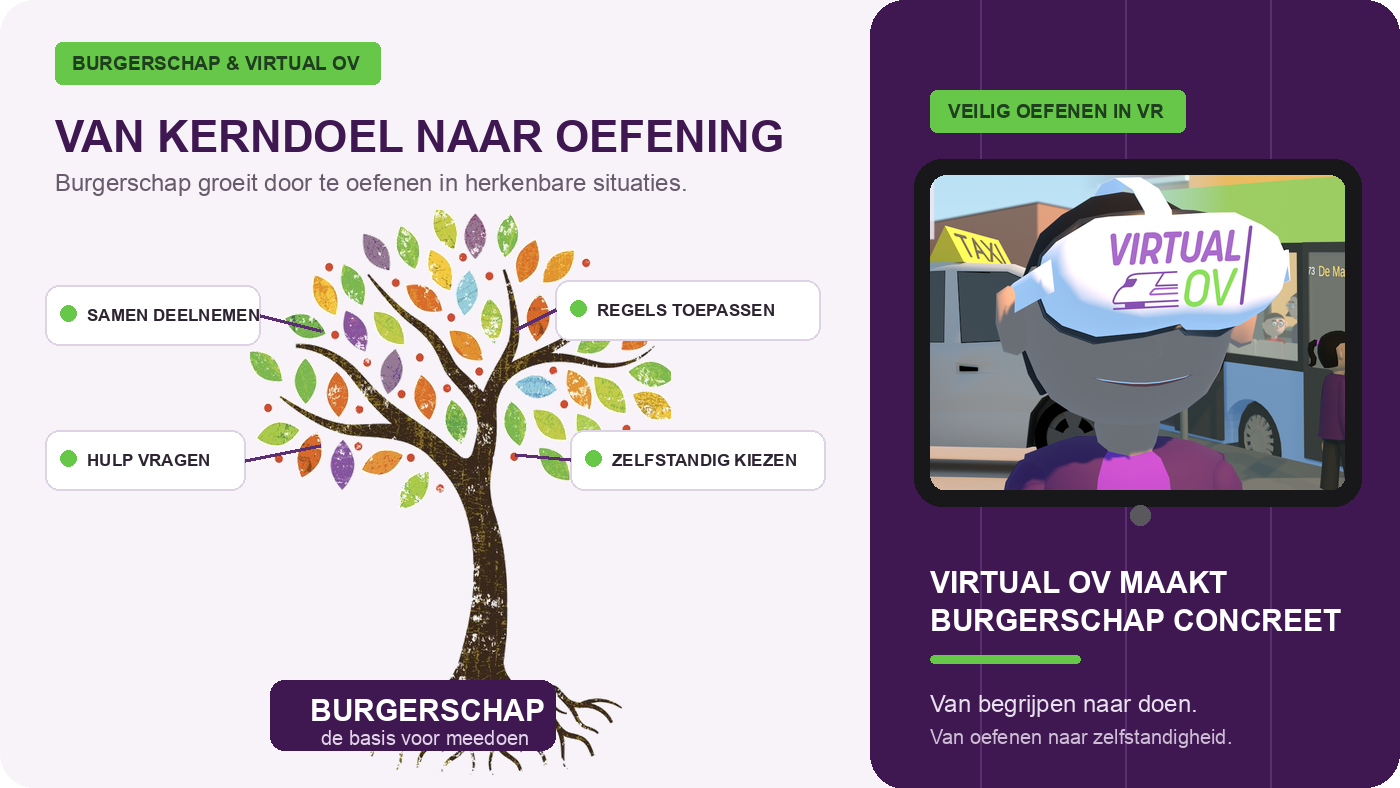
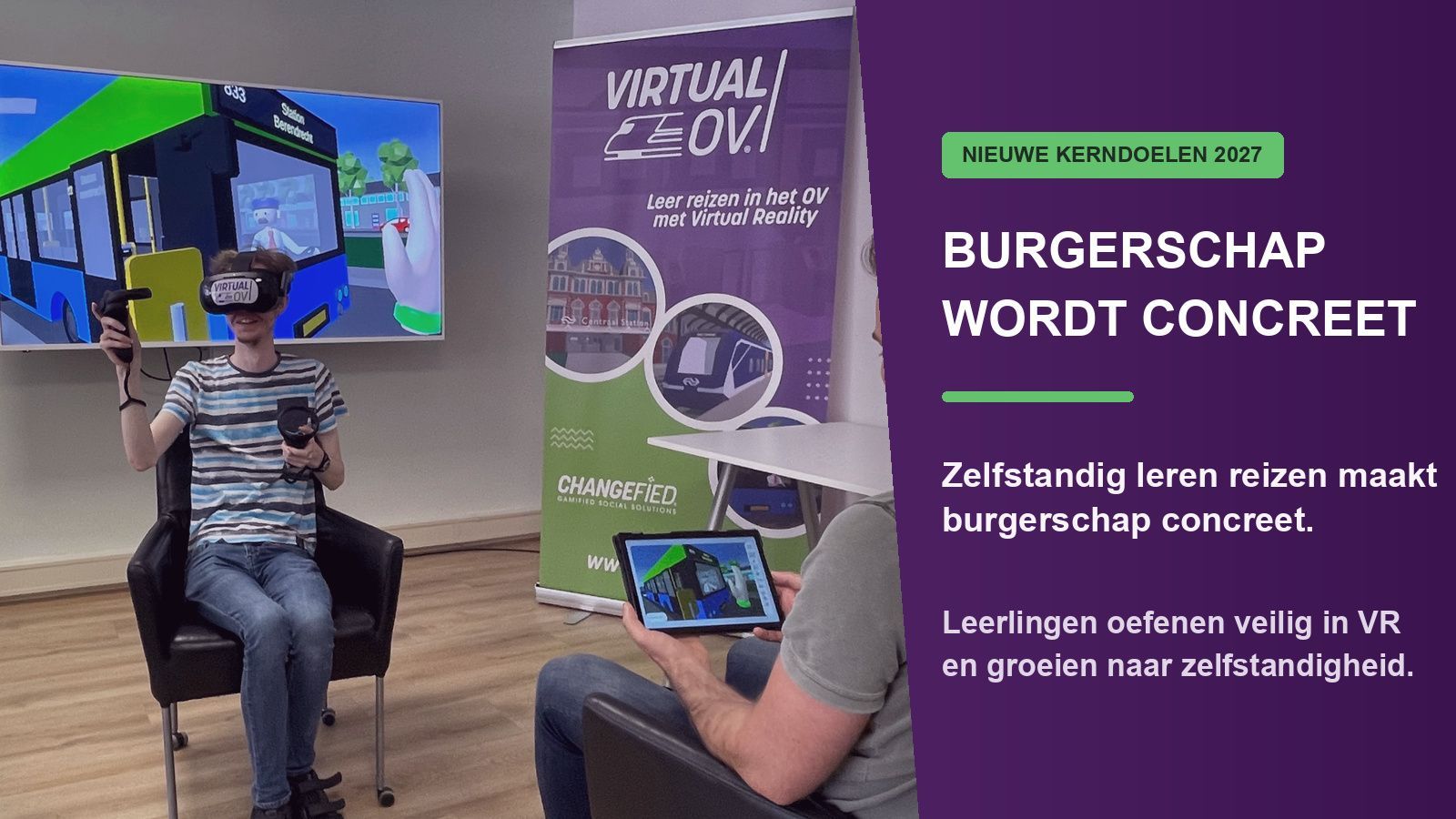
In addition, there's the "People and Society" curriculum, which focuses on citizenship and social functioning. Independent travel gives young people the opportunity to fully participate in society, connect with others, and take responsibility for their own lives. This not only strengthens their social skills but also their self-esteem and self-confidence.
In addition to the CED learning objectives, Virtual OV also aligns well with the broader statutory core objectives of the SLO for special education (VSO). These SLO objectives provide a legal framework within which schools shape their education and focus on broad development, social participation, and self-reliance, without always being specific. The CED learning paths flesh out these SLO objectives by translating them into practical and measurable educational activities. Virtual OV thus supports both SLO core objectives and CED learning objectives.
Virtual public transport not only supports learning to travel but also the broad development of young people within special education (VSO). It contributes to cross-disciplinary goals such as functioning in learning, working, and citizenship. In this way, we prepare young people step by step for a more independent and active life, where they can fully participate in society.
Traveling independently with Virtual Public Transport is therefore much more than a practical skill; it's an important step towards self-reliance and participation in society. This gives young people in special education (VSO) the opportunities and possibilities they deserve.
Discover how Virtual Public Transport makes a difference in the lives of young people and how it contributes to their future!