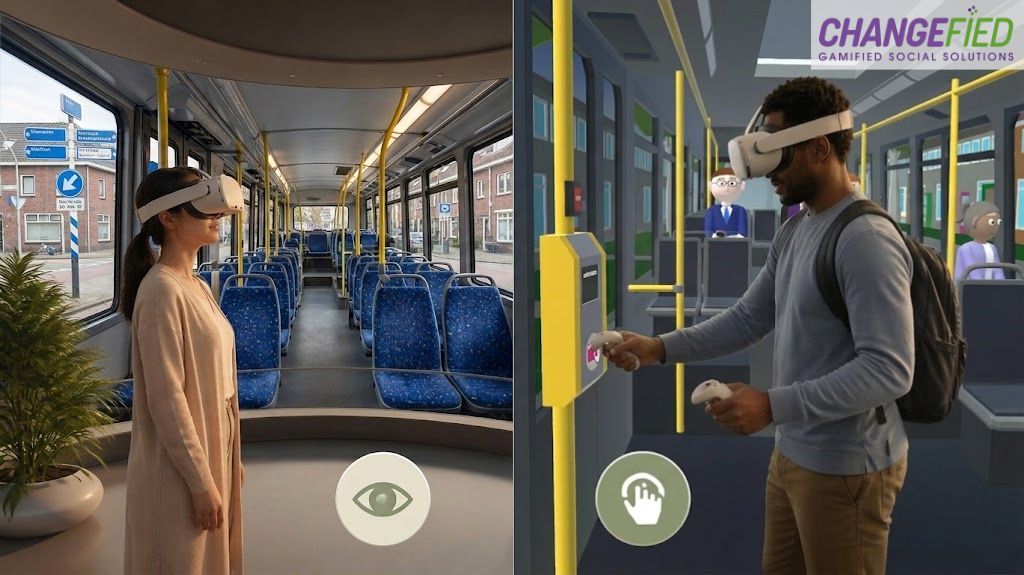
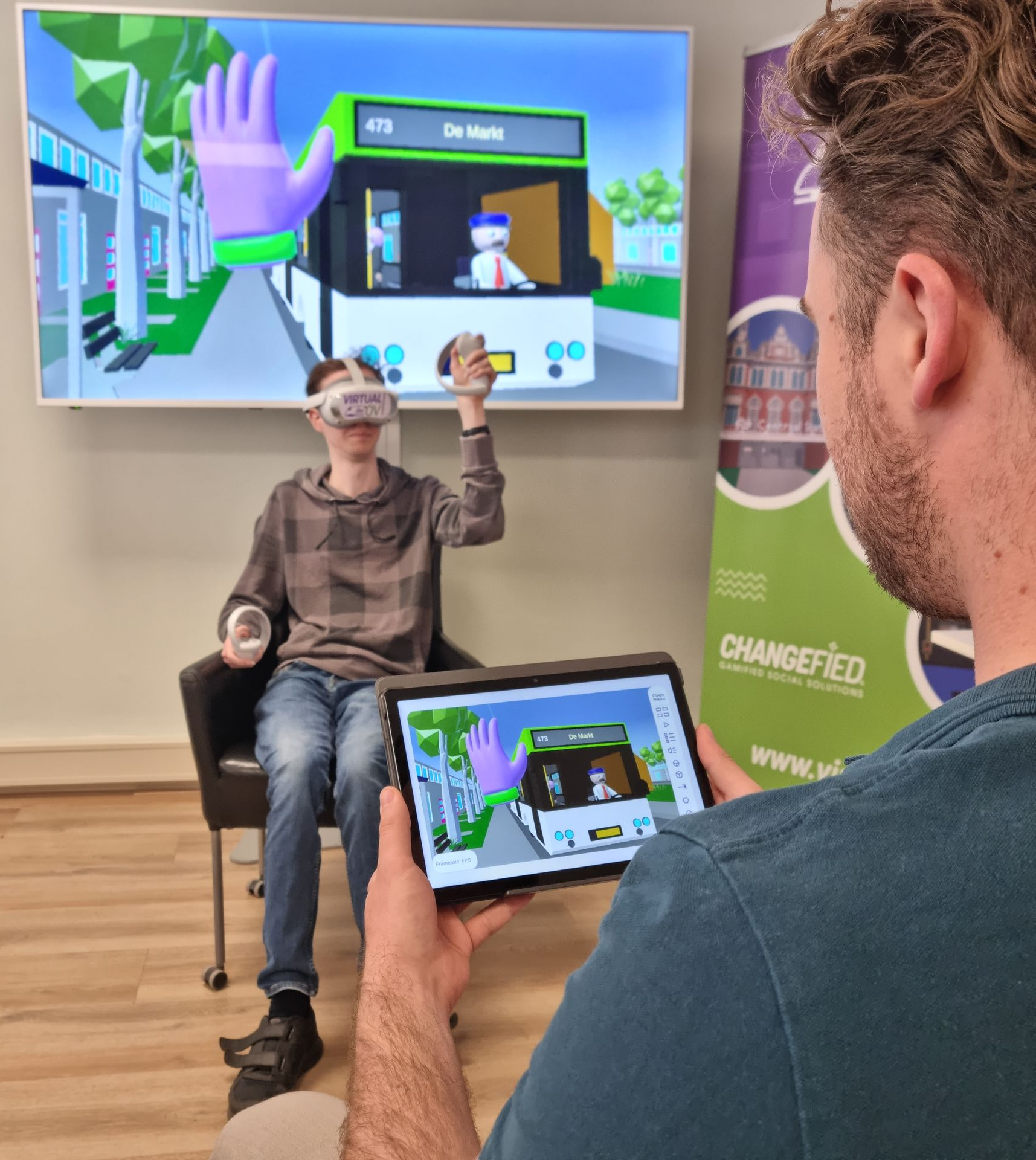
In 360° VR, a person can look around in an existing environment. This can be valuable for
recognition, awareness, or a first introduction to a place or situation.
But at Changefied, we want to do more than just let someone experience what a situation looks like. We want people to practice what they need to do.
That is why, within Virtual OV and our broader Virtual Empowerment platform, we consciously choose 6DoF VR: a form of virtual reality in which participants can move, act, make choices, make mistakes, and try again in a safe environment.
Precisely when the goal is to build self-reliance, routines, executive functions, and confidence, that difference makes a big difference.
What is the difference between 360° VR and 6DoF VR?
VR is often seen as a single category, but there is a big difference between 360° VR and 6DoF VR.
In
360° VR , a person looks around in a recorded or pre-defined environment. You can turn your head and view the surroundings, but you usually do not move freely through the space and your interaction is limited. This makes 360° VR suitable for applications such as:
- getting acquainted with a new environment;
- awareness training;
- virtual tours;
- visual simulations;
- onboarding;
- recognizing situations or risks.
With
6DoF VR, or Six Degrees of Freedom, a person can move more freely in the virtual environment. Participants can walk, turn, bend down, reach, pick up objects, make choices, and react to what happens.
That makes 6DoF VR particularly suitable for active skills training. Not just watching, but doing. And that is precisely where the core lies for us.
When is 360° VR actually suitable?
360° VR can certainly be valuable. It is often more accessible, faster to produce, and cheaper to implement than fully interactive VR.
For some learning objectives, that is sufficient or even ideal. Consider a student who wants to see what a new school looks like in advance. Or an employee getting a visual introduction to a workplace. Or a group that wants to raise awareness regarding stimuli, safety, or social situations.
360° VR can help with recognition and preparation. It lowers the barrier to exploring an environment.
But there is also a limit.
If someone needs not only to recognize what is happening but also to practice acting, deciding, and dealing with unexpected situations, then looking around is not enough.
Then someone needs to be able to practice actively.
Why 6DoF VR is important for self-reliance
Self-reliance does not arise solely from receiving information. Nor does it arise solely from examining a situation.
Self-reliance arises through repetition, acting, making choices, being allowed to make mistakes and
try again.
For many neurodivergent people, everyday situations can be complex or overwhelming.
Think of traveling independently, dealing with crowds, planning, adapting to unexpected changes, social interactions, or performing daily routines.
In the real world, practicing is often difficult. The pressure is high, mistakes feel big, and the environment is not always safe, predictable, or patient.
6DoF VR makes it possible to practice those situations step by step in a safe, realistic, and repeatable environment.
1. Procedural memory: learning by doing
Many skills in daily life consist of sequences of actions.
Planning a route. Walking to the correct stop. Checking in. Getting off on time. Making a transfer. Asking for help if something doesn't work.
On paper, you can explain what someone needs to do. In a video, you can show how it works.
But ultimately, someone has to be able to carry it out themselves.
That is why procedural memory is so important. This is the memory that helps automate actions and routines. Think of cycling, typing, or walking a familiar route. You no longer consciously think about every step; your body and brain recognize the pattern.
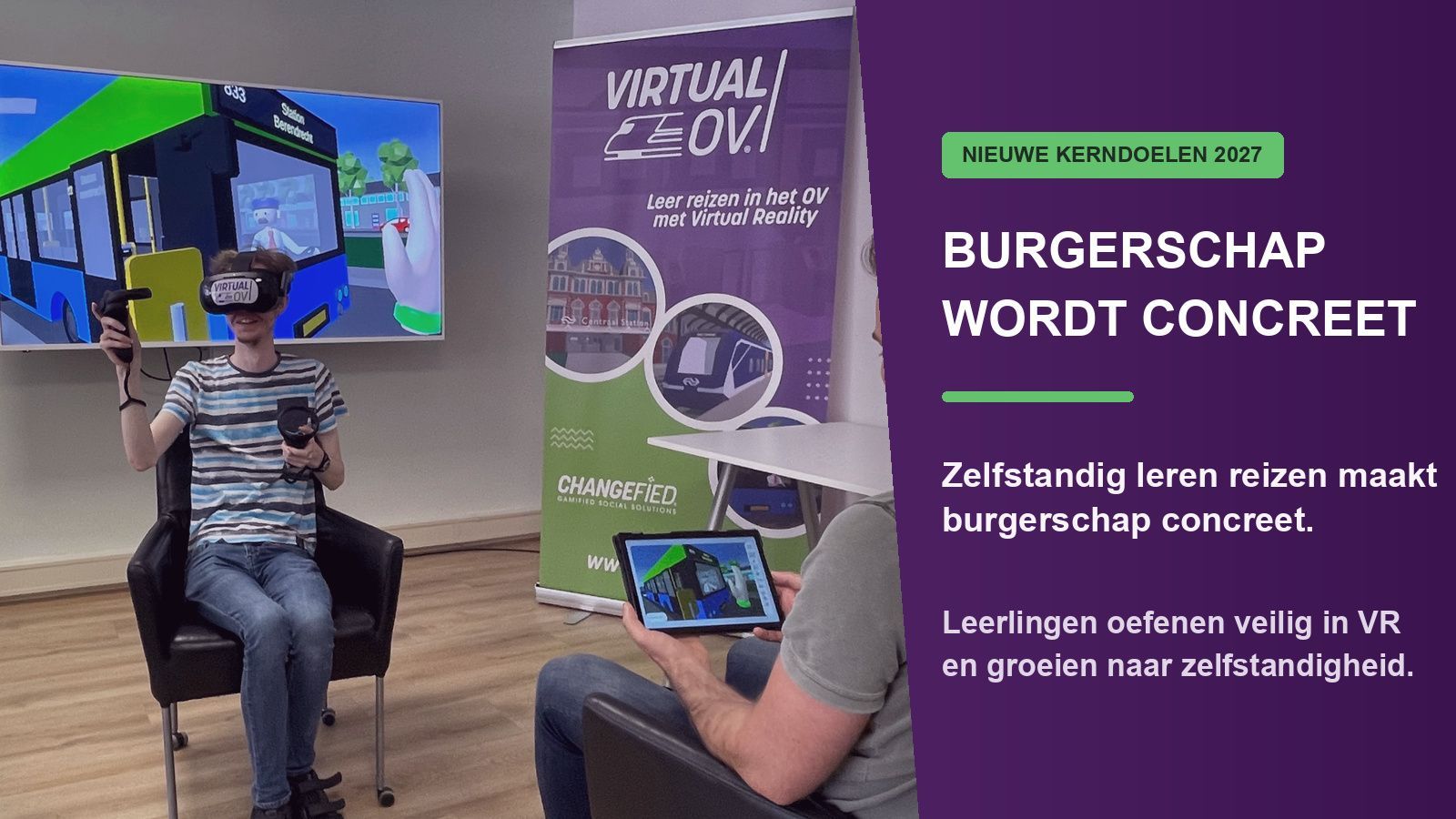
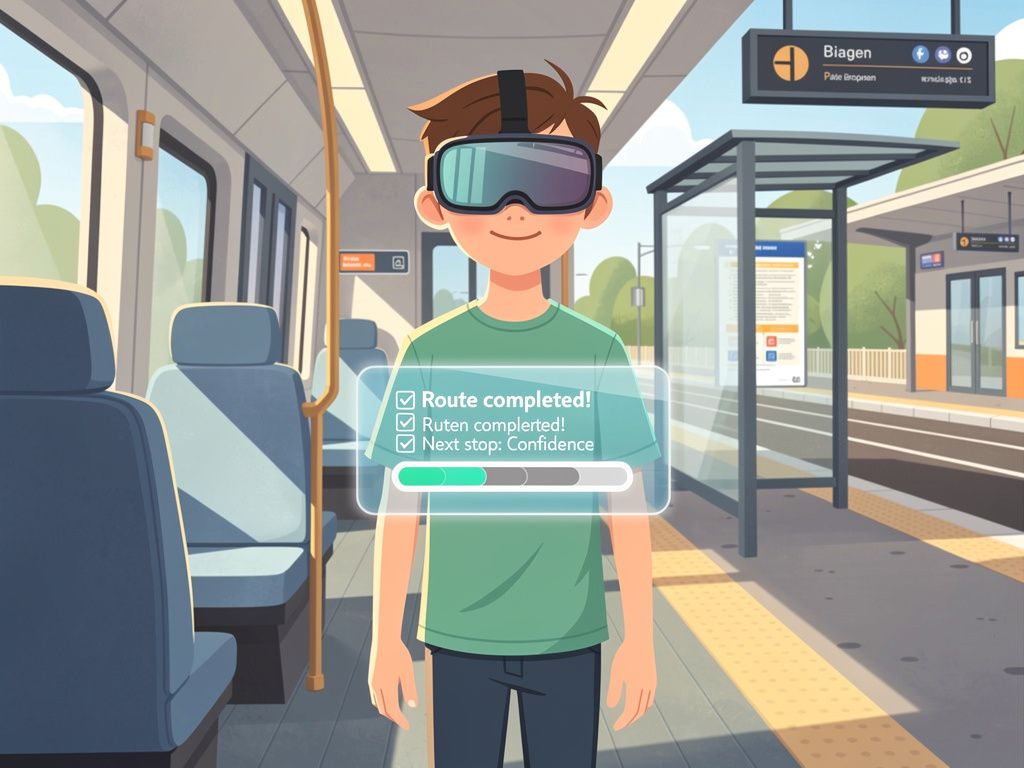
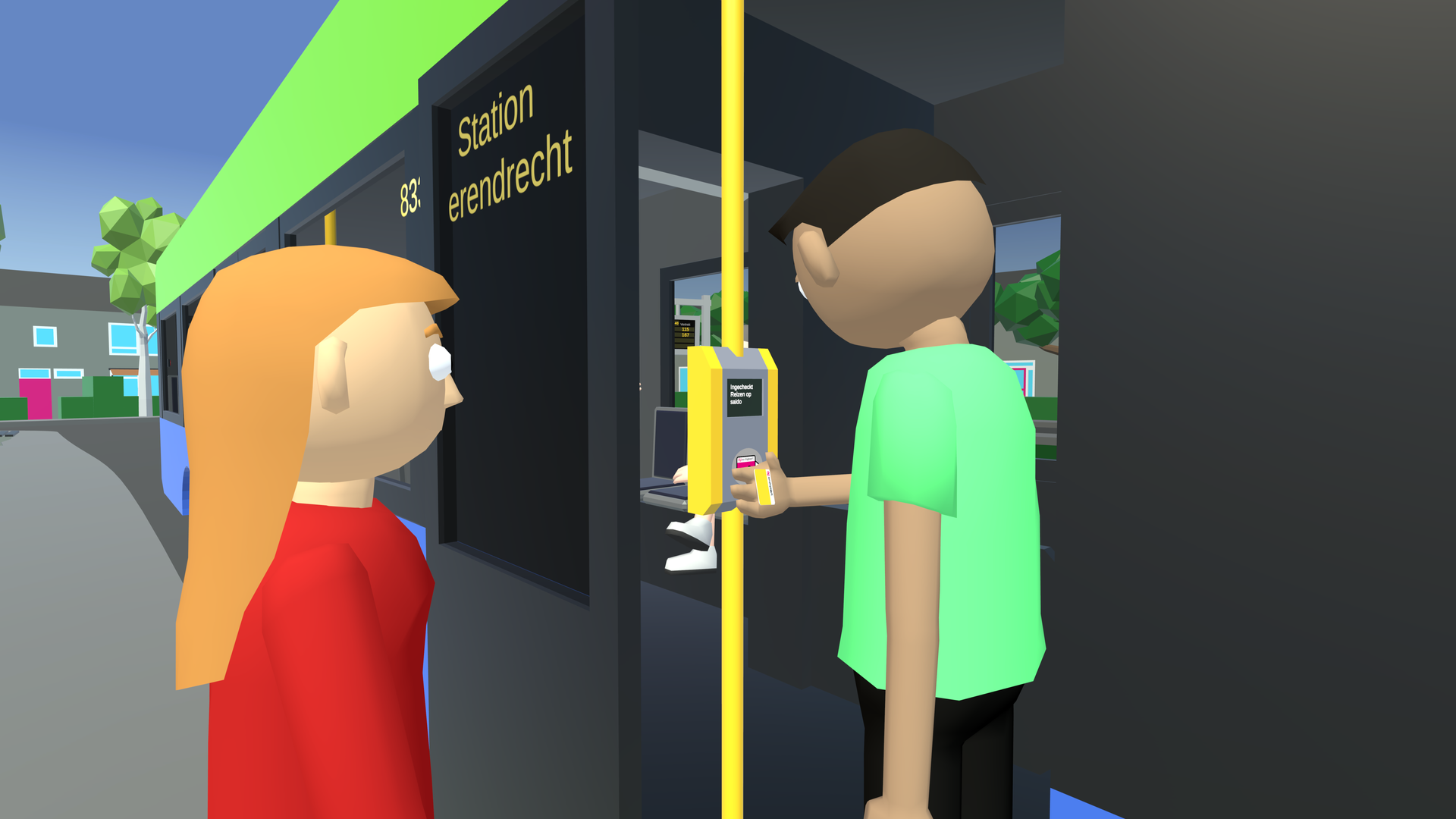
In 6DoF VR, participants can actively practice such routines. They do not just look at a bus stop or station, but perform actions themselves. They move through the environment, make choices, and repeat steps until they become more familiar.
At
Virtual OV , this means, for example, that participants can practice with:
- follow a route;
- go to the correct stop or platform;
- check in;
- board;
- change;
- dealing with busyness;
- respond to a delay or a missed connection.
The value lies not only in the virtual environment, but in the repetition of action.
2. Executive functions: practicing planning, choosing, and switching
Functioning independently places heavy demands on executive functions. These are skills such as planning, prioritizing, working memory, maintaining attention, inhibiting impulses, and adapting flexibly when things do not go as expected.
It is precisely in everyday situations that these functions are constantly engaged.
- What do you do if your bus doesn't come?
- How do you choose an alternative?
- When do you ask for help?
- How do you stay calm when the surroundings are busier than expected?
- How do you remember what the next step is?
For many neurodivergent people, these kinds of moments can be extra challenging. Not because they cannot learn it, but because the real world often demands too much at once.
6DoF VR offers room to practice this in a controlled manner.
In a virtual environment, scenarios can be built up in difficulty. Start simple and calm. Then with more stimuli, more choices, or unexpected events.
As a result, participants train not only what to do, but also how to react when the situation changes.
3. Sensory stimuli: safely getting used to complexity
Many neurodivergent people experience stimuli differently. Sound, light, movement, crowds, or social interaction can require a lot of energy or even be overwhelming.
That plays a major role in self-reliance.
A station is not just a place where trains depart. It is also an environment with announcements, moving people, sounds, signs, haste, unexpected changes, and social signals.
In 6DoF VR, these types of stimuli can be built up in a controlled manner. A participant can first practice in a quiet environment. Then, sound, movement, crowds, or time pressure can be added step by step.
This creates a safe way to get used to complexity, without immediately throwing someone in at the deep end.
The goal is not to artificially remove stimuli from life. The goal is to help people build strategies, confidence, and room for maneuver before entering the real situation.
4. Transfer to the real world: practicing behavior, not just knowledge
An important question with every training is: does it also work outside the training?
When it comes to self-reliance, that question is crucial. It is not about whether someone understands something in a virtual environment. It is about whether someone knows better what they can do in the real world.
Therefore, natural interaction is important.
When someone moves, looks, chooses, grasps, turns, walks, or reacts in 6DoF VR, the exercise resembles the real action more closely than in a passive experience. This can help make the step from virtual practice to real action smaller.
At Changefied, we therefore do not see VR as a replacement for the real world. We see it as an intermediate step.
A safe practice space between explanation and reality.
5. Safety and self-confidence: being allowed to make mistakes without major consequences
Perhaps this is the most important point.
Learning requires room to make mistakes. But in the real world, mistakes do not always feel safe.
Taking the wrong bus, getting off too late, getting stuck in busy traffic, or not knowing where to ask for help can cause a lot of stress. Sometimes, a single negative experience causes someone to prefer avoiding a situation afterward.
In 6DoF VR, mistakes are allowed.
A participant can start over. Repeat a step. Practice a situation more calmly. Or make it slightly more difficult when there is room for it.
That makes practicing less threatening and increases the sense of control.
Self-confidence does not arise from hearing that something will succeed. Self-confidence grows when someone experiences: I have practiced this, I recognize the situation, and I know what I can do.
Why this fits with Virtual Empowerment
With
Virtual Empowerment, we at Changefied are building VR training programs that help neurodivergent people become more self-reliant in daily life.
Our first module,
Virtual Public Transport, focuses on independent travel using public transport. But the underlying vision is broader.
There are many situations in which people can benefit from safe, repeatable, and realistic practice:
- mobility;
- education;
- work;
- independent living;
- social participation;
- daily routines;
- dealing with unexpected situations.
In all those domains, it is not just about knowing what needs to be done. It is about being able to act the moment it is necessary.
That is why we choose 6DoF VR.
Not because more technology is automatically better. But because active practice comes closer to the real world.
360° VR and 6DoF VR do not have to be competitors
It is important not to view 360° VR and 6DoF VR as simple opposites.
They both have value, depending on the learning objective.
360° VR is strong when the goal is:
- get acquainted;
- observe;
- awareness;
- visual orientation;
- experience as accessible.
6DoF VR is strong when the goal is:
- act;
- repeat;
- making choices;
- building routines;
- dealing with stimuli;
- training skills;
- preparing for real situations.
So the question is not: which technology is better?
The better question is: What should someone be able to do after the training?
If the answer is primarily “recognizing” or “experiencing”, 360° VR can be very suitable.
If the answer is “acting independently in a complex situation”, then 6DoF VR offers clear advantages.
Conclusion
At Changefied, we believe that independence should be trainable.
For many neurodivergent people, the step into the real world is a big one. Not because motivation is lacking, but because the practice space is often missing.
6DoF VR offers that practice space.
A place where someone can act safely, repeat, make mistakes, practice choices, and build confidence before it has to happen for real.
That is why we
consciously choose 6DoF VR within Virtual OV and
Virtual Empowerment
Not as a technological luxury, but as a functional choice for active skills training.
For independence does not arise from merely looking at a situation.
Independence grows when you can safely practice what to do in that situation.