The school year has started again. Students are getting started, schedules are getting underway, and teachers are re-evaluating goals regarding independence, mobility, citizenship, and daily functioning.
For students who struggle with planning, sensory overload, or unexpected situations on public transport, this is a logical time to put independent travel back on the agenda.
Because independent travel is not just about getting from A to B. It is also about participating. About making choices. About interacting with others in public spaces. About daring to ask for help when things don't go as expected.
At Changefied, we used the summer to further improve Virtual OV. Not with grand promises, but with practical updates that make practicing easier, more natural, and more realistic
make for students, teachers, and supervisors.
Greater ease of use for students
Those who travel by public transport often have to do several things at the same time.
You look where you are. You check your route. You keep your ticket or phone at hand. You pay attention
people around you. Sometimes you have to point something out or ask for help.
In Virtual OV, too, we want practicing to feel as natural as possible.
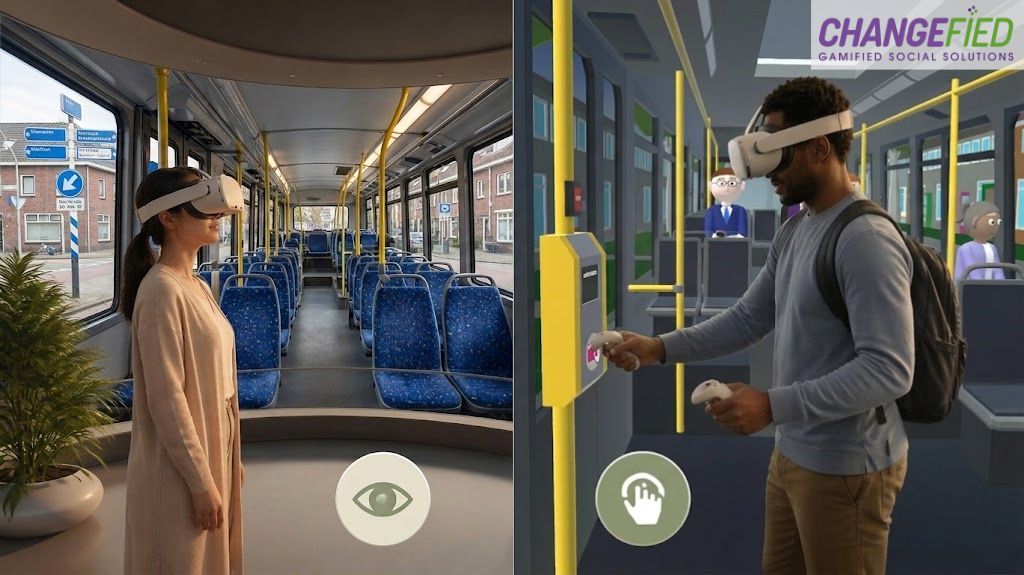
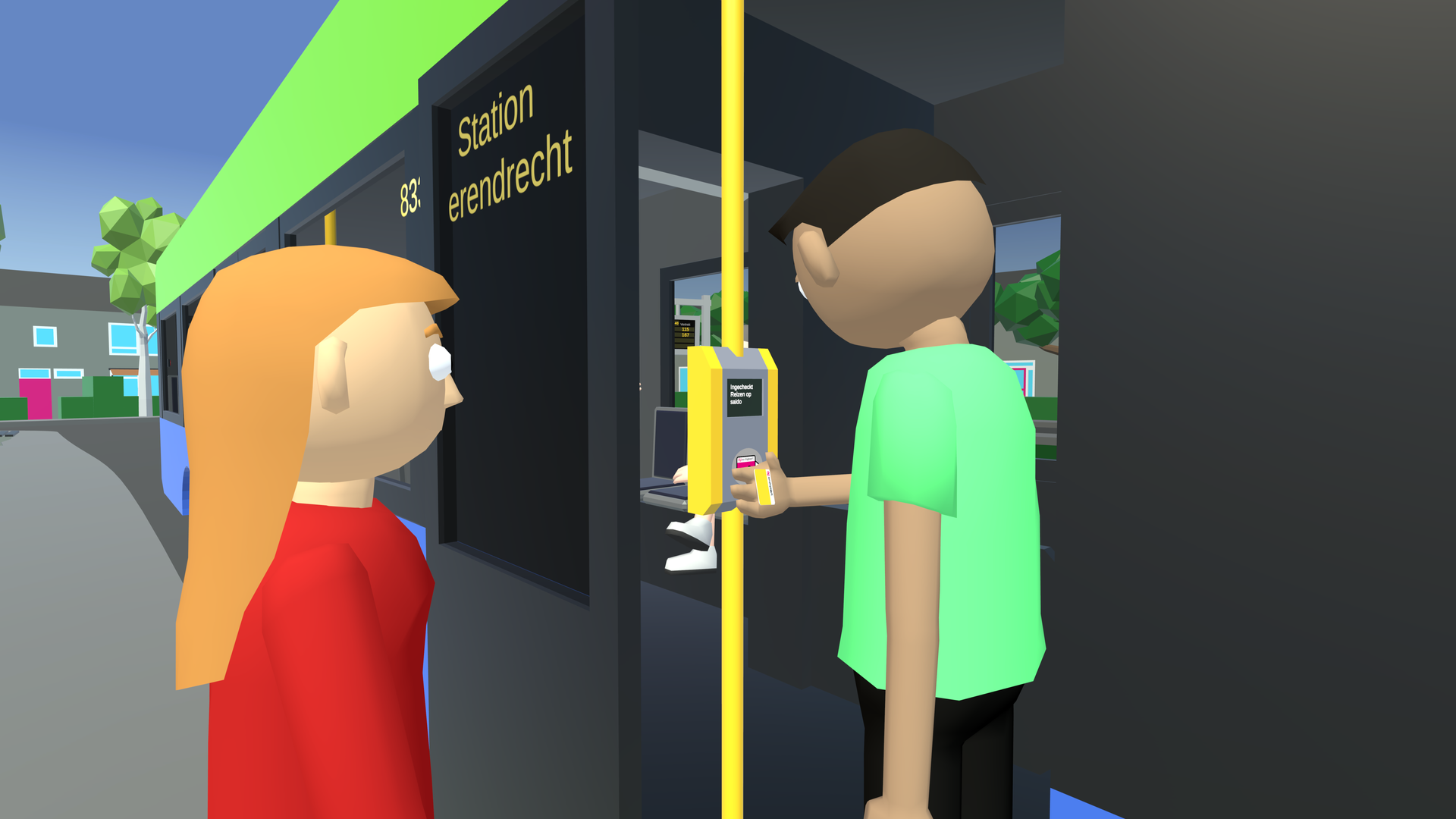
Therefore, we have made an important adjustment within the game: all travel items that students need while traveling are now held in one hand in the VR environment instead of being distributed between two hands.
That might sound like a small change, but in practice, it makes a big difference. One hand now remains free to grab things, point, or plan the route. The student has to think less about the controls and can focus better on the situation itself.
We have also improved the controls on the controllers. Selecting items has been moved to the button on the front of the controller instead of the button on the side. That side button was difficult for many players to find. In practice, we observed that students used the button on the front or top of the controller much more instinctively.
By aligning the controls better with what students do naturally, the exercise becomes calmer and more accessible. The technology recedes more into the background. This creates more room for what really matters: practicing traveling.
More realistic stimuli
Traveling independently requires more than knowing which bus or train to take.
On public transport, a lot happens at once. People get on and off. It gets busier. Someone looks at you. Someone says hello. There is noise, movement, and time pressure. Meanwhile, you have to stay calm, follow your route, and sometimes make a decision.
It is precisely that combination that makes traveling exciting for many neurodivergent students.
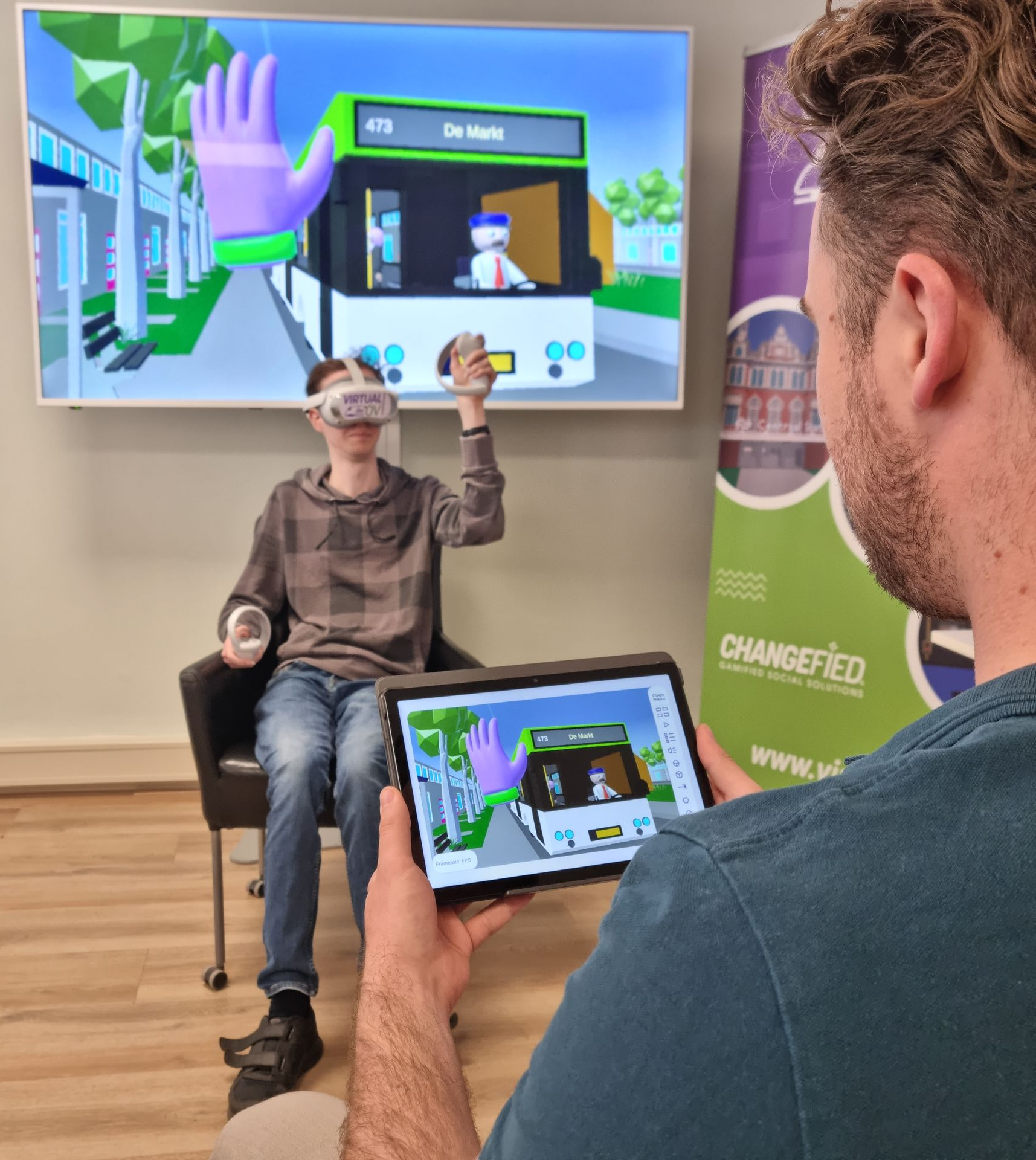
Therefore, we have expanded Virtual OV with moving fellow travelers in the VR environment. These digital people can, for example, board while the student is sitting on the bus or greet the student.
This allows students to practice with more stimuli and social situations in a controlled manner. Not immediately on a real bus or at a busy station, but first in a safe practice environment.
That is important. Because learning to handle stimuli requires repetition, predictability, and guidance. In Virtual OV, a situation can be built up step by step. First calmly. Then more realistically. And always in a way that suits the student.
In this way, the VR environment becomes not only a place to practice routes, but also a place to build confidence in situations that often feel unpredictable in real public transport.
Easier start-up for schools
A training course may be strong in content, but if getting started is too much of a hassle, the barrier becomes too high in practice.
This is certainly true at school. Teachers and supervisors have full days. Technology should not be unnecessarily complicated, but rather help to meet the needs quickly and reliably
to make a move.
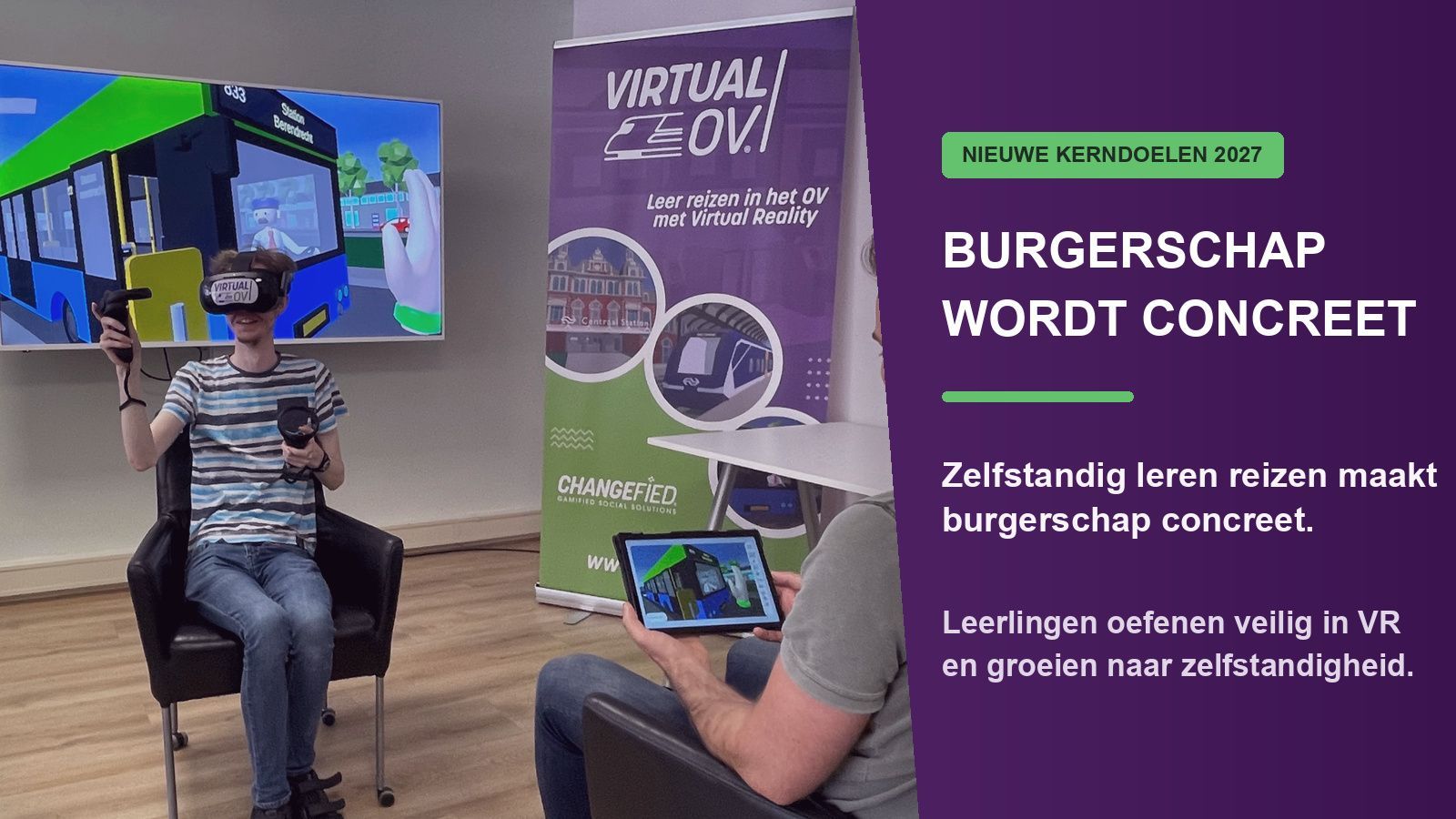
That is why we also worked on the practical implementation of Virtual OV this summer. The connection between the tablet and headset now works without a separate router. The headset and tablet connect wirelessly to each other via the Companion App, using Wi-Fi and Bluetooth.
An internet connection is not required to play Virtual OV. However, the tablet can be connected to the school Wi-Fi network for updates, refreshing licenses, and remote support.
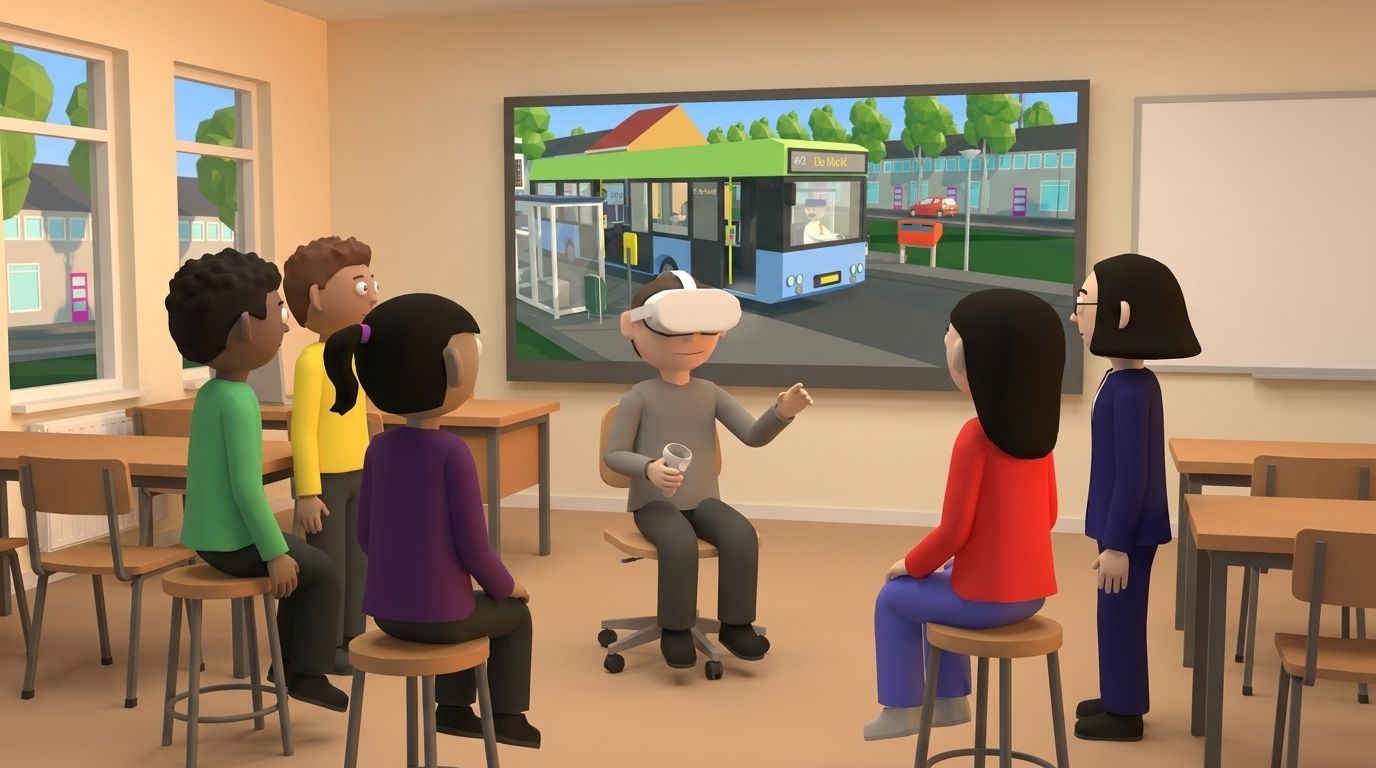
Casting to an interactive whiteboard can also be started via the Companion App on the tablet. This allows other students to watch along with what is happening in the VR environment.
For schools, this primarily means: fewer steps, less hassle with connections, and more clarity for the teacher or supervisor.
And that is exactly what is needed to properly integrate Virtual OV into the school day.
Why these updates are important
Virtual OV only works well if it aligns with school practices.
Students must be able to practice safely with recognizable situations. Teachers and supervisors must be able to use the system without unnecessary barriers. And the training must allow for repetition, guidance, and growth at the student's pace.
This summer's updates help with that.
For students, playing becomes more natural. They have to deal less with buttons and controls and can focus better on the travel experience.
For supervisors, getting started becomes easier. As a result, it becomes easier to use Virtual OV more frequently and consistently.
And for the training itself, the environment becomes more realistic. Moving travelers and social interactions make it possible to add more stimuli step by step.
This aligns with the core of Virtual OV: allowing students to safely practice situations that can be stressful, complex, or unpredictable in real life.
Independent travel as part of citizenship
Now that the school year is back underway, this is a good time to consider the place independent travel occupies within guidance, citizenship, mobility training, internship preparation, or preparation for further education.
Because learning to travel independently is more than a practical skill.
It is about self-reliance. About trust. About learning to cope with the world outside the school walls. About participating in society.
A student who learns to travel independently does not just learn a route. They regain a piece of freedom.
With Virtual OV, schools can take that step safely, concretely, and with guidance.
Would you like to know how Virtual OV can be implemented at your school? Schedule an introductory meeting or demo with Changefied.