Municipalities are under pressure.
The costs of student transport are rising, budgets are under strain, and at the same time there is a clear societal mandate: people with disabilities must be able to participate fully. The UN Convention on the Rights of Persons with Disabilities calls not for good intentions, but for concrete steps towards accessibility, independence, and participation.
Virtual OV helps precisely at that intersection.
But then we need to look at student transport differently. Not only as a logistical service, but also as an opportunity to teach students skills that increase their independence.
Student transport: a category that continues to grow
Student transport is a costly and difficult-to-manage expense within the social domain for many municipalities. At the same time, pressure is rising on specialized education and the facilities surrounding it.
The number of students in special secondary education has been rising for years. The 2024 Student Transport Monitor shows that in the 2023/2024 school year, approximately 75,000 students used municipal transport services. A large proportion of this consists of adapted transport, such as vans and taxis.
That transport is often safe and reliable. But it is also expensive.
According to Oberon's Student Transport Monitor, the average transport costs amount to €3,978 per transported student per year. In 2021, this was €3,272. The costs per student have therefore clearly increased.
For students who will never be able to travel independently, adapted transport remains essential. However, there is also a group of students who might be able to learn to do so, provided they can practice safely, step-by-step, and with the right guidance.
That is where the opportunity lies.
For as long as independent travel is not practiced, adapted transport often remains the standard. Not always because it is necessary, but because there is no safe intermediate step between fully dependent transport and independent use of public transport.
The starting point is not to phase out student transport for students who need it.
The starting point is to offer students who are ready for it a safe route to greater independence.
The UN Convention: not an extra, but a mandate
The Netherlands ratified the UN Convention on the Rights of Persons with Disabilities in 2016. That convention covers more than physical accessibility.
Article 9 concerns accessibility, including transport. Article 19 concerns independent living and participation in society, with appropriate support where necessary.
For municipalities, this means that student transport is not just a transport issue. It also touches upon inclusion, participation, and self-reliance.
For provinces, this directly relates to inclusive mobility. Accessible public transport is not only about vehicles, stops, and travel information, but also about whether people have sufficient confidence and skills to actually use public transport.
So the question is not just: who needs to be taken from A to B?
The better question is: which students can learn to eventually get from A to B on their own?
Two problems, one approach
That is exactly where Virtual OV plays a role.
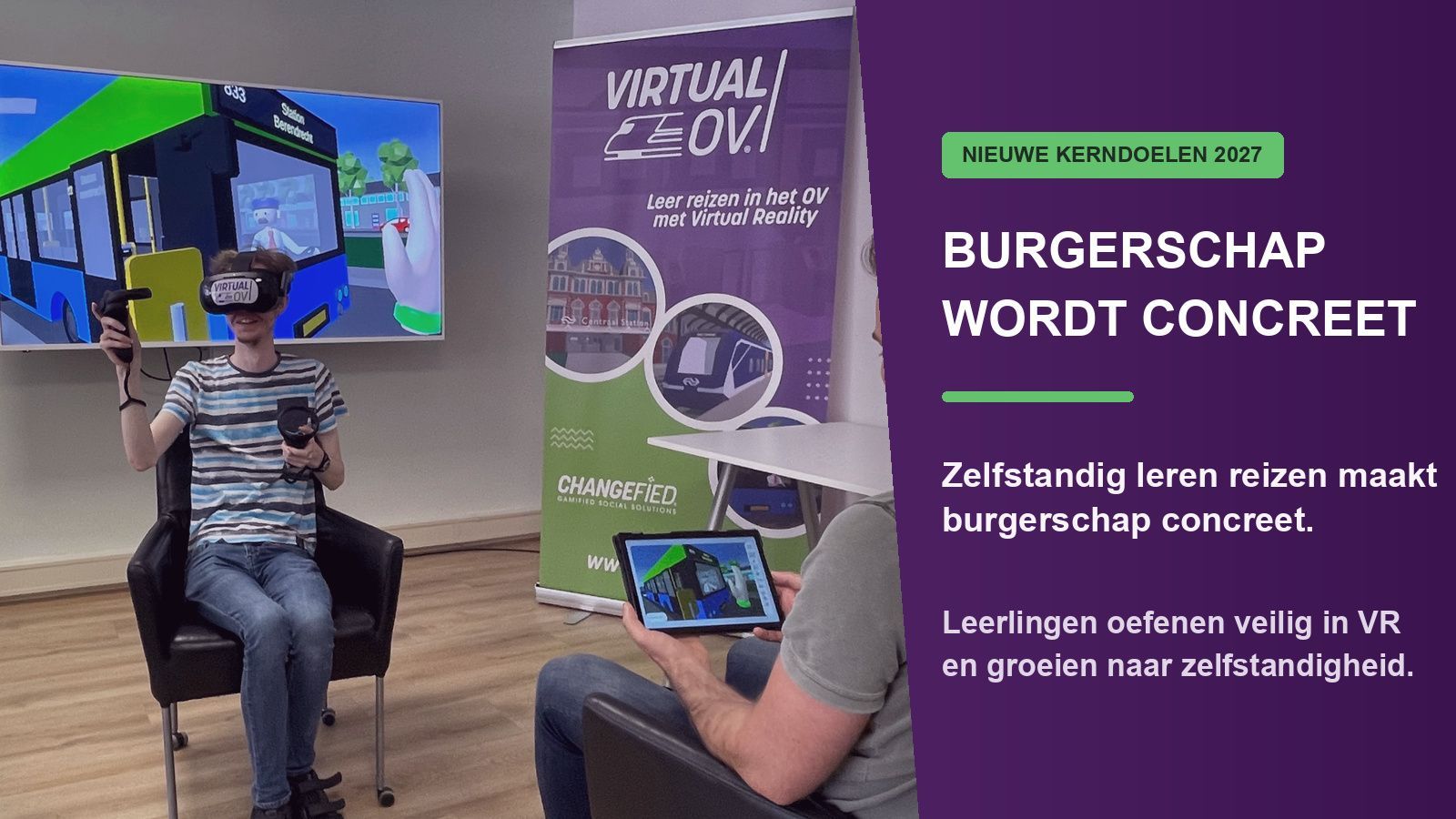
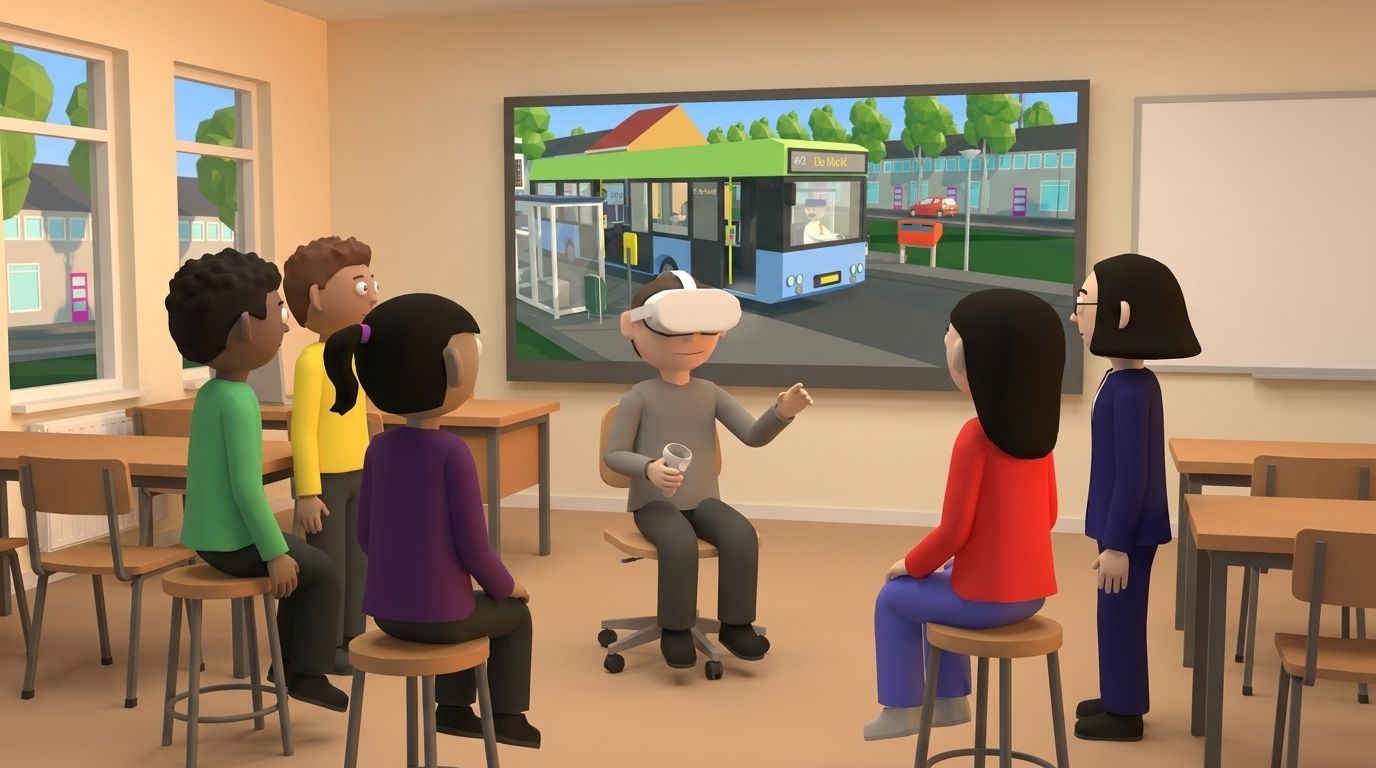
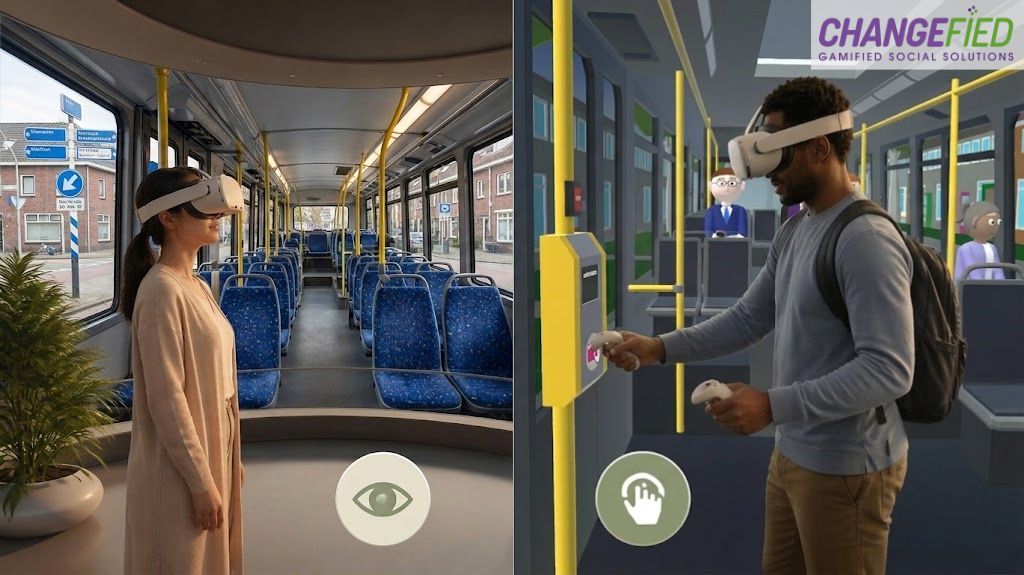
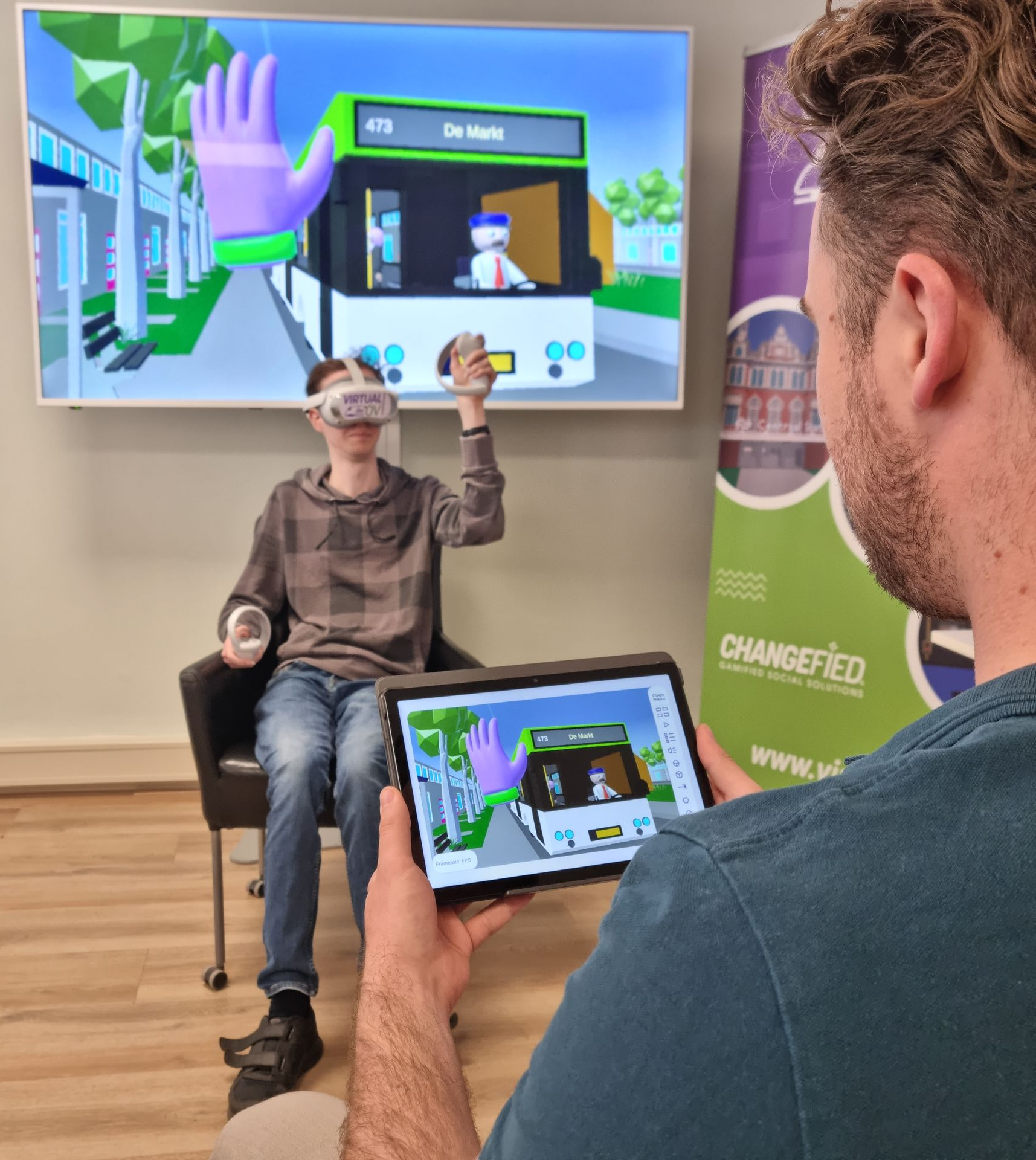
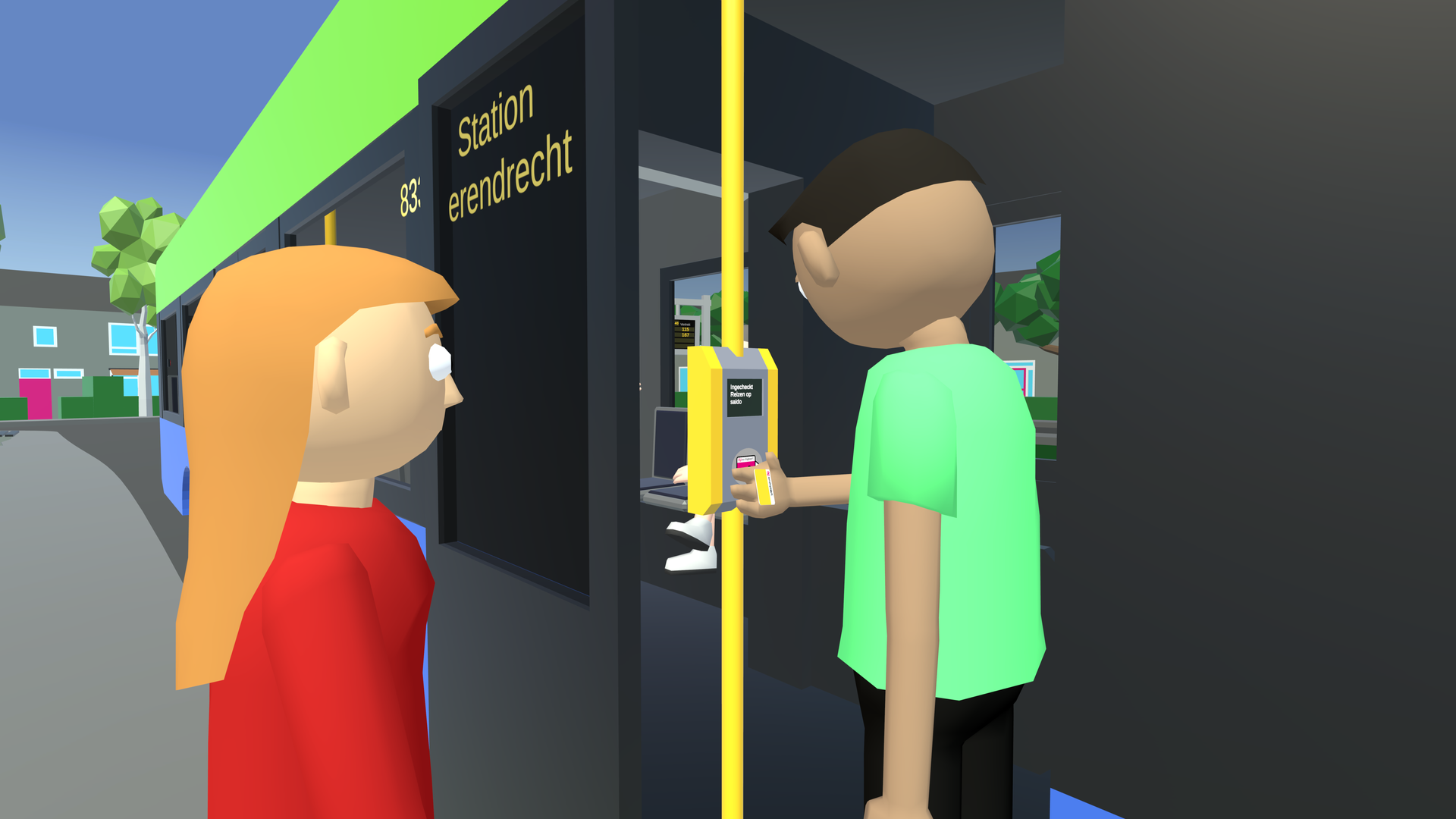
Virtual OV is a VR learning environment in which neurodivergent young people can safely practice using public transport. This includes boarding, alighting, transferring, dealing with crowds, asking questions, and responding to unexpected situations.
Students can first practice everything that might be exciting or overwhelming in real public transport in a safe environment. Not just once, but as often as necessary. With guidance, repetition, and scenarios that align with real-world situations.
The result is not that every student will travel independently. That would be too simple a promise.
The result is that you identify which students have the potential to travel more independently and provide them with targeted support to take that step.
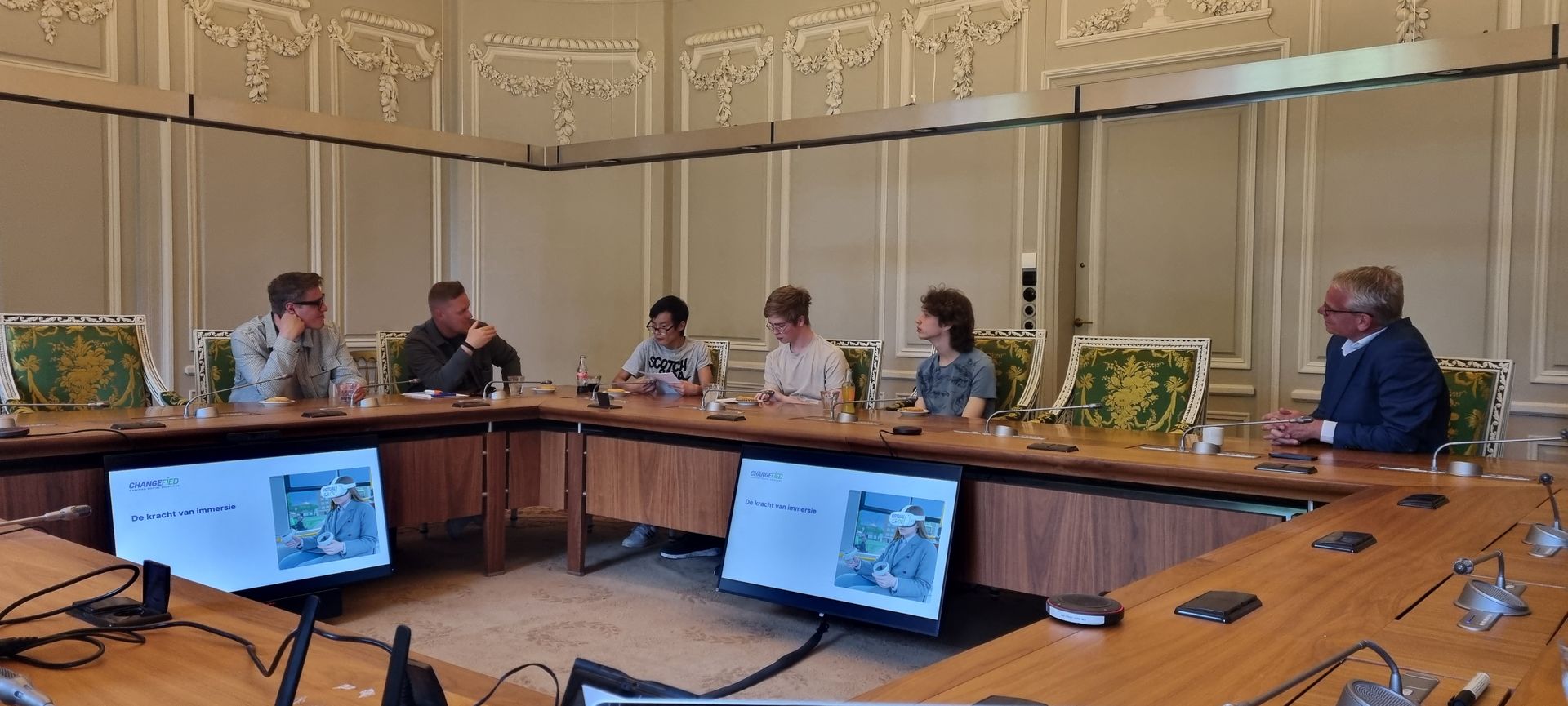
At Heliomare in Alkmaar, we saw what that can mean. At the invitation of Provincial Executive Member Jeroen Olthof, three students traveled independently by train to the Provincial Government building in Haarlem following VR training. Their teachers traveled along in a monitoring role. The students ultimately made the journey themselves.
That is precisely the shift that municipalities and provinces need: from structural dependence to gradual greater independence.
What this means for municipalities and provinces
Virtual public transport is not a replacement for school transport.
It is a supplement for the group of students who may be able to learn to travel independently or with less supervision, but have never been able to practice this safely.
For municipalities, this can yield three things:
- greater self-reliance for young people who are currently dependent on adapted transport
- better substantiation of policy on inclusion and participation
- lower pressure on student transport in the long term, because some of the students learn to travel more independently
For provinces, Virtual Public Transport can help make inclusive mobility more concrete. Not only by organizing public transport to be more accessible, but also by allowing people to safely practice using it. This creates a practical bridge between transport for specific target groups, education, municipalities, transport operators, and regular public transport.
Moreover, the investment is scalable. A single VR setup can be used by multiple students, classes, and potentially care partners as well. Schools and care partners can handle the daily implementation. Municipalities and provinces can facilitate, co-finance, or incorporate Virtual Public Transport into a broader approach to inclusive transport and self-reliance.
Virtual public transport is already being deployed in the province of North Holland, the West Brabant Region, and together with Transdev in Hoeksche Waard/Goeree-Overflakkee. In every region, the same question arises: do we continue to primarily organize transport, or do we also invest in the skills that help people travel more independently?
From cost center to preventive investment
Municipalities and provinces face tough choices in the coming years. Student transport, accessibility, and inclusive public transport all touch upon the same question: do we continue to primarily organize services after dependency has developed, or do we invest instead in skills that increase independence?
That makes this a good time to review student transport.
Not only as a recurring annual expense, but as an area where preventive policy is possible. By allowing students with the potential to safely practice independent travel, an approach emerges that is both socially and financially more justifiable.
The UN Convention calls for steps towards accessibility and participation.
The municipal and provincial budgets call for smart choices.
Virtual public transport connects those two.
Would you like to explore what Virtual Public Transport could mean for your municipality or region?